*********************************************************************************************************************************************
SEPTEMBER 2026 UPDATE
*********************************************************************************************************************************************
STU DAVIES
*********************************************************************************************************************************************
KIER HARDY
*********************************************************************************************************************************************
MIKE WHITCHURCH
*********************************************************************************************************************************************
MATT OWEN
*********************************************************************************************************************************************
KARL CROWTHER
*********************************************************************************************************************************************
*********************************************************************************************************************************************

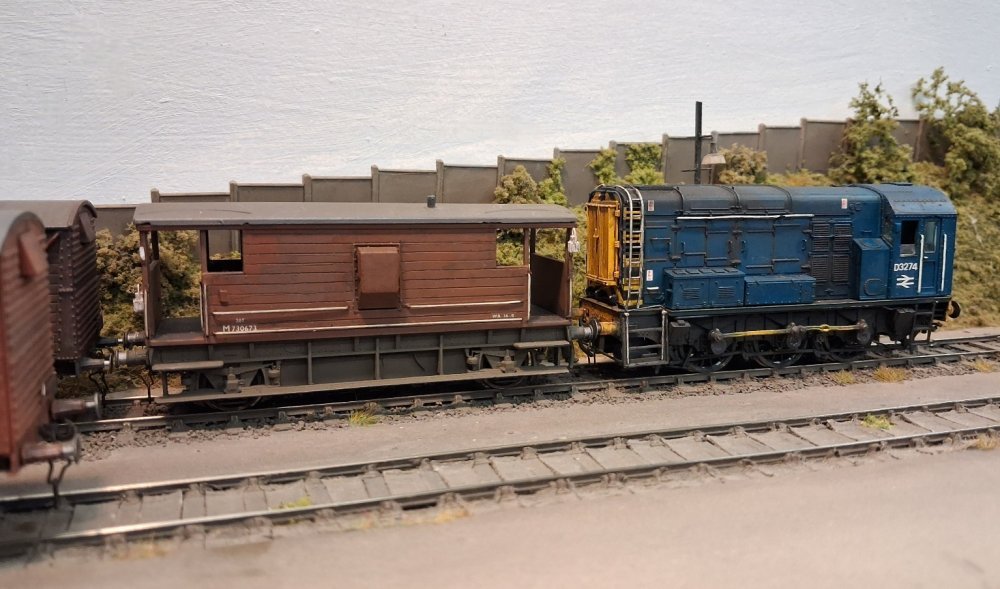 Class 08 D3274 is seen here, in a early version of rail blue with number and arrow on cab
side (Hornby model).
Class 08 D3274 is seen here, in a early version of rail blue with number and arrow on cab
side (Hornby model).
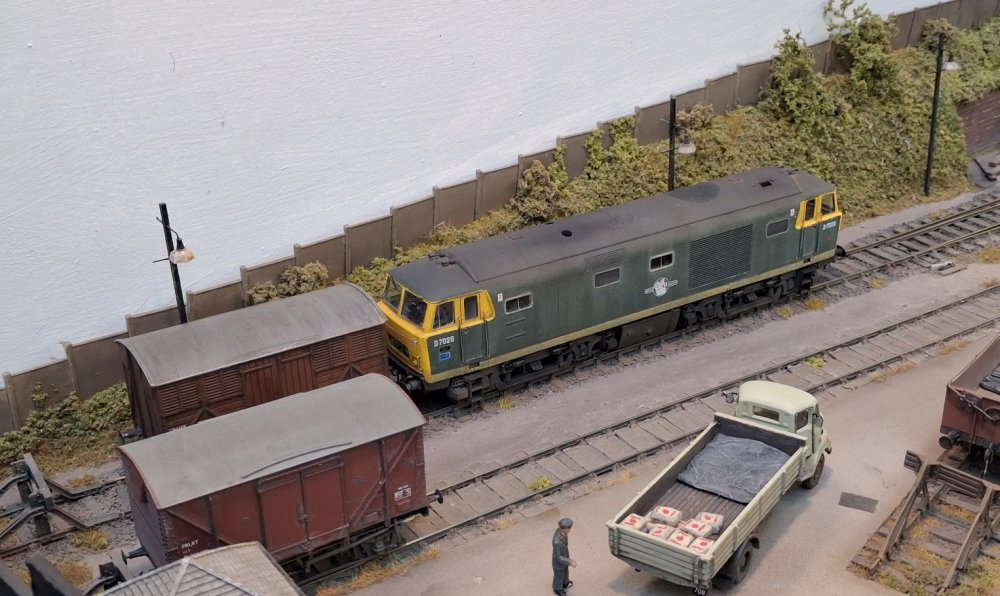 Hymek D7026 in green with full yellow ends shunts a few wagons in the yard. This model was
finished using Railtec's faded totems and their 3D printed numbers which is a lot easier to
apply than individual etched numerals, which I could never get totally right.
Hymek D7026 in green with full yellow ends shunts a few wagons in the yard. This model was
finished using Railtec's faded totems and their 3D printed numbers which is a lot easier to
apply than individual etched numerals, which I could never get totally right.
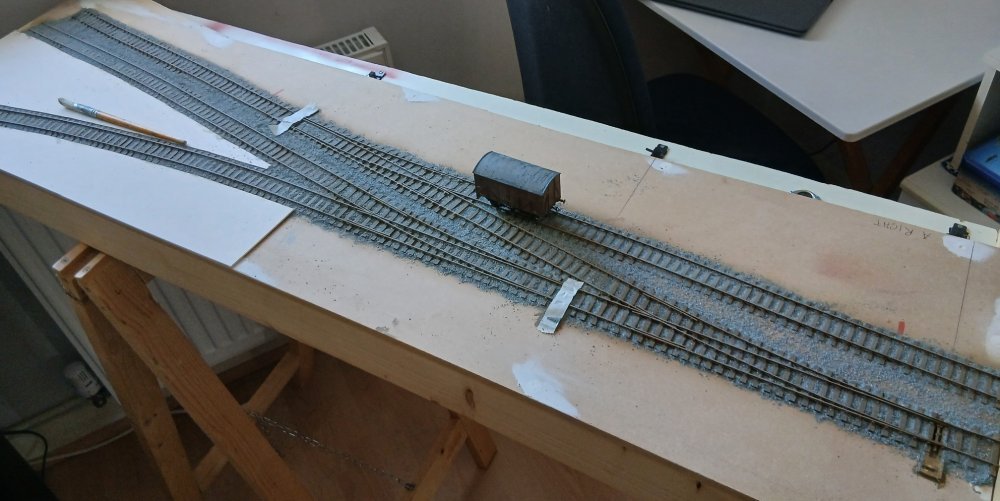 My Sheepcroft layout is now over 10 years old and beginning to show its age, so work has
now started on a replacement Littlemoor. It's slightly bigger but essentially a follow-on
that hopefully uses lesson learned from my previous efforts. This is the headshunt and
yard end, with a start made on groundwork and the ballasting.
My Sheepcroft layout is now over 10 years old and beginning to show its age, so work has
now started on a replacement Littlemoor. It's slightly bigger but essentially a follow-on
that hopefully uses lesson learned from my previous efforts. This is the headshunt and
yard end, with a start made on groundwork and the ballasting.
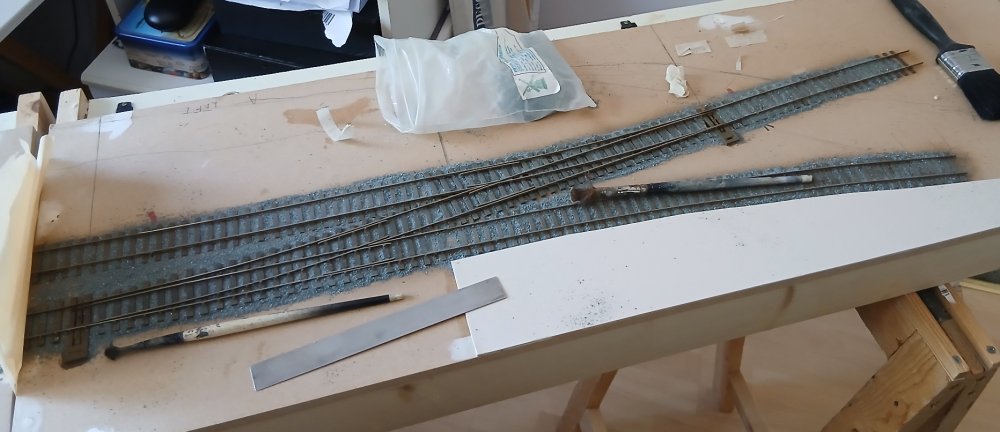 The paintbrush is where the fiiddleyard starts, but needs the backscene in so that I know
what there is to play with. I've used the EMGS / Peco EM points which are a larger radius
than those on Sheepcroft, so should minimise buffer locking which was an issue with certain
loco / wagon combinations.
The paintbrush is where the fiiddleyard starts, but needs the backscene in so that I know
what there is to play with. I've used the EMGS / Peco EM points which are a larger radius
than those on Sheepcroft, so should minimise buffer locking which was an issue with certain
loco / wagon combinations.
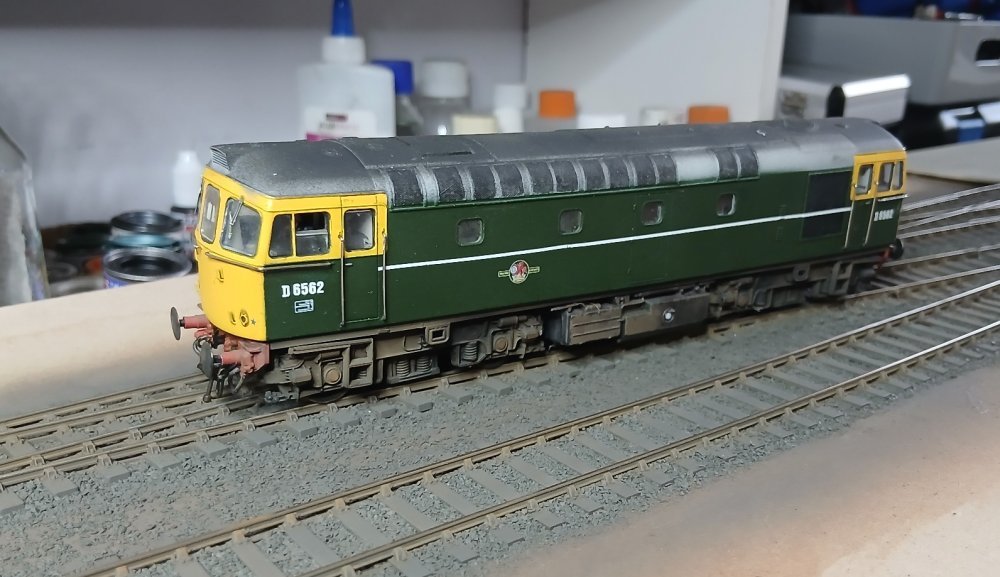 Here's my Crompton D6562 in green with full yellow ends - My oldest loco in the fleet and
still in regular use. I backdated the exhaust port and livery some time ago, but it was
beginning to look rather worn. It's now had a complete repaint and renumber as 6562
which had this exhaust / livery combination. Photographed on Littlemoor where the
ballasting and weathering are coming along nicely.
Here's my Crompton D6562 in green with full yellow ends - My oldest loco in the fleet and
still in regular use. I backdated the exhaust port and livery some time ago, but it was
beginning to look rather worn. It's now had a complete repaint and renumber as 6562
which had this exhaust / livery combination. Photographed on Littlemoor where the
ballasting and weathering are coming along nicely.

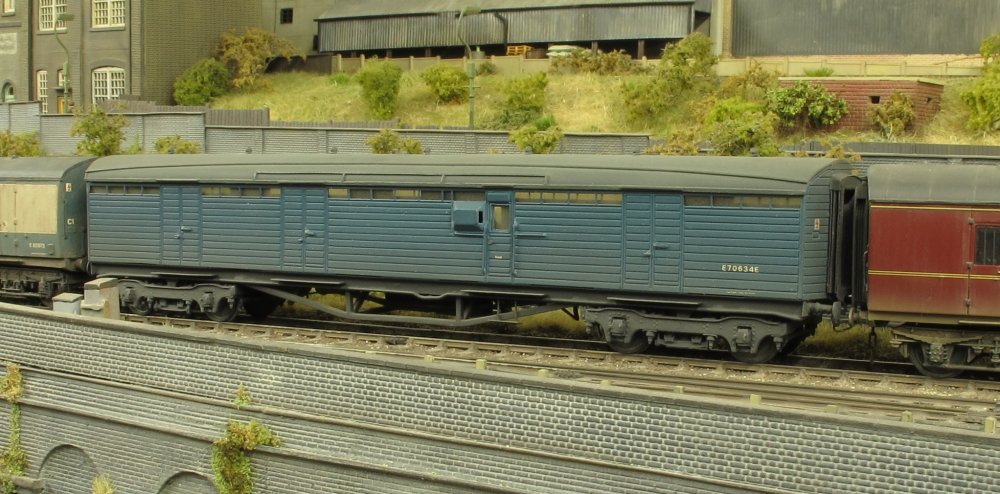 Three new (to me) parcels vehicles have joined the Hornsey Bdy fleet, starting off with
E70634E, a Comet etched brass kit of a Thompson Matchboard passenger brake (BG), which
had been stored out of use for many years by a third party.
Three new (to me) parcels vehicles have joined the Hornsey Bdy fleet, starting off with
E70634E, a Comet etched brass kit of a Thompson Matchboard passenger brake (BG), which
had been stored out of use for many years by a third party.
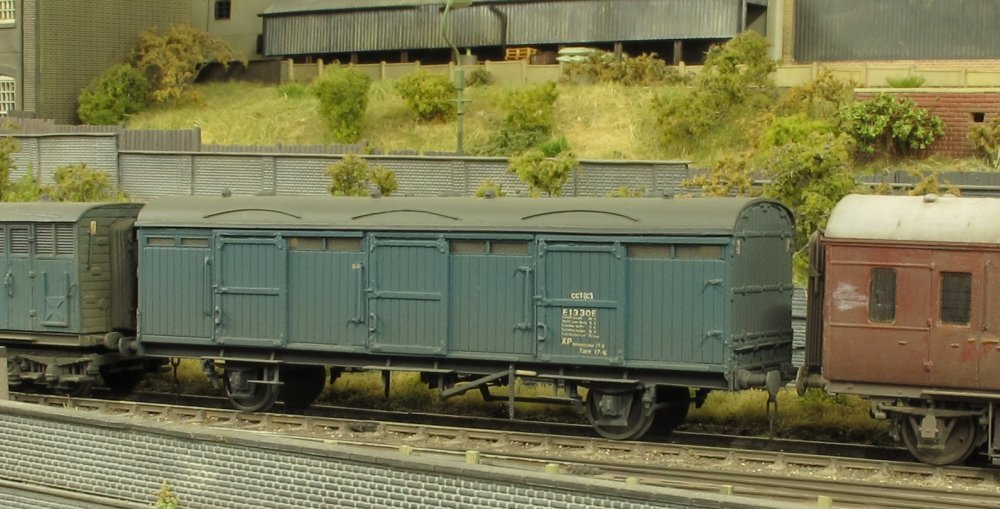 Another from the same collection is E1330E, a Chivers etched brass kit of an ex-LNER CCT
which required some modification to fit EM gauge wheelsets.
Another from the same collection is E1330E, a Chivers etched brass kit of an ex-LNER CCT
which required some modification to fit EM gauge wheelsets.
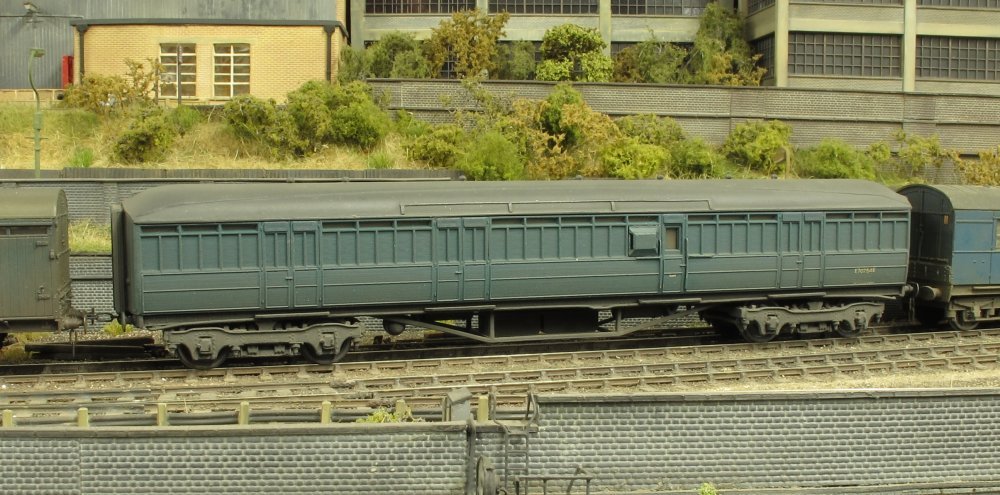 The last of the three is E70754E, a Gresley panelled BG constructed from an Ian Kirk plastic
kit. All three have had their bufferbeams rebuilt and conventional hook and 3-link couplings
fitted (in place of the buckeye couplings they came with), touched up the paintwork and given
a light weathering.
The last of the three is E70754E, a Gresley panelled BG constructed from an Ian Kirk plastic
kit. All three have had their bufferbeams rebuilt and conventional hook and 3-link couplings
fitted (in place of the buckeye couplings they came with), touched up the paintwork and given
a light weathering.
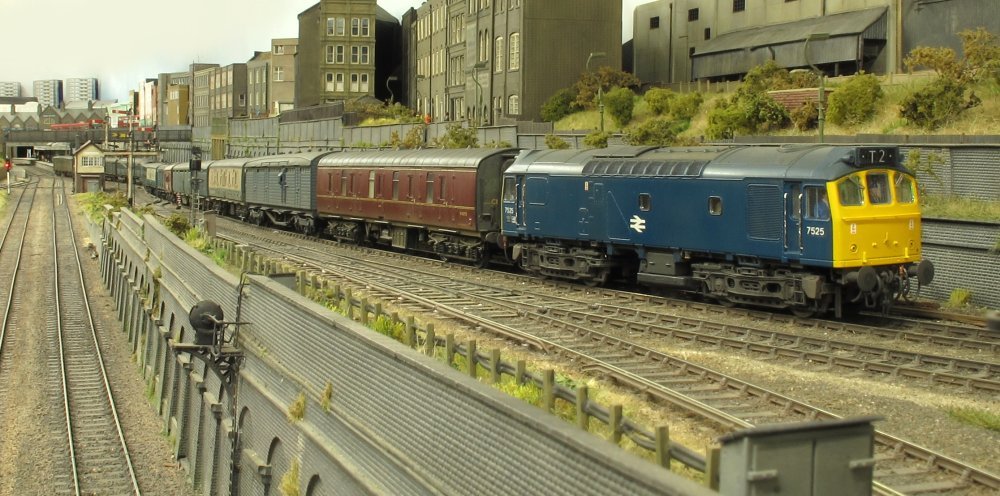 All this recent parcels stock activity has resulted in a maintenance program, and bringing
my other parcels vehicles out of storage, regauging wheels and lubricating the pinpoint axles
(especially on those that were squeaking). This view shows Class 25 number 7525 at the head
of a mixed parcels rake. Additional refinement work is now planned, particularly on the
leading maroon BG which will have the platform removed above the gangway, roof ribs smoothed
out, and the coach ends repainted body colour.... watch this space.
All this recent parcels stock activity has resulted in a maintenance program, and bringing
my other parcels vehicles out of storage, regauging wheels and lubricating the pinpoint axles
(especially on those that were squeaking). This view shows Class 25 number 7525 at the head
of a mixed parcels rake. Additional refinement work is now planned, particularly on the
leading maroon BG which will have the platform removed above the gangway, roof ribs smoothed
out, and the coach ends repainted body colour.... watch this space.
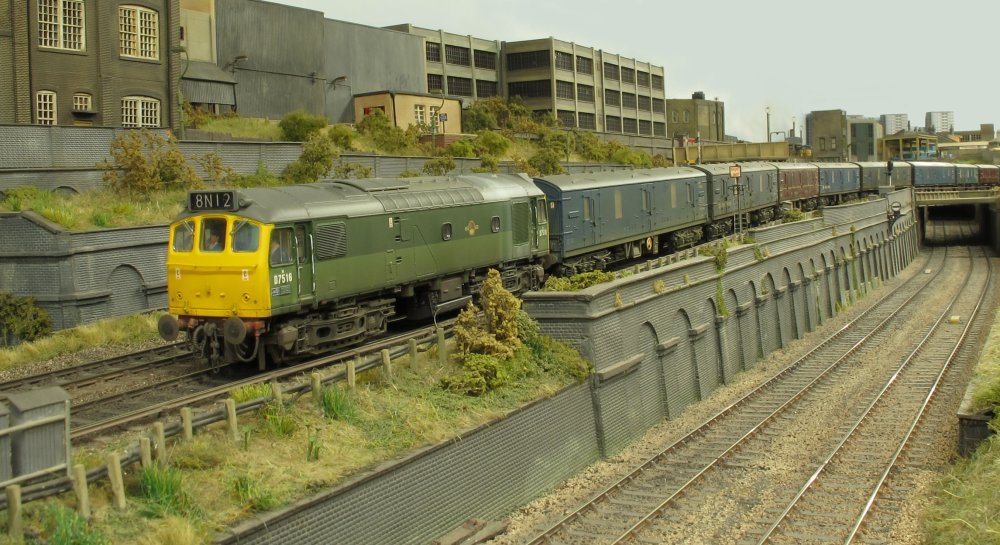 Another Class 25 - 7516 heads the opposite way with a long rake of GUVs and CCTs, both being
a mix of Bachmann and Lima models.
Another Class 25 - 7516 heads the opposite way with a long rake of GUVs and CCTs, both being
a mix of Bachmann and Lima models.
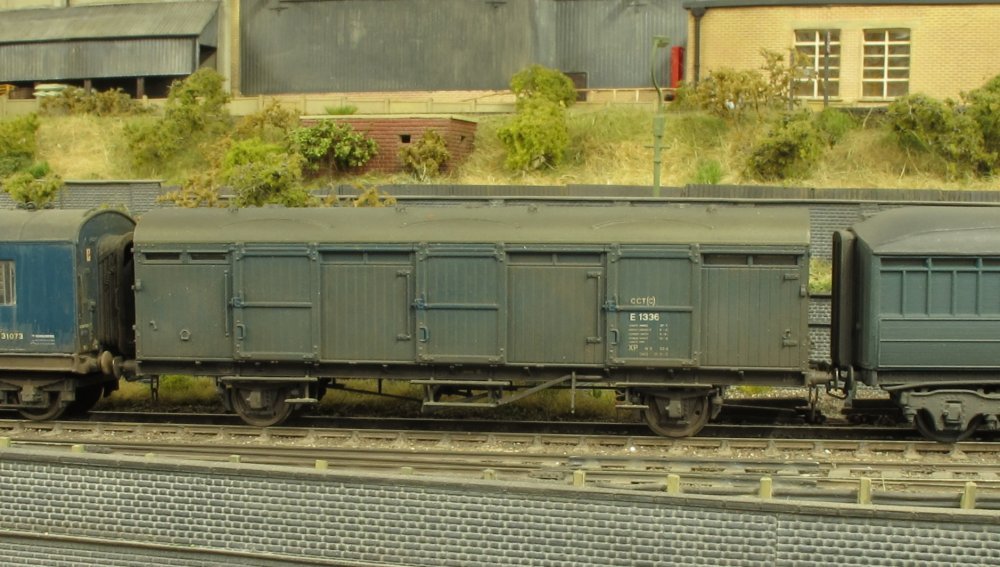 Here's another ex-LNER CCT E1336 (Hornby RTR) which has been in my fleet for some time but
not used due to regular derailing. Lacking pinpoint axles and fitted with a peculiar inside
bearing arrangement, the sidefloat of the axle has been reduced with washers and the weight
of the vehicle increased with lead flashing installed underneath to improve road handling.
Here's another ex-LNER CCT E1336 (Hornby RTR) which has been in my fleet for some time but
not used due to regular derailing. Lacking pinpoint axles and fitted with a peculiar inside
bearing arrangement, the sidefloat of the axle has been reduced with washers and the weight
of the vehicle increased with lead flashing installed underneath to improve road handling.
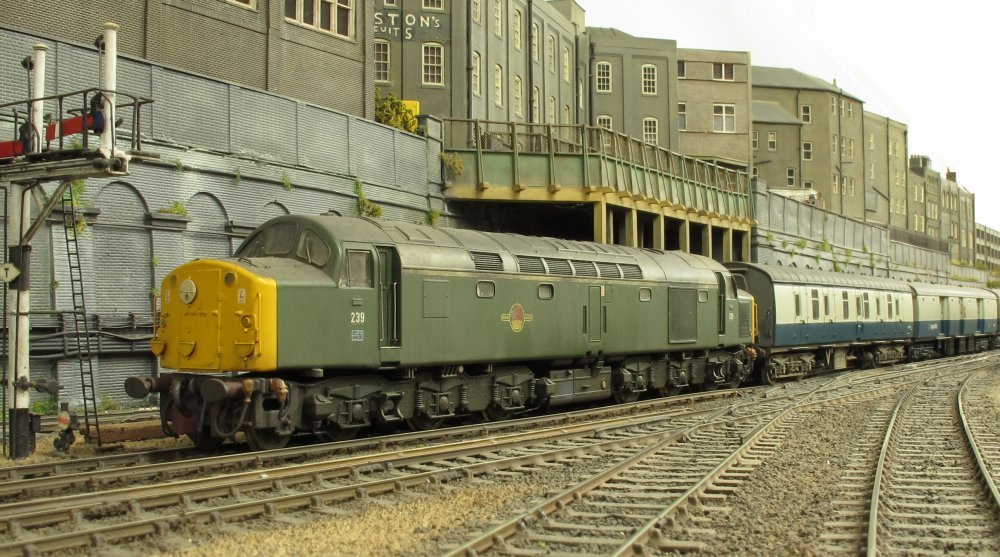 Here's the 'Down Mail' headed by English Electric type 4 number 239. Again, the BGs in this
rake are also due into works for refinements as previously mentioned with the maroon BG. A
short video has been put together featuring the parcels and mail trains featured here -
please see at the bottom of the page for details and link.
Here's the 'Down Mail' headed by English Electric type 4 number 239. Again, the BGs in this
rake are also due into works for refinements as previously mentioned with the maroon BG. A
short video has been put together featuring the parcels and mail trains featured here -
please see at the bottom of the page for details and link.
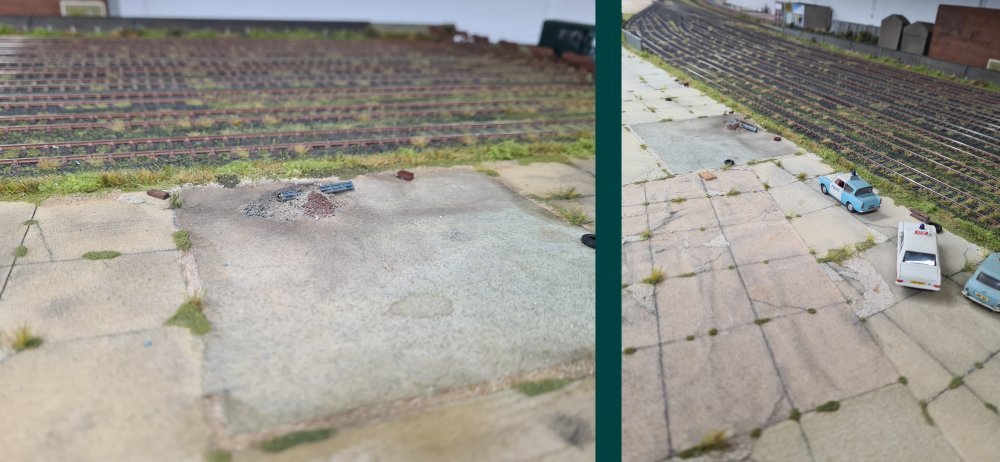 The corner of the baseboard on the new Ferry Road layout isn't really big enough for much
in the way of three-dimensional development, so rather than a bare plywood finish, the
surface has been clad with sandpaper to represent concrete. It can be assumed this area was
once industrial, with any buildings razed to the ground with nature starting to take over.
A flat area also makes things easier for reaching over and coupling wagons in the exchange sidings.
The corner of the baseboard on the new Ferry Road layout isn't really big enough for much
in the way of three-dimensional development, so rather than a bare plywood finish, the
surface has been clad with sandpaper to represent concrete. It can be assumed this area was
once industrial, with any buildings razed to the ground with nature starting to take over.
A flat area also makes things easier for reaching over and coupling wagons in the exchange sidings.

 Seeing as a the Hereford Model Centre staff were missing some hydraulic action after last
month's plethora of Class 47s, we'll revisit a day out to London, and in particular Old
Oak Common.
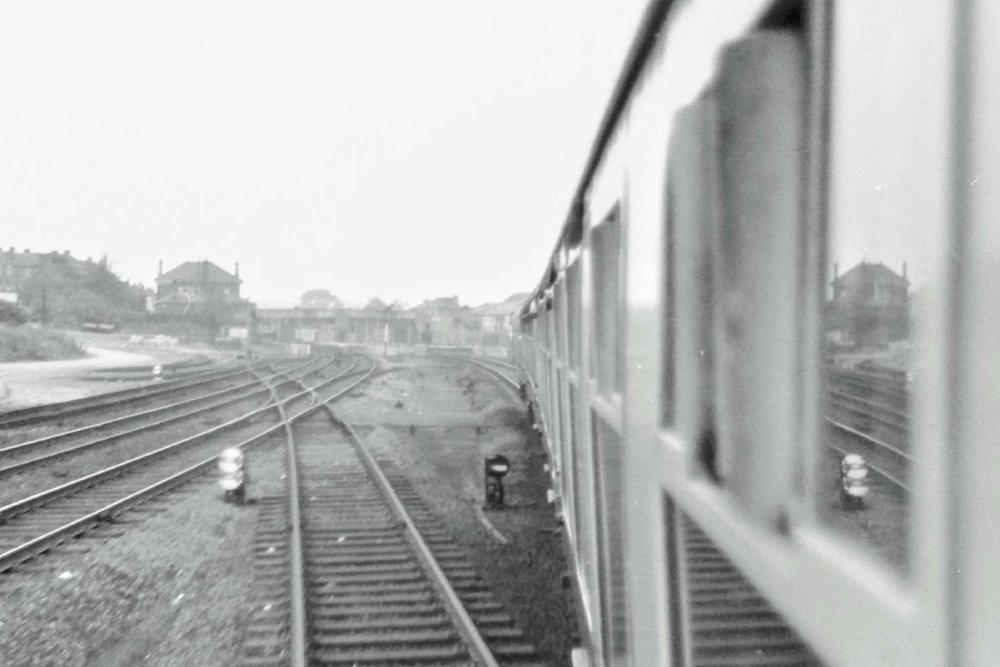
The train to London was hauled by Tinsley's (41A) celebrity Brush 4 D1575,
on the 4th of October 1969, 1M04 SO 07:15 Sheffield to St Pancras (which was not The Master
Cutler on Saturdays). This image is believed to be at Hendon on the approaches to the capital.
Seeing as a the Hereford Model Centre staff were missing some hydraulic action after last
month's plethora of Class 47s, we'll revisit a day out to London, and in particular Old
Oak Common.
The train to London was hauled by Tinsley's (41A) celebrity Brush 4 D1575,
on the 4th of October 1969, 1M04 SO 07:15 Sheffield to St Pancras (which was not The Master
Cutler on Saturdays). This image is believed to be at Hendon on the approaches to the capital.
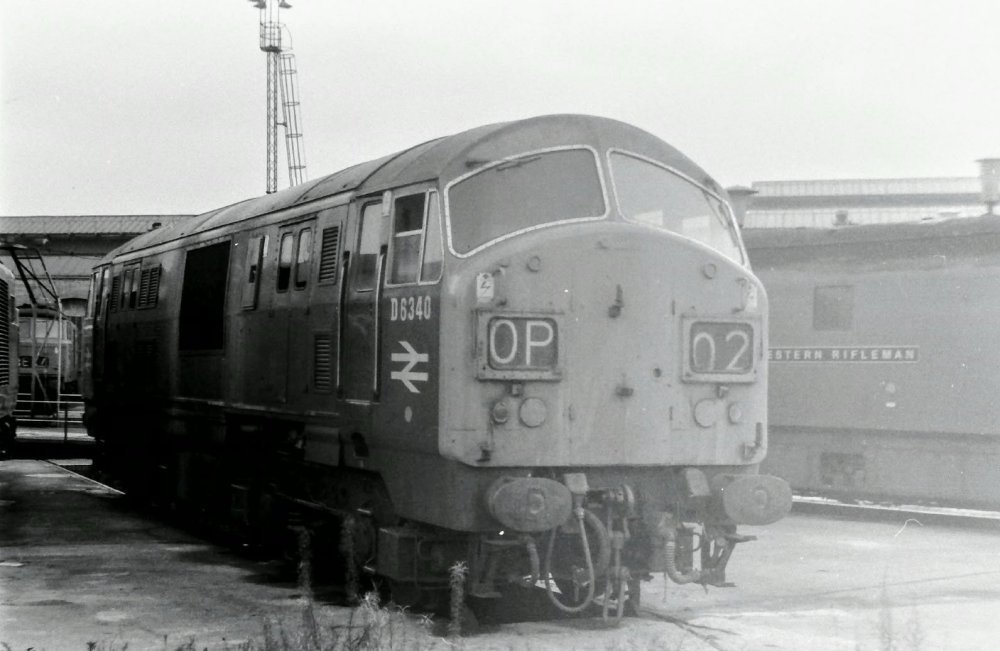 North British D6340 greeting me at 81A via the turntable entrance when arriving from
the Willesden Junction direction.
North British D6340 greeting me at 81A via the turntable entrance when arriving from
the Willesden Junction direction.
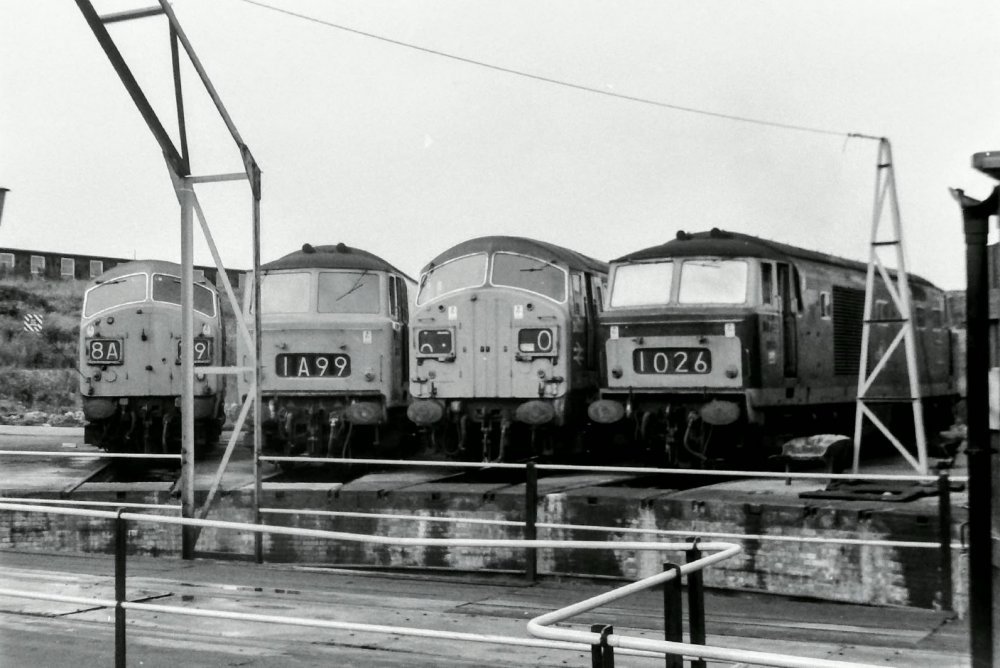 In an iconic 81A turntable shot, we see D6340, D7100, D6332 & D7050.
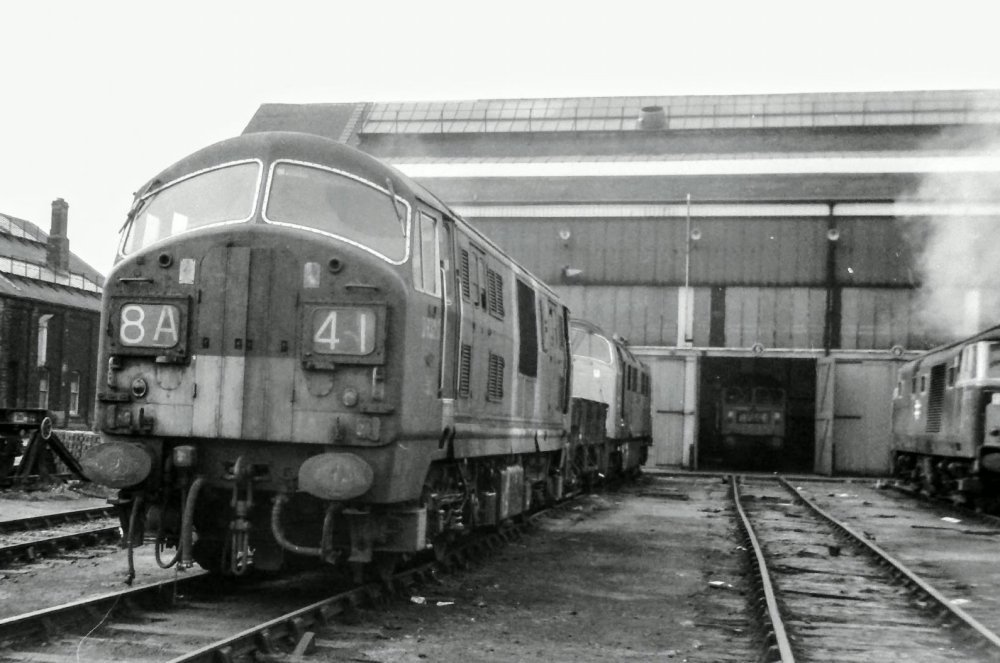 D6326, D850, D1596 and an unidentified Hymek in front of the works.
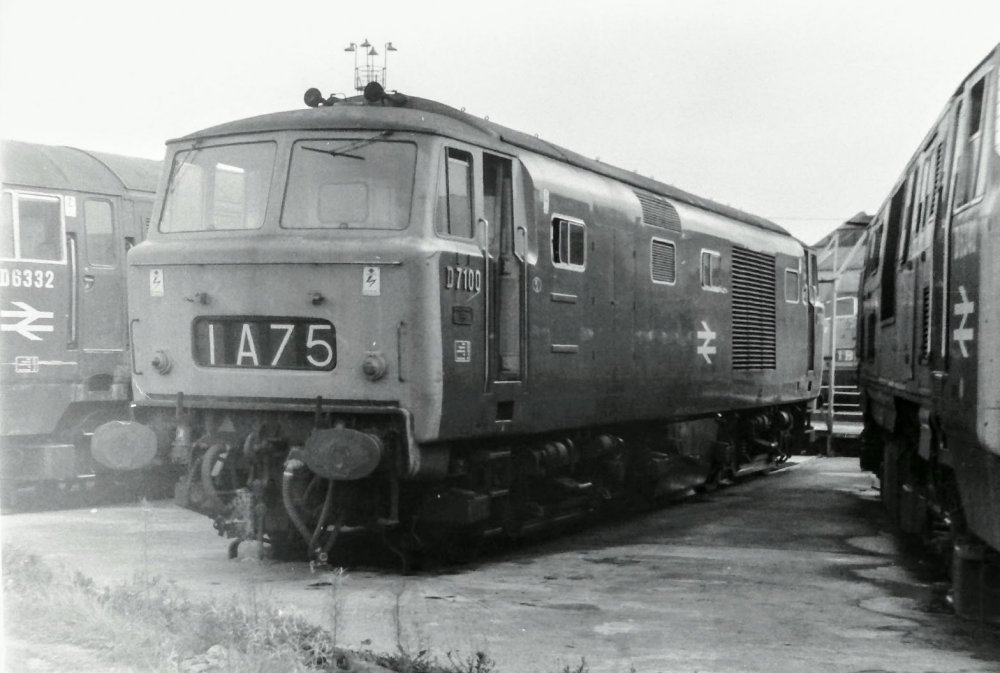 D6332, D7100 & D6340 around the turntable.
 Just so that no one runs away with the idea that I am Les Nixon in disguise, I present
a shot of D1031 Western Rifleman.
Just so that no one runs away with the idea that I am Les Nixon in disguise, I present
a shot of D1031 Western Rifleman.
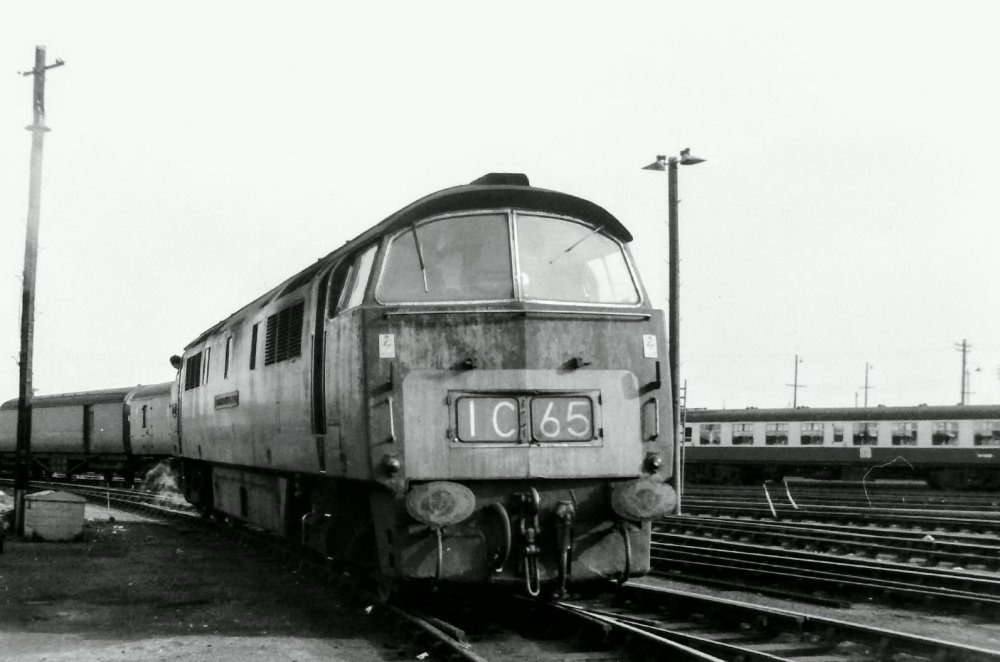 Although we've had this pic of D1019 Western Challenger before, I will include it again
for completeness as it was taken on the same day.
Although we've had this pic of D1019 Western Challenger before, I will include it again
for completeness as it was taken on the same day.
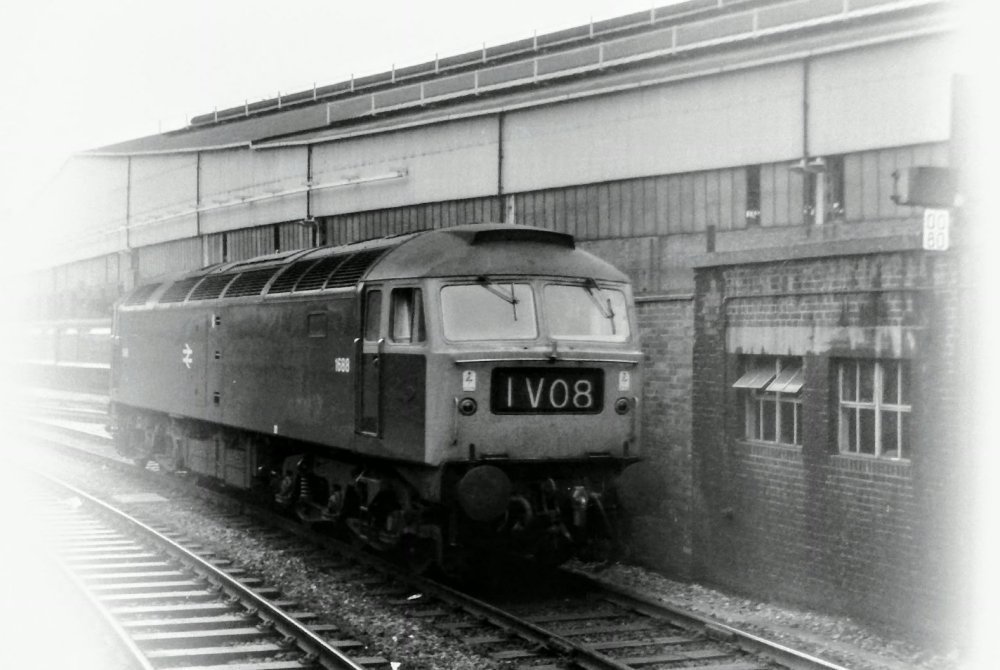 As the day was an all-London bash, a flying visit to Paddington was included. Amazingly no
hydraulics were present, so this quick shot of 1688 running out light engine will have to suffice.
As the day was an all-London bash, a flying visit to Paddington was included. Amazingly no
hydraulics were present, so this quick shot of 1688 running out light engine will have to suffice.
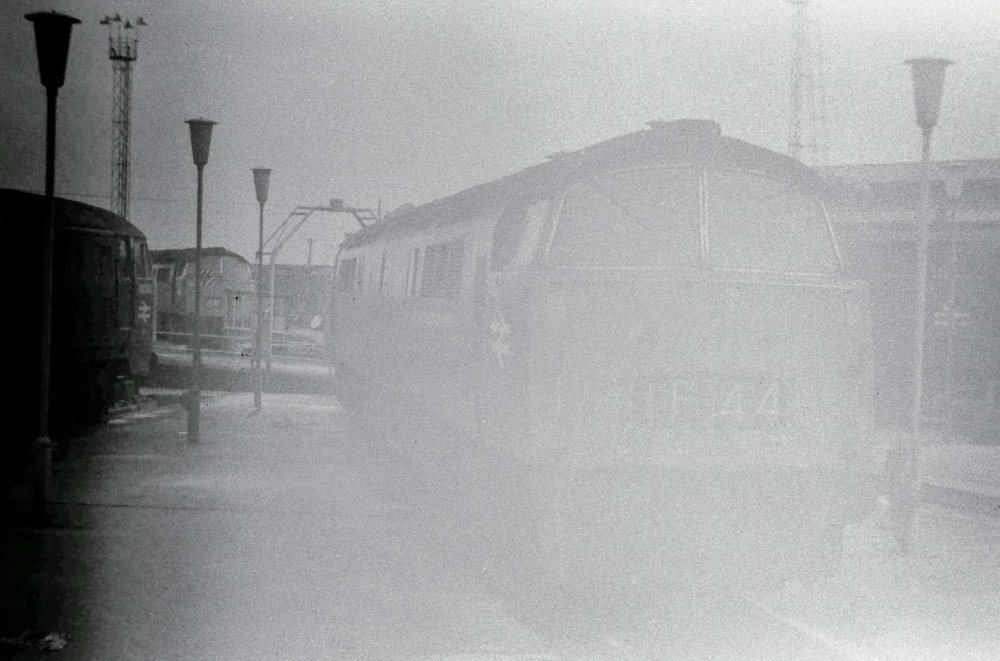
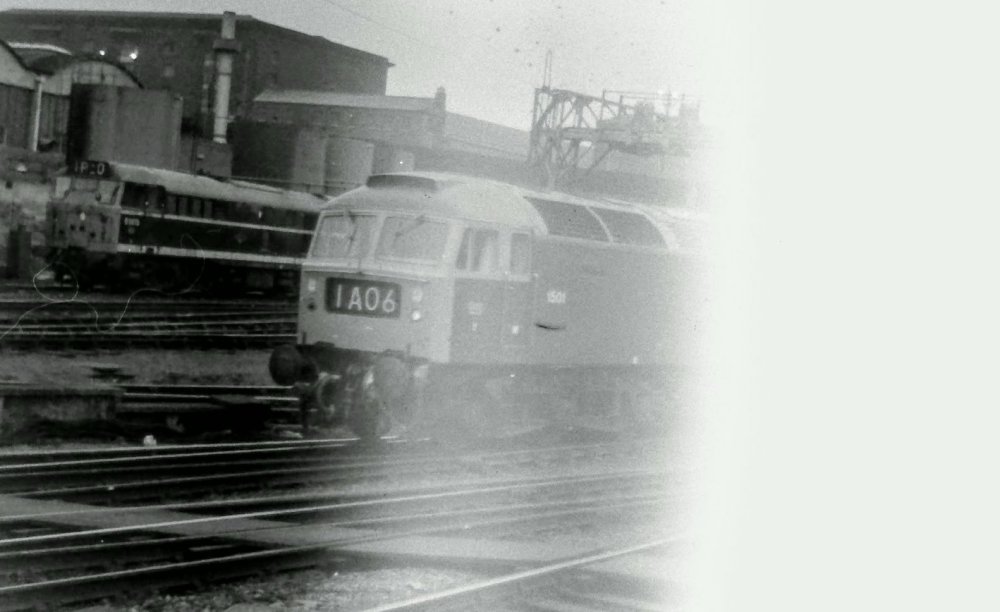 If you think the Western photograph was bad, this shows I must have been having an
intermittently bad day with the camera, as this shot of 1501 at Kings Cross shows.
Oh for
a digital camera and a TARDIS! To preserve a bit of continuity, next month will be of
shots from the same day as we orbited the smoke!
If you think the Western photograph was bad, this shows I must have been having an
intermittently bad day with the camera, as this shot of 1501 at Kings Cross shows.
Oh for
a digital camera and a TARDIS! To preserve a bit of continuity, next month will be of
shots from the same day as we orbited the smoke!
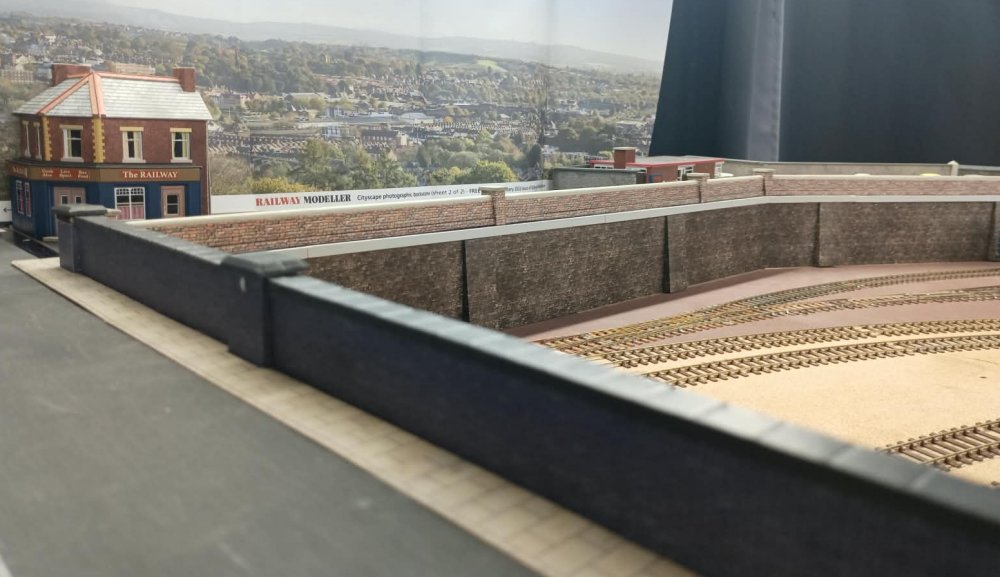 What bit of work that has been done on the layout is finishing off the road bridge walls
and a re-thinking of the road up to the Motorail facility.
A modified Metcalfe corner
shop / pub will be at either end of a row of 4 terraced houses, the startings of which
are shown here with the temporarily placed back scene. The walls have been re-clad in SMS
brick paper, with their quoins, sills and lintels added to give some relief, and the
frontage painted to cover the ropey printing.
Until I get the houses and tie them in that's
as far as I can currently go.
What bit of work that has been done on the layout is finishing off the road bridge walls
and a re-thinking of the road up to the Motorail facility.
A modified Metcalfe corner
shop / pub will be at either end of a row of 4 terraced houses, the startings of which
are shown here with the temporarily placed back scene. The walls have been re-clad in SMS
brick paper, with their quoins, sills and lintels added to give some relief, and the
frontage painted to cover the ropey printing.
Until I get the houses and tie them in that's
as far as I can currently go.

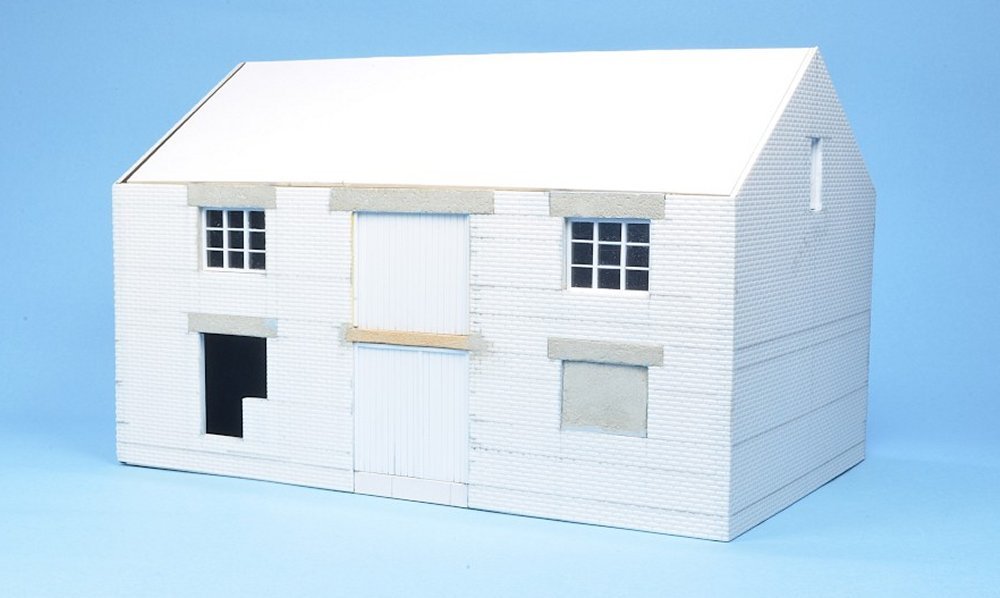 A busy summer has seen progress slow across the board, not just with regards modelling.
It's funny how inspiration sometimes strikes when you least expect it - in this case
when out for an evening walk. The prototype building has literally been on my doorstep
but I've never really noticed it until recently. As soon as I did, I just knew it'd
make an interesting project, and one that I hope to find space for on the layout in the future.
A busy summer has seen progress slow across the board, not just with regards modelling.
It's funny how inspiration sometimes strikes when you least expect it - in this case
when out for an evening walk. The prototype building has literally been on my doorstep
but I've never really noticed it until recently. As soon as I did, I just knew it'd
make an interesting project, and one that I hope to find space for on the layout in the future.
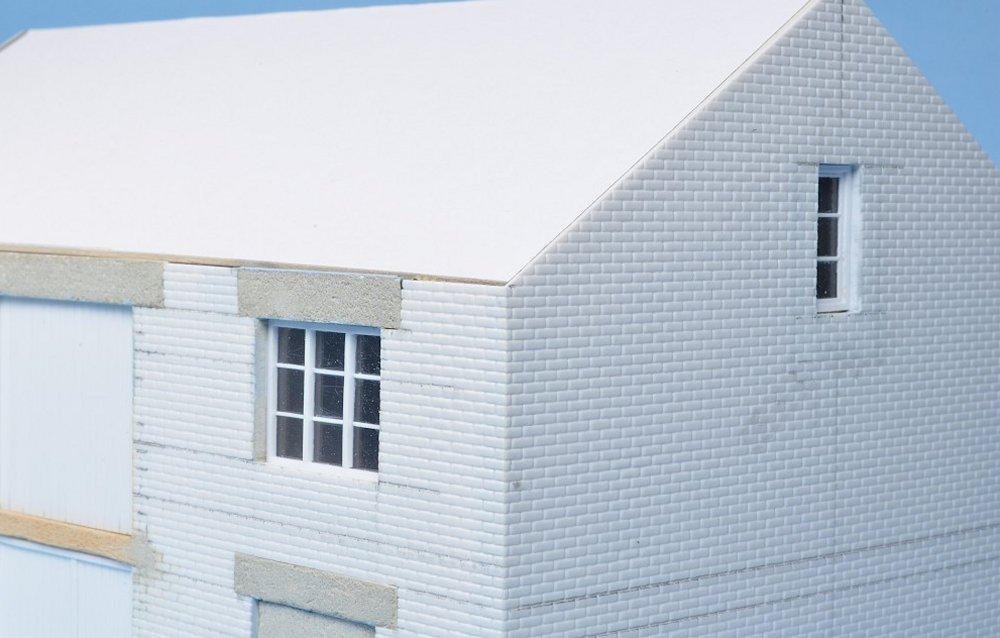 I normally construct my models from plastic sheet, however went "old school" and used card
for the basic structure - just like I did when I was younger! I'd forgotten how tactile
card is to work with. The card is then clad with embossed plastic sheet, with extra care
being taken to get nice, crisp corners. Any gaps you can see in the photos are the result
of dry fitting - these will disappear when the model is fully built.
I normally construct my models from plastic sheet, however went "old school" and used card
for the basic structure - just like I did when I was younger! I'd forgotten how tactile
card is to work with. The card is then clad with embossed plastic sheet, with extra care
being taken to get nice, crisp corners. Any gaps you can see in the photos are the result
of dry fitting - these will disappear when the model is fully built.
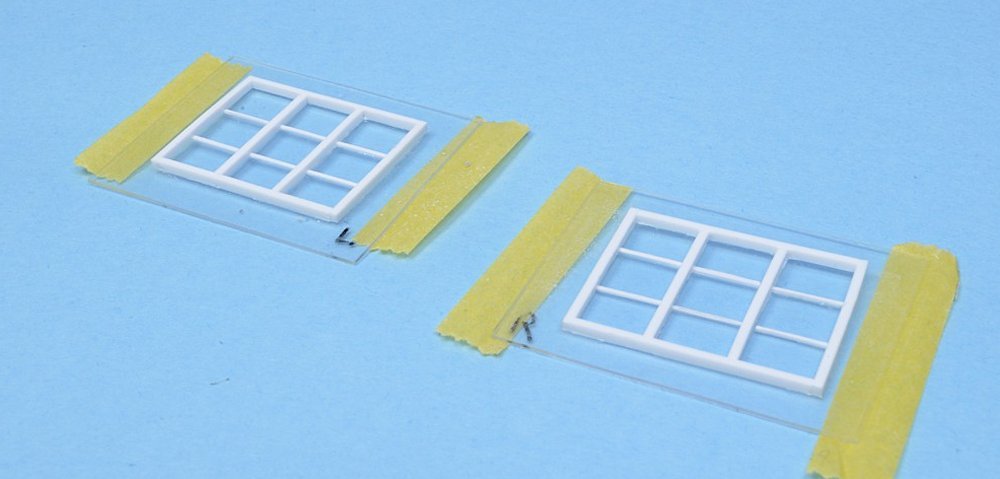 Windows are scratchbuilt from plastic section - these are much simplified as the accurate
representations I made first just looked wrong in 4mm scale.
Windows are scratchbuilt from plastic section - these are much simplified as the accurate
representations I made first just looked wrong in 4mm scale.

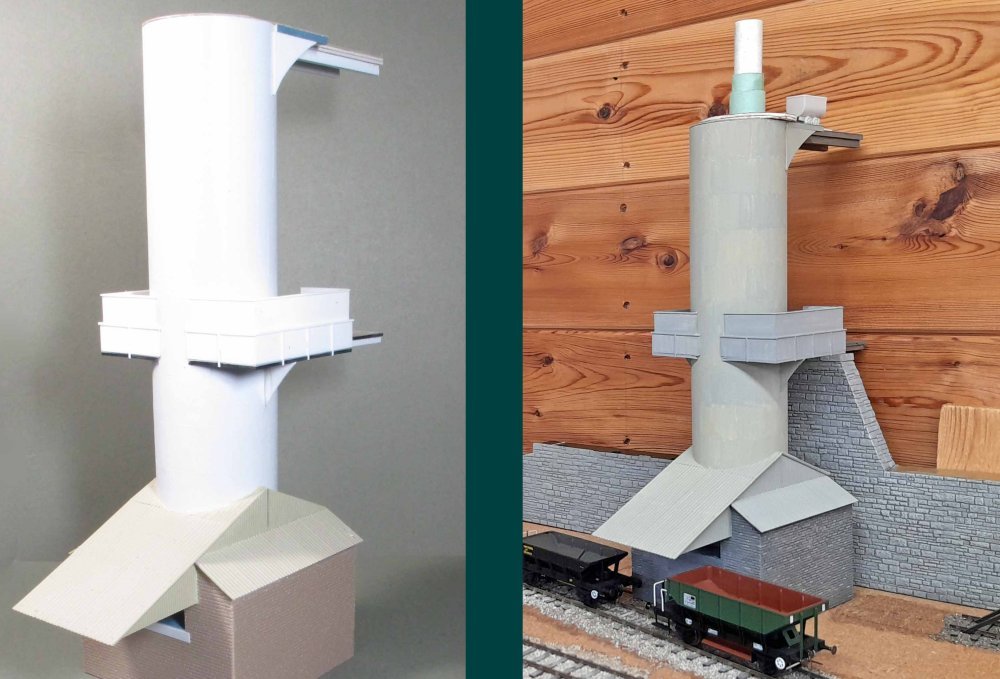 Continued progress with the Spencer kiln. The lower platform is where the fuel would be
added. Arrangements appear to have varied, either with a hoist from ground level or (as
I’ve assumed at Kentside), coal wagons were run into the main quarry and unloaded into
narrow gauge ‘skips’; then by various means these were run up to the kiln feed gantry at
the required height. The upper platform is where crushed lime would be inserted, usually
via a gantry arrangement higher up from the quarry. Various handrails still to be added,
plus of course the chimney, which had openings around its base where the stone could be
fed into the kiln. With painting underway on the Spencer Kiln, note the stone abutment
that supports the lower (fuel) gantry. This arrangement has been inspired by the one at
Sandside, although closer inspection of photos may suggest there were two gantries at
this level. On the upper gantry can be seen a little ‘mine tub’ which I printed off,
having found the STL file on the Thingiverse website. Mock-up chimney in evidence here,
pending creating a suitable 3D print.
Continued progress with the Spencer kiln. The lower platform is where the fuel would be
added. Arrangements appear to have varied, either with a hoist from ground level or (as
I’ve assumed at Kentside), coal wagons were run into the main quarry and unloaded into
narrow gauge ‘skips’; then by various means these were run up to the kiln feed gantry at
the required height. The upper platform is where crushed lime would be inserted, usually
via a gantry arrangement higher up from the quarry. Various handrails still to be added,
plus of course the chimney, which had openings around its base where the stone could be
fed into the kiln. With painting underway on the Spencer Kiln, note the stone abutment
that supports the lower (fuel) gantry. This arrangement has been inspired by the one at
Sandside, although closer inspection of photos may suggest there were two gantries at
this level. On the upper gantry can be seen a little ‘mine tub’ which I printed off,
having found the STL file on the Thingiverse website. Mock-up chimney in evidence here,
pending creating a suitable 3D print.
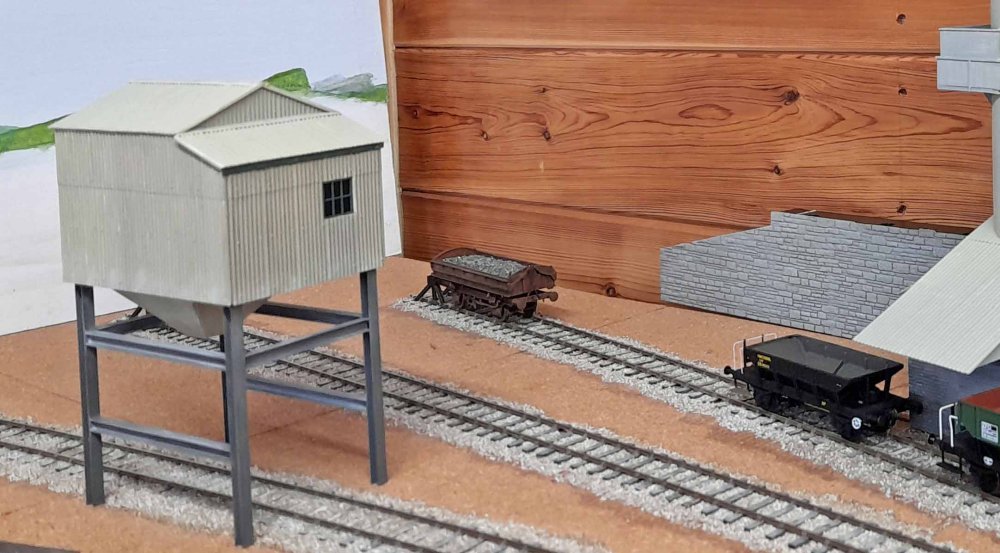 Here's the crushed stone loading hopper, now clad with Wills corrugated asbestos and painted.
A long conveyor bringing stone from further up in the quarry still needs to be created of course.
Here's the crushed stone loading hopper, now clad with Wills corrugated asbestos and painted.
A long conveyor bringing stone from further up in the quarry still needs to be created of course.
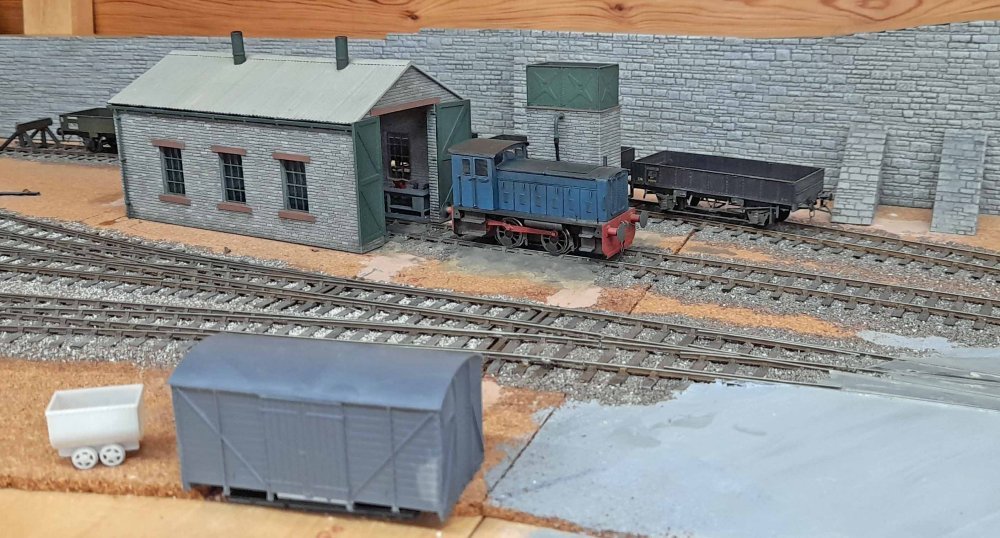 Moving on, the quarry engine shed now has its doors fitted and look closely inside (see next
photo). In the foreground is one of the 3D printed mine tubs.
Moving on, the quarry engine shed now has its doors fitted and look closely inside (see next
photo). In the foreground is one of the 3D printed mine tubs.
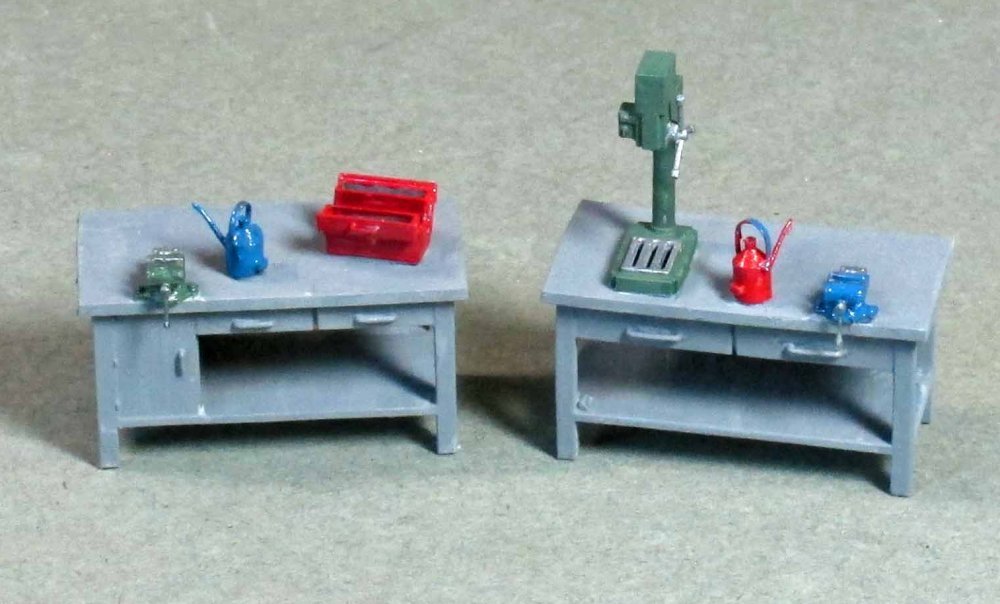 Two workbenches complete with various tools, courtesy of Modelu. These can just be glimpsed
inside the quarry loco shed.
Two workbenches complete with various tools, courtesy of Modelu. These can just be glimpsed
inside the quarry loco shed.
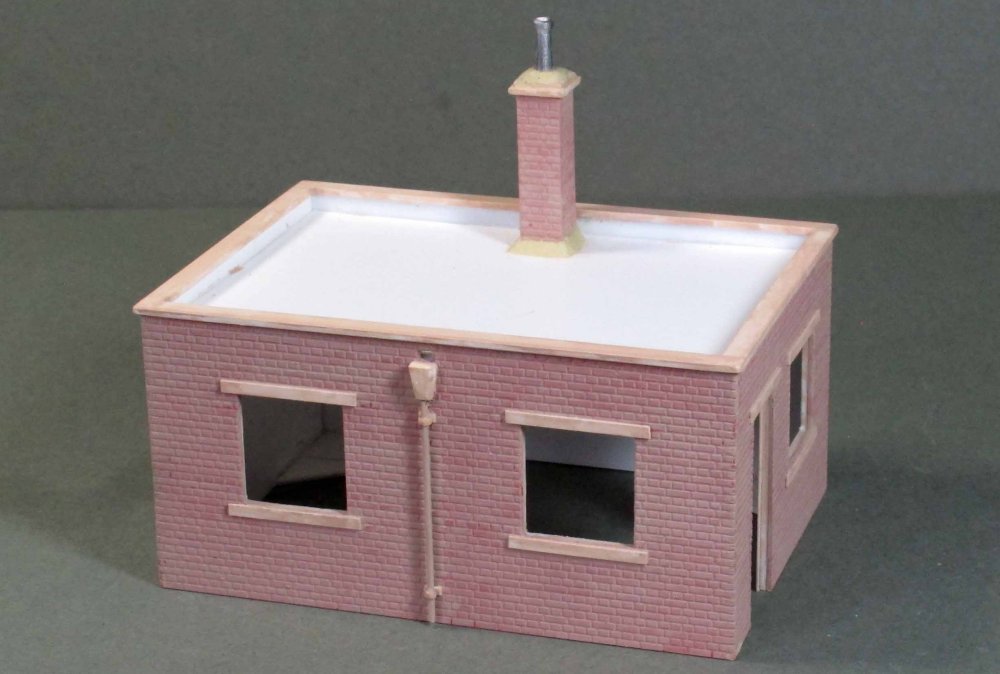 At this point I felt the area in front of the Spencer kiln looked a bit bare, so came up with
what you might call some sort of an office building, inspired by a structure at Sandside
quarry. All made out of Plastikard and in here in undercoat / mortar base colour (Humbrol 103).
At this point I felt the area in front of the Spencer kiln looked a bit bare, so came up with
what you might call some sort of an office building, inspired by a structure at Sandside
quarry. All made out of Plastikard and in here in undercoat / mortar base colour (Humbrol 103).
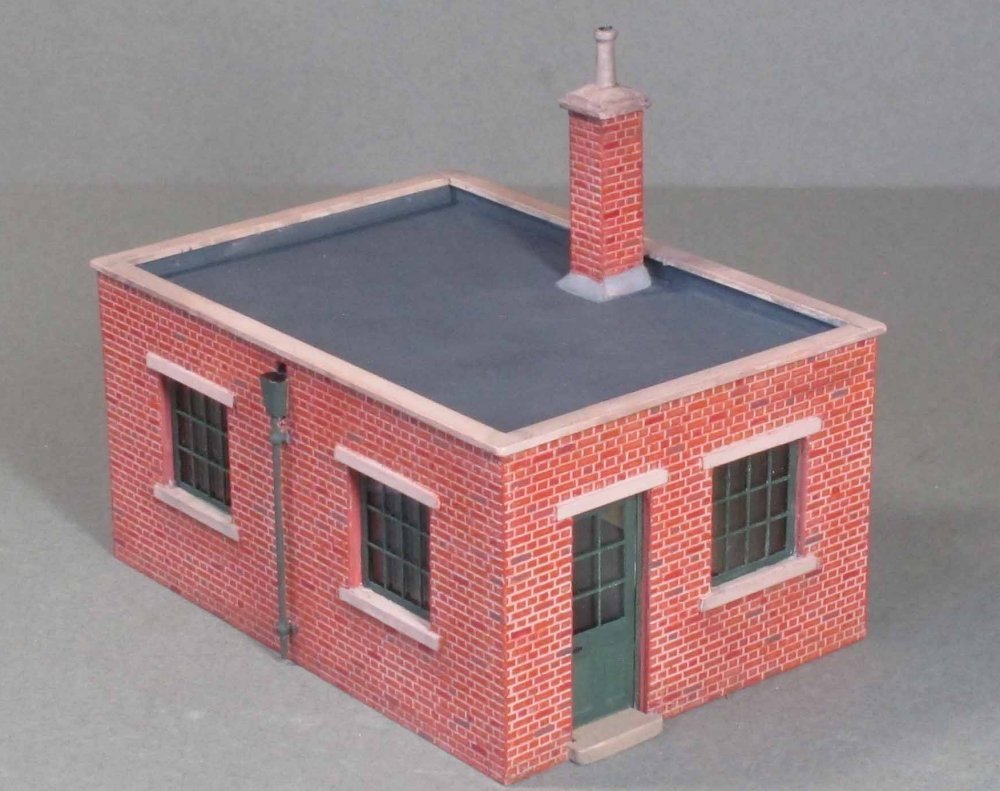 And here we see the little building finished. Painting was my usual method of dry brushing
with a mix of Humbrol 62 & 73 and then picking out individual bricks with various shades.
The windows and door were etched parts from my stash of ‘come in useful one day’ parts.
And here we see the little building finished. Painting was my usual method of dry brushing
with a mix of Humbrol 62 & 73 and then picking out individual bricks with various shades.
The windows and door were etched parts from my stash of ‘come in useful one day’ parts.
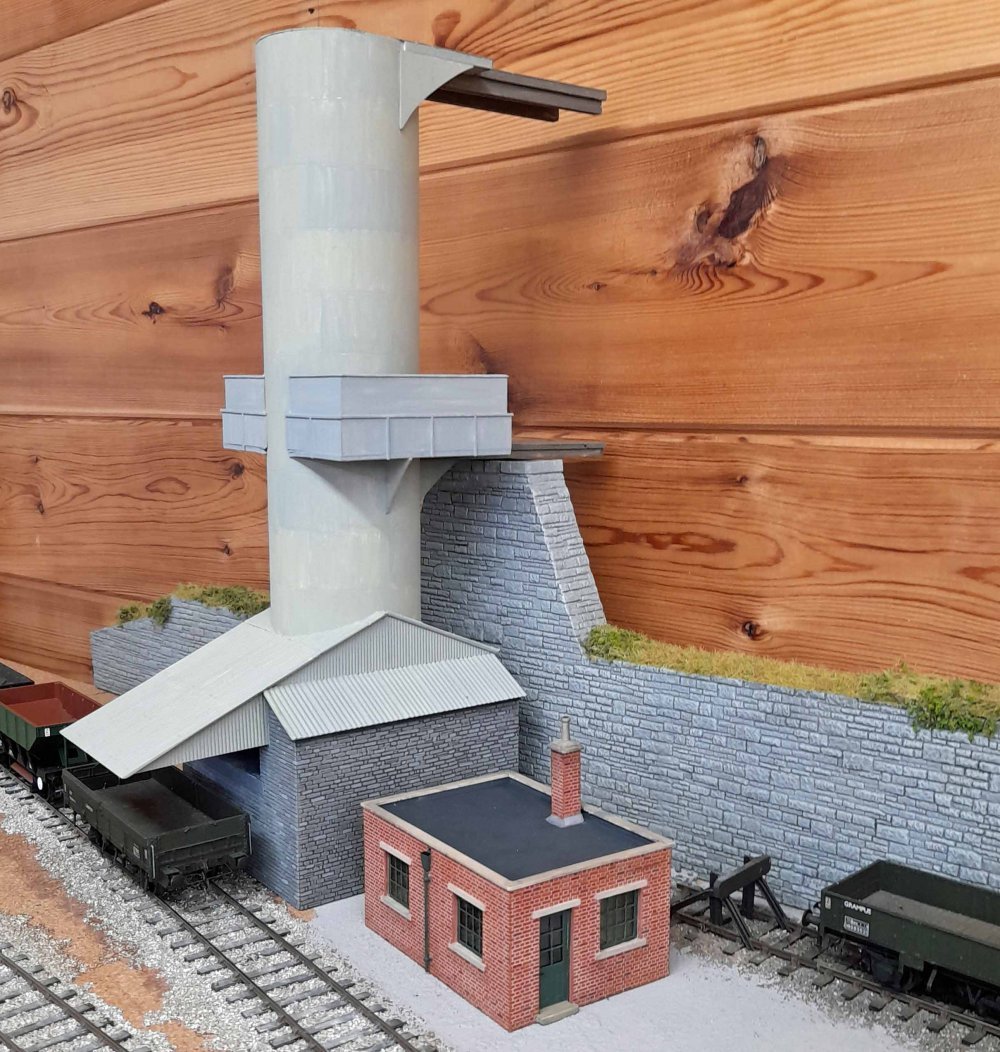 And this is the approximate position the building will occupy within the quarry. Note also
I’ve been experimenting with static grass etc. This was necessary here in particular as
this portion of the surrounding wall has been fixed permanently in place, so it was easier
to work up the scenic cover beforehand to avoid me having to stretch over the layout!
And this is the approximate position the building will occupy within the quarry. Note also
I’ve been experimenting with static grass etc. This was necessary here in particular as
this portion of the surrounding wall has been fixed permanently in place, so it was easier
to work up the scenic cover beforehand to avoid me having to stretch over the layout!
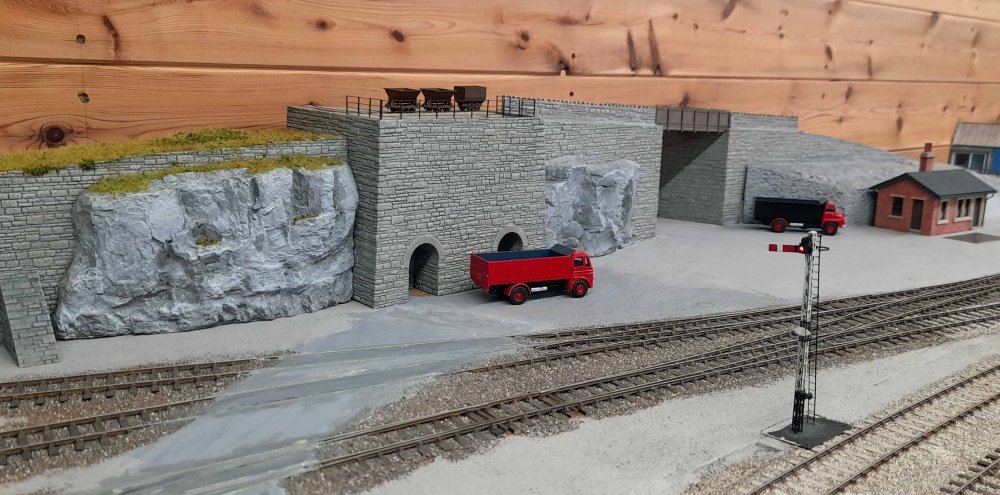 Further evidence of scenic development and a start being made on representing bare ground
cover within the quarry.
Further evidence of scenic development and a start being made on representing bare ground
cover within the quarry.
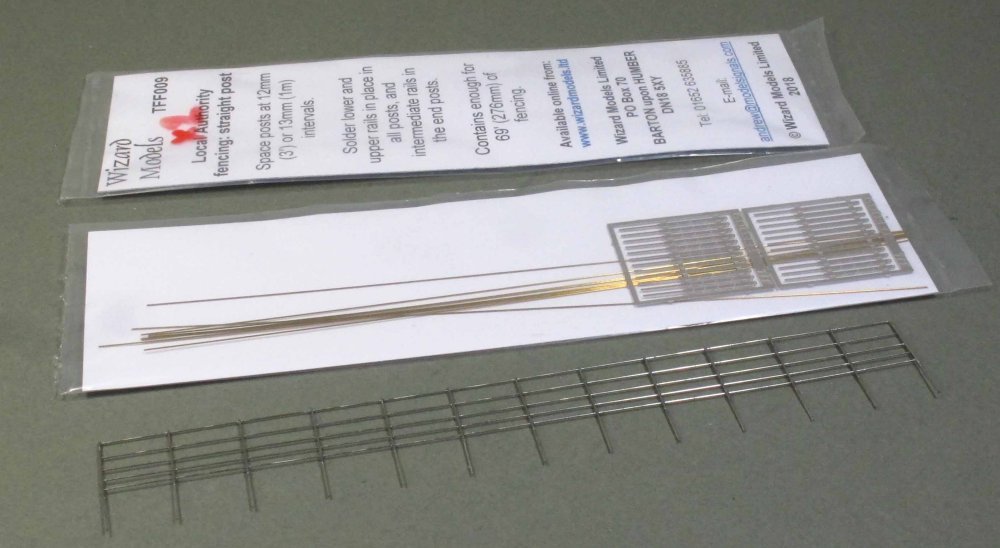 Not too far away, attention has been turned to completing the remaining wrought iron fencing
on Kentside down station platform – no more risk of passengers falling off down the bank! As
it happens, this etched fencing from Wizard Models/51L is pretty much bang on for what was
used at Greenodd; thus perfect for what was required. Quite delicate to make up but certainly looks the part.
Not too far away, attention has been turned to completing the remaining wrought iron fencing
on Kentside down station platform – no more risk of passengers falling off down the bank! As
it happens, this etched fencing from Wizard Models/51L is pretty much bang on for what was
used at Greenodd; thus perfect for what was required. Quite delicate to make up but certainly looks the part.
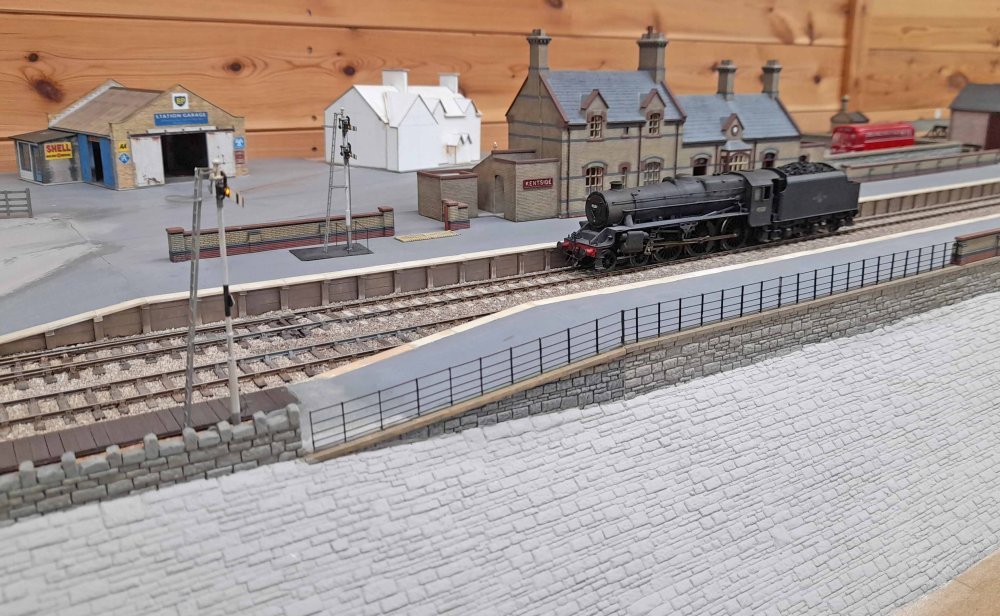 In this final view for September, the aforementioned fencing has now been installed at Kentside.
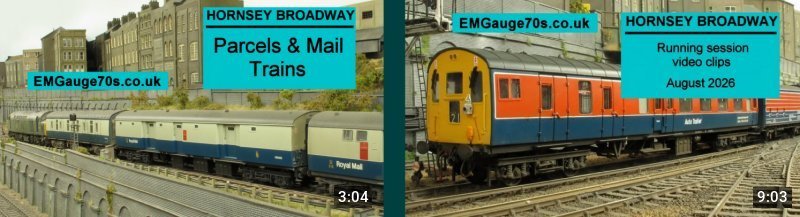
Please click on the above image to view the latest videos, featuring a short video on Parcels
& Mail trains at Hornsey Broadway, and some clips from the August running sessions.
In this final view for September, the aforementioned fencing has now been installed at Kentside.
Please click on the above image to view the latest videos, featuring a short video on Parcels
& Mail trains at Hornsey Broadway, and some clips from the August running sessions.