*********************************************************************************************************************************************
AUGUST 2026 UPDATE
*********************************************************************************************************************************************
KIER HARDY
*********************************************************************************************************************************************
STEVE CARTER
*********************************************************************************************************************************************
MIKE WHITCHURCH
*********************************************************************************************************************************************
ALAN DEWEY
*********************************************************************************************************************************************
TIM SHACKLETON
*********************************************************************************************************************************************
KARL CROWTHER
*********************************************************************************************************************************************
*********************************************************************************************************************************************

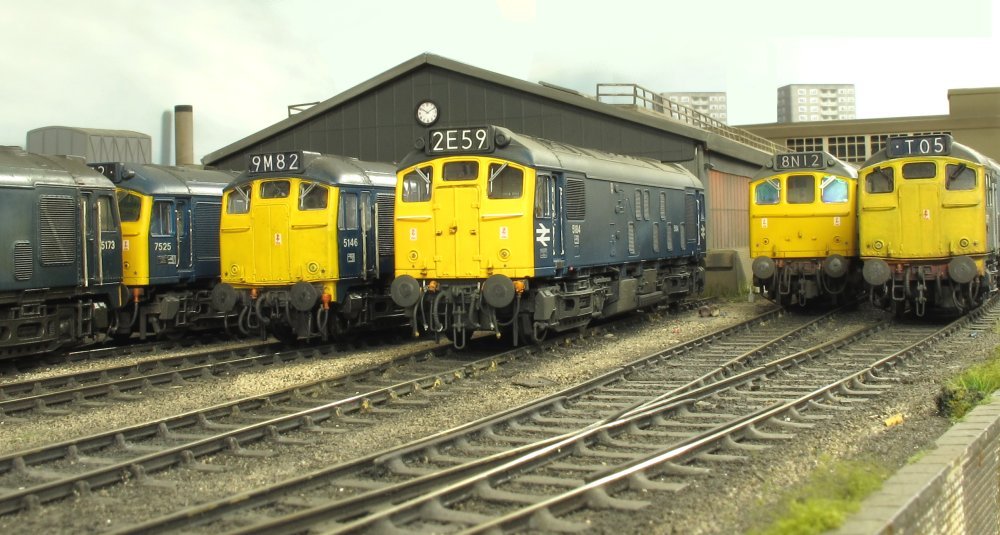 A snapshot of the Hornsey Sulzer type 2 fleet, featuring from left to right, 5173 from
Holbeck, 7525 (Willesden), 5146 (Longsight Class 24/1), 5184 (Cricklewood), D7516
(Willesden) and D5153 (Longsight) at rest on Hornsey Road depot.
A snapshot of the Hornsey Sulzer type 2 fleet, featuring from left to right, 5173 from
Holbeck, 7525 (Willesden), 5146 (Longsight Class 24/1), 5184 (Cricklewood), D7516
(Willesden) and D5153 (Longsight) at rest on Hornsey Road depot.
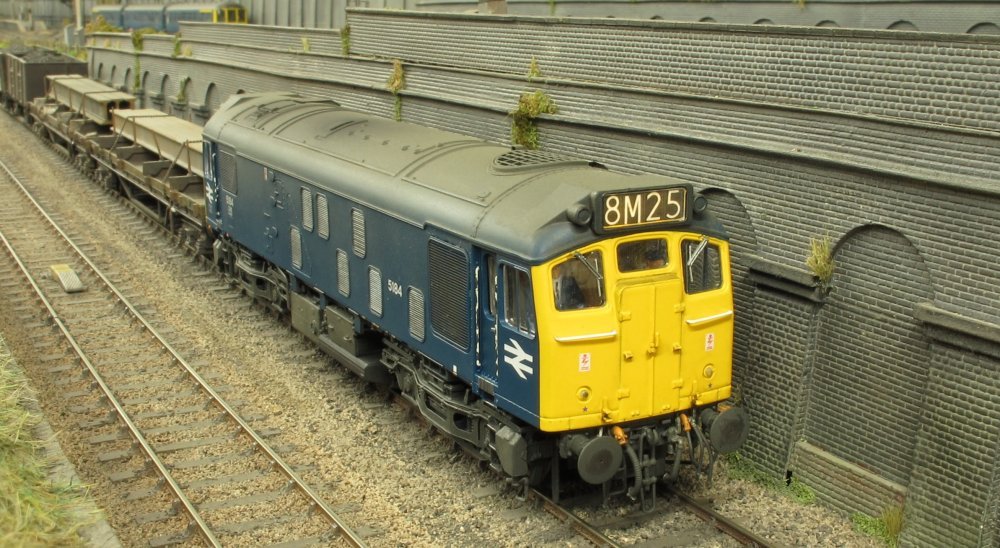 Class 25/1 5184 is the latest locomotive into the fleet, seen here after the fitment of a
driver / secondman, and weathering to depict 5184 from a photograph of it at Aylesbury
in the early 1970s. This Sutton Locomotive Workshop model is one of a batch of advanced
decorated samples for evaluation and testing before expected delivery in Autumn 2026.
Class 25/1 5184 is the latest locomotive into the fleet, seen here after the fitment of a
driver / secondman, and weathering to depict 5184 from a photograph of it at Aylesbury
in the early 1970s. This Sutton Locomotive Workshop model is one of a batch of advanced
decorated samples for evaluation and testing before expected delivery in Autumn 2026.
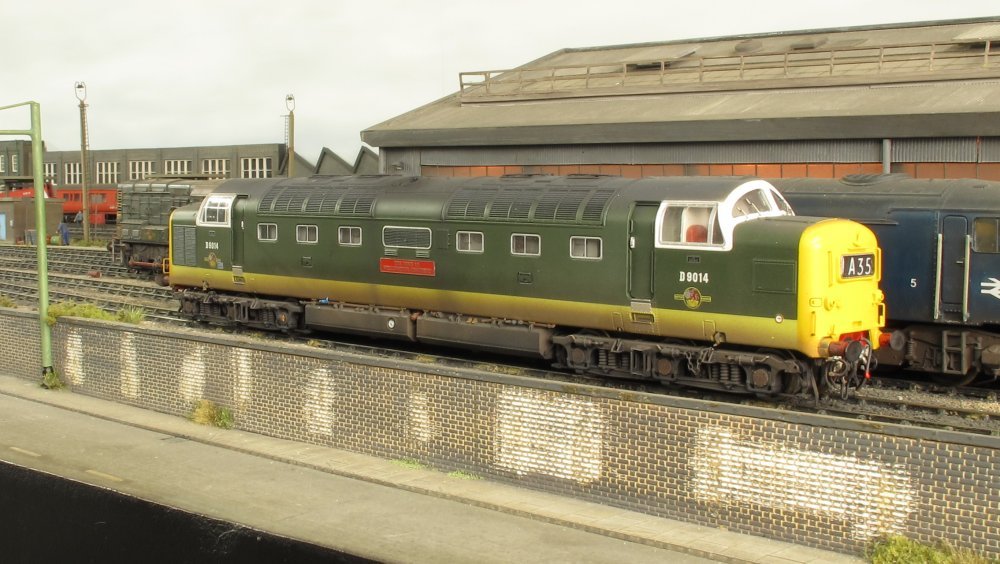 Here's a couple of snaps of visiting locos from Greg's Shenston Road fleet, starting off
with Deltic D9014 The Duke of Wellington's Regiment (Accurascale)....
Here's a couple of snaps of visiting locos from Greg's Shenston Road fleet, starting off
with Deltic D9014 The Duke of Wellington's Regiment (Accurascale)....
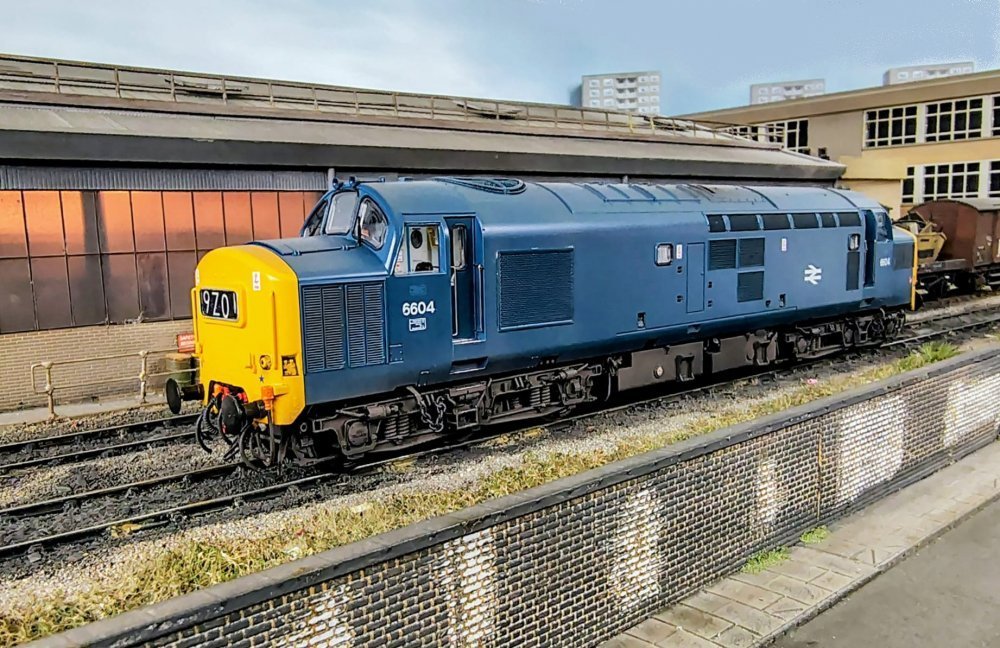 .... And English Electric type 3 number 6604 finished off with light weathering (Bachmann).
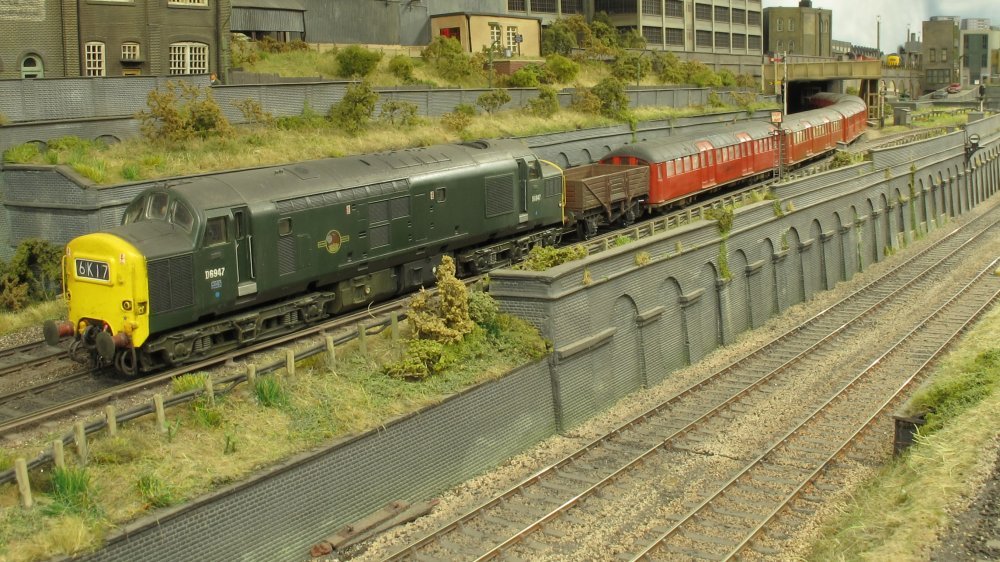 Meanwhile out on the mainline, Stratford allocated D6947 is seen hauling withdrawn 1938
tube stock, destined for a Midlands scrapyard.
Meanwhile out on the mainline, Stratford allocated D6947 is seen hauling withdrawn 1938
tube stock, destined for a Midlands scrapyard.
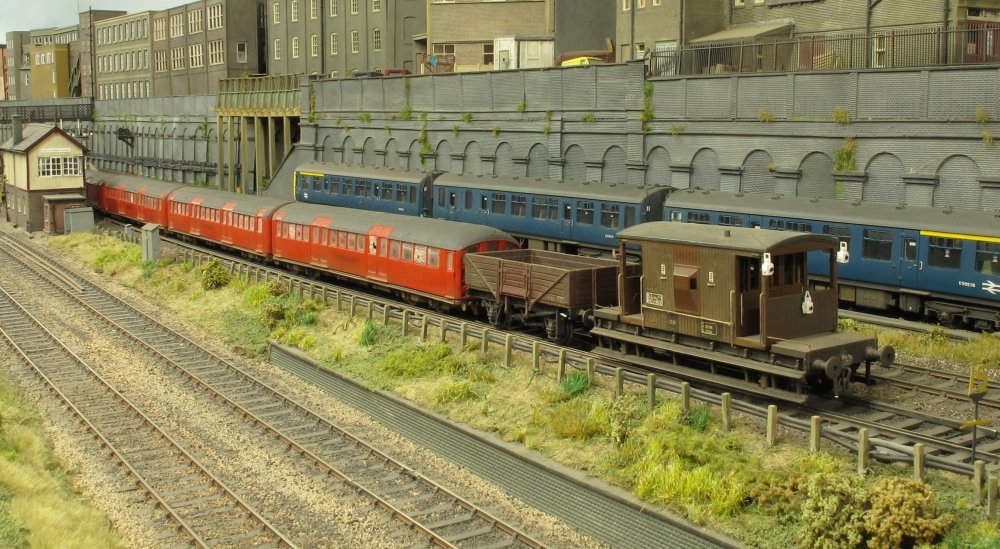 A view of the rear of the train which utilises ex-revenue 5-plank converter wagons.
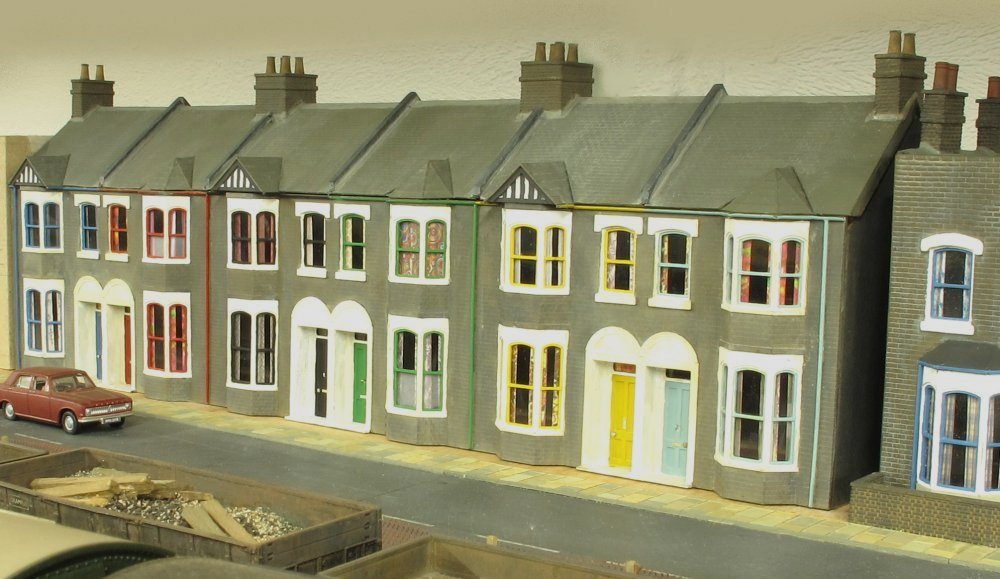 There's been some progress on the terraced houses on North Ferry Road, which have now
been painted and glazed, and 3D chimney pots added. Next up will be some low-tone
weathering, and the construction of front walls and paths.
There's been some progress on the terraced houses on North Ferry Road, which have now
been painted and glazed, and 3D chimney pots added. Next up will be some low-tone
weathering, and the construction of front walls and paths.

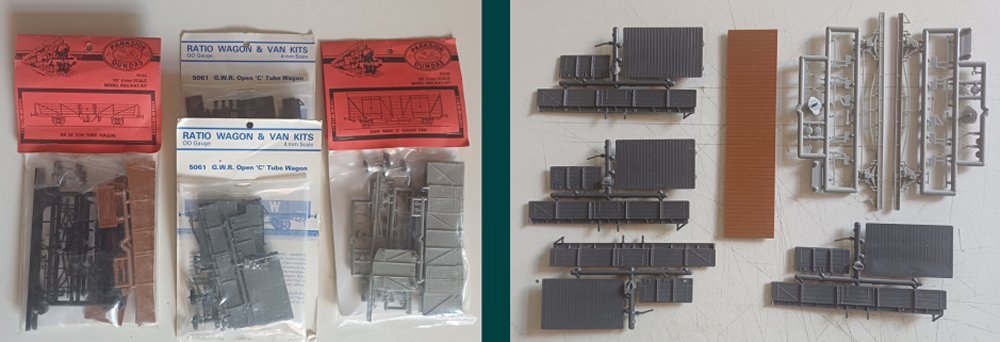 A family bereavement took its toll on my modelling output which was then further compounded
by the loss of my modelling room due to house renovations being brought forward. This meant
that all of my projects were hastily packed away and have now been frozen in storage. However
I have now decided to undertake some sort of project as a means of escape from concrete and
plaster dust! Fortunately my unmade kit stash was to hand and, like most of us I'm sure, it
contains kits that have now been superseded by the r-t-r manufacturers, in my case a couple
of venerable Ratio 5061 GWR Open C kits are now to be had from Rapido. Thoughts turned to
the possibility of depicting the last Open C variant in the form of a diagram O.41, one
hundred of which were produced by Swindon with another one hundred introduced by BR as their
diagram 1/446. These were unfitted vehicles 30' in length with a 19' 6" wheelbase and carried
modified RCH lifting link brake gear rather than a GWR DC type (the only difference between
the two builds were differing axle guards, RCH and BR types found respectively on the GWR /
BR wagons). Parkside Dundas PC48 kits for the GWR V22 MINK G have the same 19' 6" wheelbase
and a suitable floor can be had from their PC55 22T 1/448 TUBE kit.
A family bereavement took its toll on my modelling output which was then further compounded
by the loss of my modelling room due to house renovations being brought forward. This meant
that all of my projects were hastily packed away and have now been frozen in storage. However
I have now decided to undertake some sort of project as a means of escape from concrete and
plaster dust! Fortunately my unmade kit stash was to hand and, like most of us I'm sure, it
contains kits that have now been superseded by the r-t-r manufacturers, in my case a couple
of venerable Ratio 5061 GWR Open C kits are now to be had from Rapido. Thoughts turned to
the possibility of depicting the last Open C variant in the form of a diagram O.41, one
hundred of which were produced by Swindon with another one hundred introduced by BR as their
diagram 1/446. These were unfitted vehicles 30' in length with a 19' 6" wheelbase and carried
modified RCH lifting link brake gear rather than a GWR DC type (the only difference between
the two builds were differing axle guards, RCH and BR types found respectively on the GWR /
BR wagons). Parkside Dundas PC48 kits for the GWR V22 MINK G have the same 19' 6" wheelbase
and a suitable floor can be had from their PC55 22T 1/448 TUBE kit.
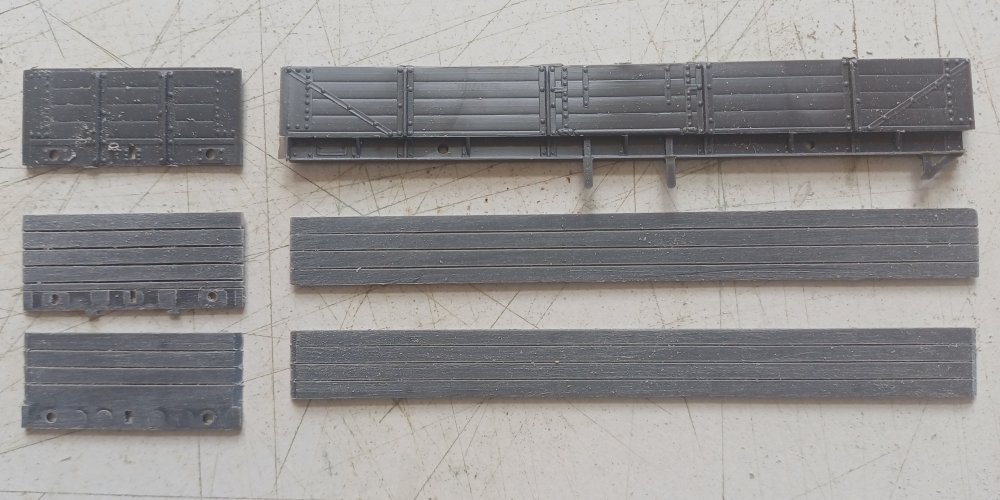 As the Ratio kits are for the shorter 25' long types then some remedial work is required to
create an O.41. This entailed the removal of the solebars along with all of the raised details
from the sides and ends. Another feature lacking with the Ratio kit is that the scribed plank
lines are absent from the interior and so have been added.
As the Ratio kits are for the shorter 25' long types then some remedial work is required to
create an O.41. This entailed the removal of the solebars along with all of the raised details
from the sides and ends. Another feature lacking with the Ratio kit is that the scribed plank
lines are absent from the interior and so have been added.
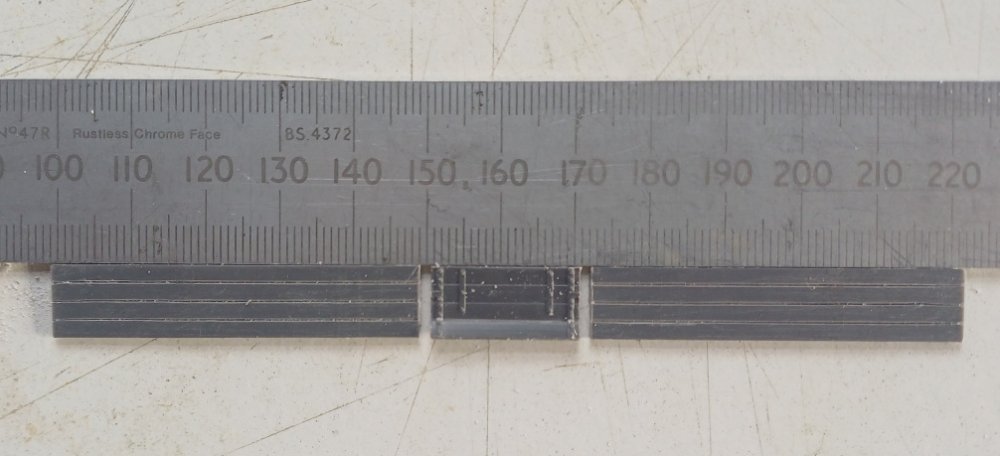 The next task involved the addition of the centre door, which fortunately for all types was
5' wide so can be taken from a second kit but will need to be modified to depict the sack
truck doors carried by later OPEN Cs including the O.41. The prepared sides are then divided
exactly in half and, when fitted with the 20mm wide door, gives the required 120mm length.
The next task involved the addition of the centre door, which fortunately for all types was
5' wide so can be taken from a second kit but will need to be modified to depict the sack
truck doors carried by later OPEN Cs including the O.41. The prepared sides are then divided
exactly in half and, when fitted with the 20mm wide door, gives the required 120mm length.
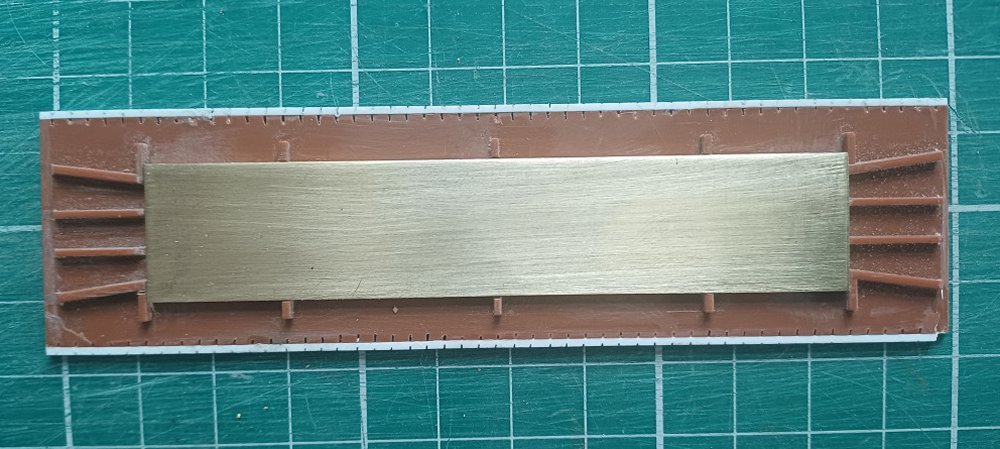 One thing I have found when building four wheeled open wagons with a longer wheel base is that
they have a tendency to twist which leads to a lopsided gait when running. To counteract this
I use 1mm thick brass sheet glued to the floor using a thin coat of epoxy resin flat which
keeps them flat and gives them a nice weight thus allowing them to run unloaded. The lattice
found underneath the floor will need to be removed but by keeping some of the sections in
place they will give the correct spacing for the solebars. The BR 1/448 tubes were 32' long
so 4mm will have to be chopped off each end of the floor and as the O.41s did not carry floor
curb rails then 1mm strips have been marked and added to each side to increase the floor width
as the body sides sit on top rather than against the side of it.
One thing I have found when building four wheeled open wagons with a longer wheel base is that
they have a tendency to twist which leads to a lopsided gait when running. To counteract this
I use 1mm thick brass sheet glued to the floor using a thin coat of epoxy resin flat which
keeps them flat and gives them a nice weight thus allowing them to run unloaded. The lattice
found underneath the floor will need to be removed but by keeping some of the sections in
place they will give the correct spacing for the solebars. The BR 1/448 tubes were 32' long
so 4mm will have to be chopped off each end of the floor and as the O.41s did not carry floor
curb rails then 1mm strips have been marked and added to each side to increase the floor width
as the body sides sit on top rather than against the side of it.
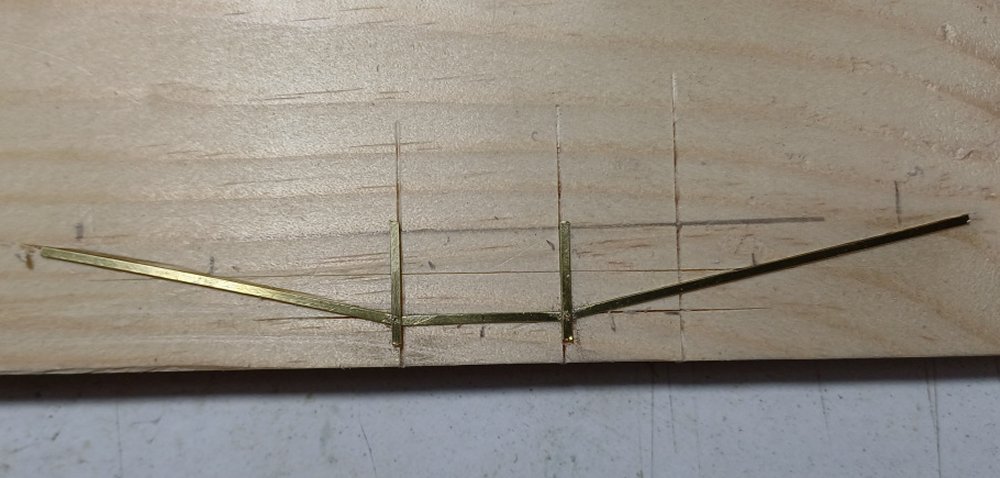 The MINK G underframe mouldings come complete with their trussing and tie bars but, especially
in the case of the tie bars, are prone to warping and so 1mm brass angle replacements have
been made using a simple jig as a former.
The MINK G underframe mouldings come complete with their trussing and tie bars but, especially
in the case of the tie bars, are prone to warping and so 1mm brass angle replacements have
been made using a simple jig as a former.
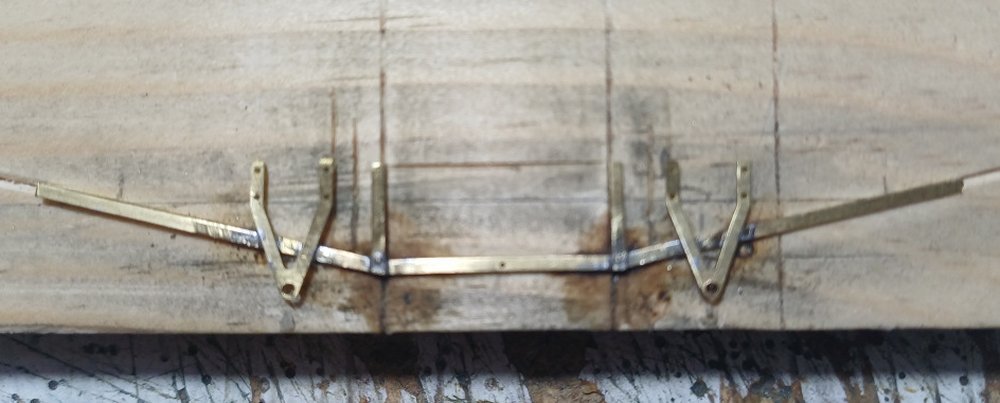 Replacement 'V's of an unknown parentage were then added to the outer face of the truss (in
reality these would be stood off from each other but by doing this it makes for a far stronger
and easier job!).
Replacement 'V's of an unknown parentage were then added to the outer face of the truss (in
reality these would be stood off from each other but by doing this it makes for a far stronger
and easier job!).
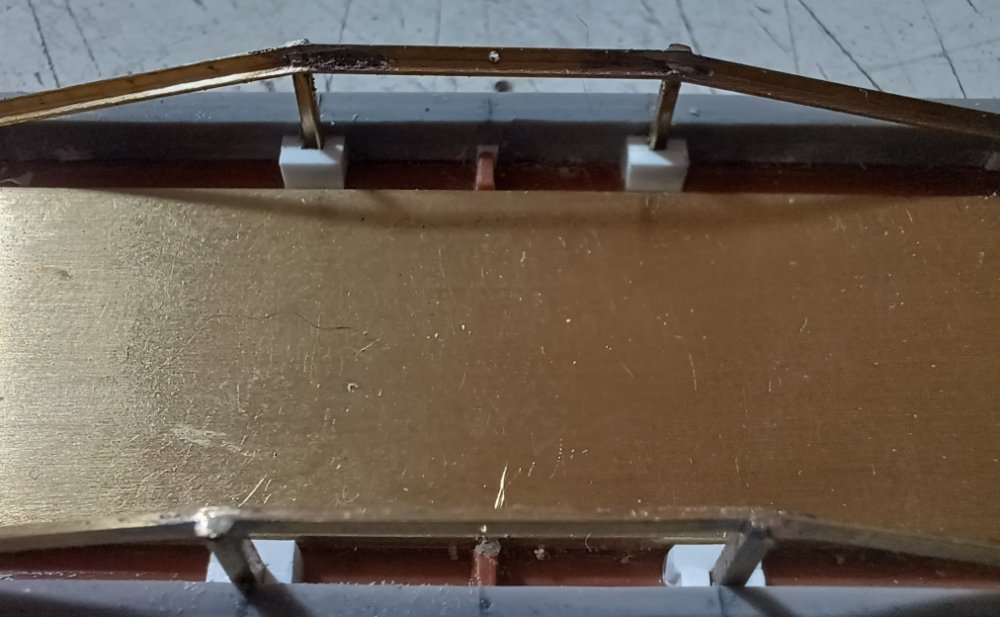 To affix the two trusses small pockets created from Evergreen strip help to locate them in a
firm accurate fashion.
To affix the two trusses small pockets created from Evergreen strip help to locate them in a
firm accurate fashion.
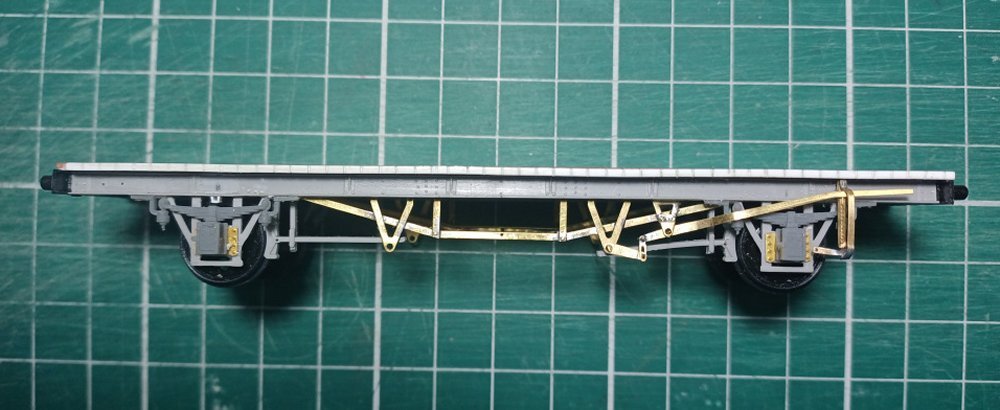 I decided that it would be easier to finish the chassis before adding the body as the body
support stanchions affixed to the ends and sides would hinder access. Rather than removing
and then adding axle boxes to give a bit of variety, it was far easier to take them off
along with their springs and reapply ones from Rumney Models that Justin had modified for
me to give a seven spring / BR welded axle box combination (the heavy duty brass horn
guides are also from the Rumney stable). Unfortunately the removal process saw the loss
of the spring stops from the sole bars so were replaced with ones made from 1mm Evergreen
strip. The brake gear has been taken from a Rumney B.23 etched underframe kit which I've
decided to marry with the plastic brake shoe assemblies found on the Parkside kit due in
part to the difficulty in fitting their brass counterparts (the angles of the push rods
are a little too shallow so will be modified accordingly).
I decided that it would be easier to finish the chassis before adding the body as the body
support stanchions affixed to the ends and sides would hinder access. Rather than removing
and then adding axle boxes to give a bit of variety, it was far easier to take them off
along with their springs and reapply ones from Rumney Models that Justin had modified for
me to give a seven spring / BR welded axle box combination (the heavy duty brass horn
guides are also from the Rumney stable). Unfortunately the removal process saw the loss
of the spring stops from the sole bars so were replaced with ones made from 1mm Evergreen
strip. The brake gear has been taken from a Rumney B.23 etched underframe kit which I've
decided to marry with the plastic brake shoe assemblies found on the Parkside kit due in
part to the difficulty in fitting their brass counterparts (the angles of the push rods
are a little too shallow so will be modified accordingly).
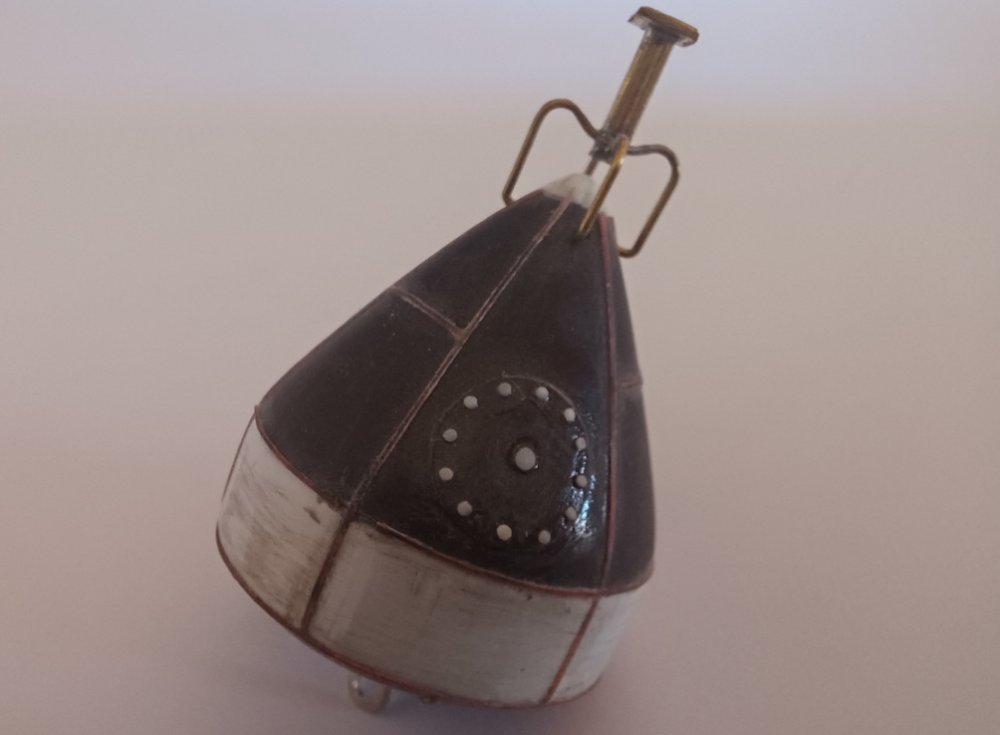 I have managed to sneak in a little project before the OPEN C; utilising a plastic cone
from a firework rocket which I had found in the garden I decided to have a crack at making
an ocean channel marker buoy which could often be found as a load on railway vehicles. The
odds and sods box allied with some brass and plastic sections give a reasonable rendition
and will be fitted at a future date with some type of wooden cradle depending on the
vehicle used to convey it.
I have managed to sneak in a little project before the OPEN C; utilising a plastic cone
from a firework rocket which I had found in the garden I decided to have a crack at making
an ocean channel marker buoy which could often be found as a load on railway vehicles. The
odds and sods box allied with some brass and plastic sections give a reasonable rendition
and will be fitted at a future date with some type of wooden cradle depending on the
vehicle used to convey it.

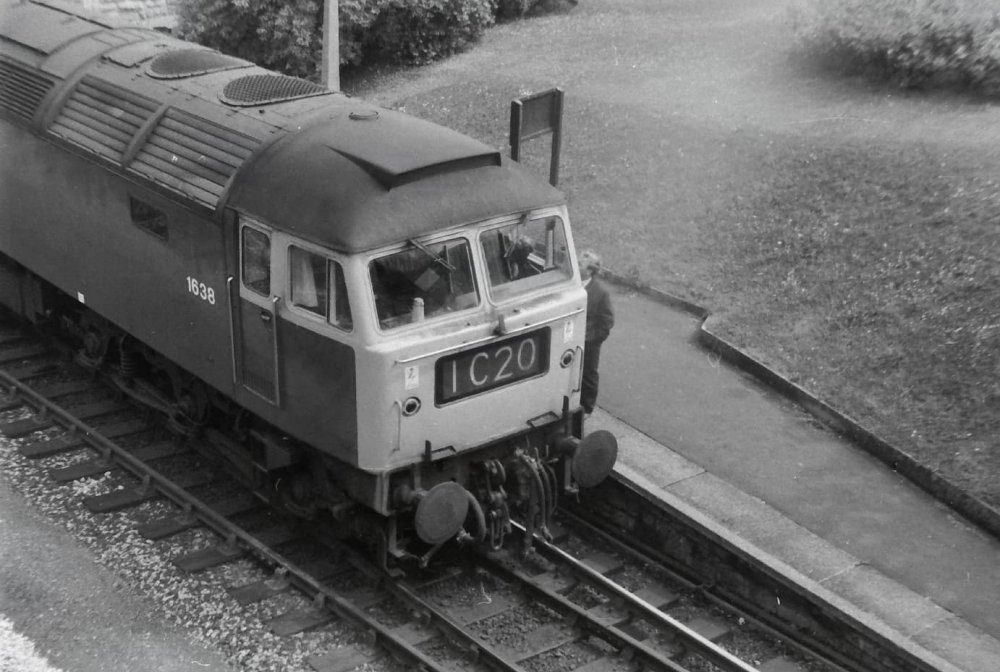 The summer holiday big hydraulics photographs are now exhausted, so we'll continue and plod through
what some may think as boring stuff!
1638 at Torquay in June 1970 with a Paddington to Paignton service.
The summer holiday big hydraulics photographs are now exhausted, so we'll continue and plod through
what some may think as boring stuff!
1638 at Torquay in June 1970 with a Paddington to Paignton service.
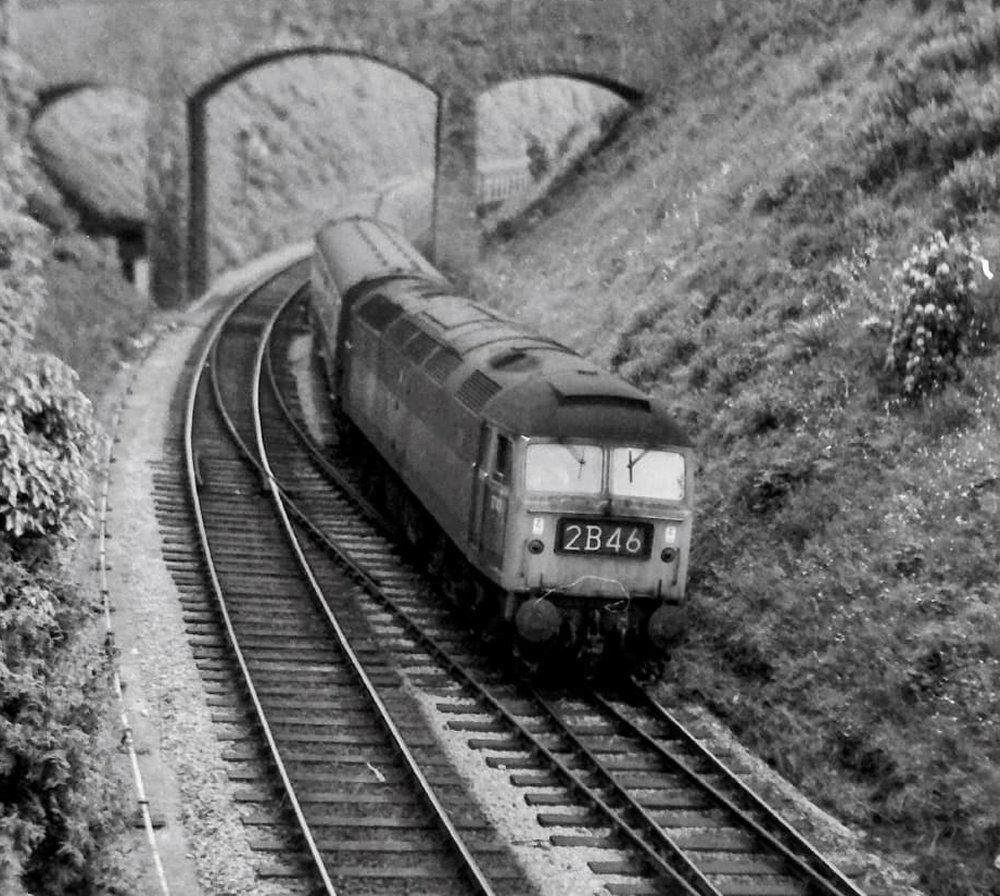
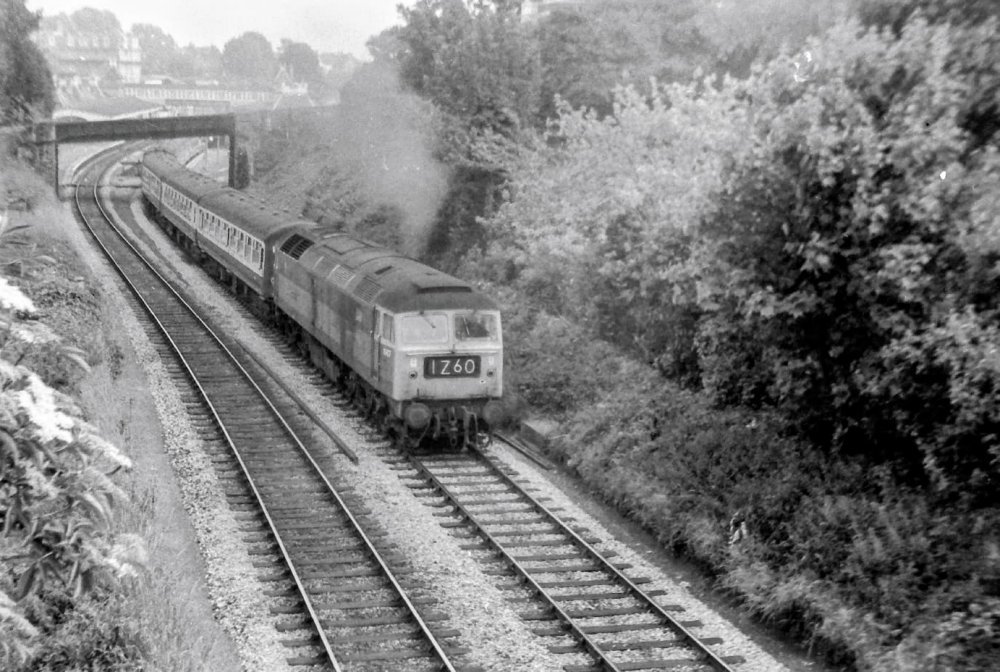 D1667 leaving Torquay on a special, maybe a Merrymaker working to Paignton on the 9th of June 1970.
 D1741 at Torquay with a Exeter St Davids to Paignton local train on the 9th of June 1970.
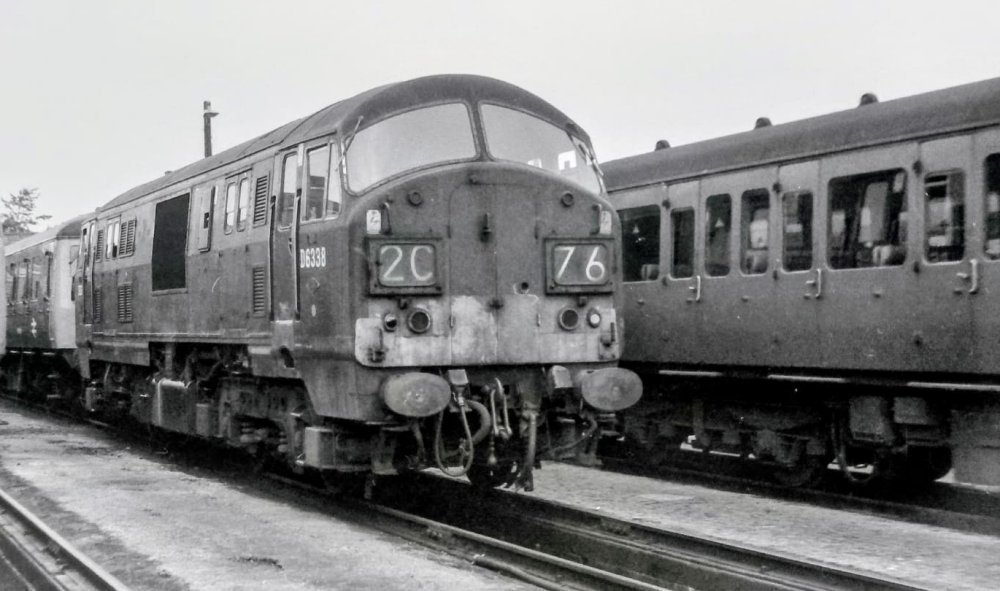 D6338 at Exeter shed in June 1970. That concludes the summer 1970 holiday pics....
Next month, who knows where we might be?
D6338 at Exeter shed in June 1970. That concludes the summer 1970 holiday pics....
Next month, who knows where we might be?
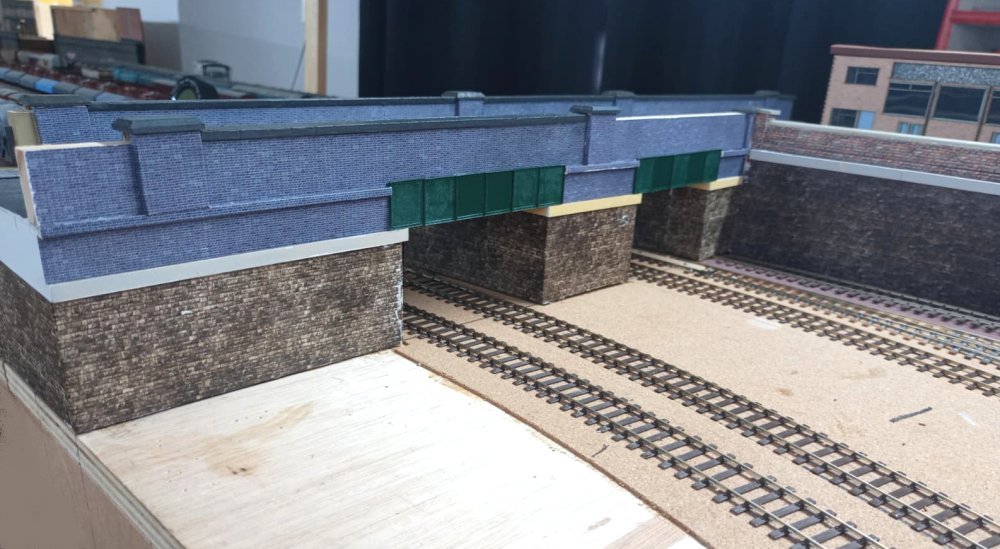 The work that has been done on the layout in the heatwave has been concentrated on the south
end of the station. With the road bridge now being mostly complete, coping stones and
pavements are required, and a decision to be made as to whether to make the road a one way
street and incorporate a couple of bus stops.
The work that has been done on the layout in the heatwave has been concentrated on the south
end of the station. With the road bridge now being mostly complete, coping stones and
pavements are required, and a decision to be made as to whether to make the road a one way
street and incorporate a couple of bus stops.
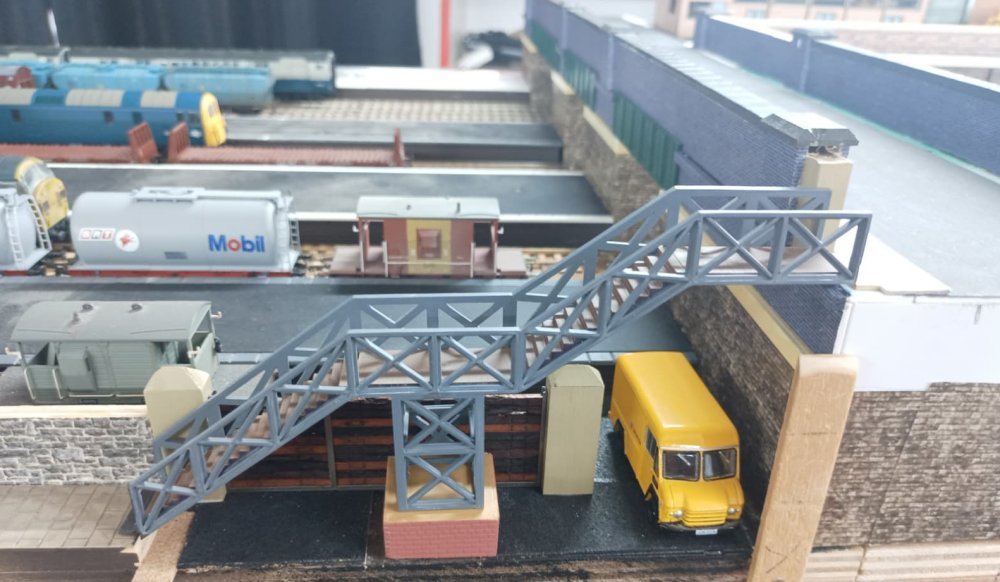 The footbridge area has seen developments, so after a bit of further chopping and adapting the
venerable Airfix footbridge kit is now in its final position.
A sleeper wall made from
Evergreen H section strip and Scale Model Scenery sleepers suitably distressed and stained
will make a small area for BR vans to access the platform for loading purposes. A gate needs
cobbling together, but I have a plan.
The footbridge area has seen developments, so after a bit of further chopping and adapting the
venerable Airfix footbridge kit is now in its final position.
A sleeper wall made from
Evergreen H section strip and Scale Model Scenery sleepers suitably distressed and stained
will make a small area for BR vans to access the platform for loading purposes. A gate needs
cobbling together, but I have a plan.
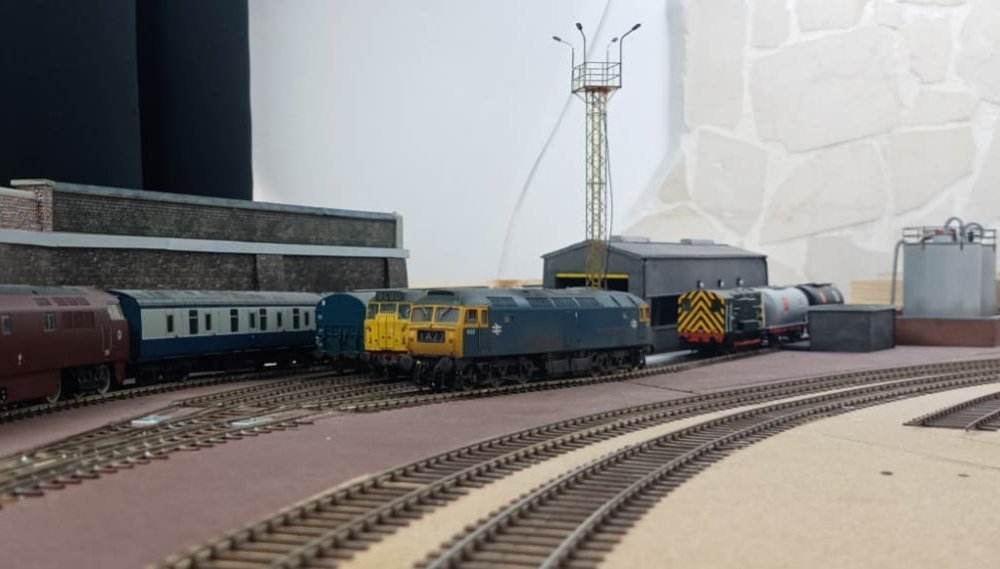 A test filling of the Motorail / fuelling point shows its possibilities, and has the addition
of a tower light gantry which was built a few years back from a sadly missed Nick Tilston kit,
purely because I fancied building it and everything comes to he who waits!
A test filling of the Motorail / fuelling point shows its possibilities, and has the addition
of a tower light gantry which was built a few years back from a sadly missed Nick Tilston kit,
purely because I fancied building it and everything comes to he who waits!
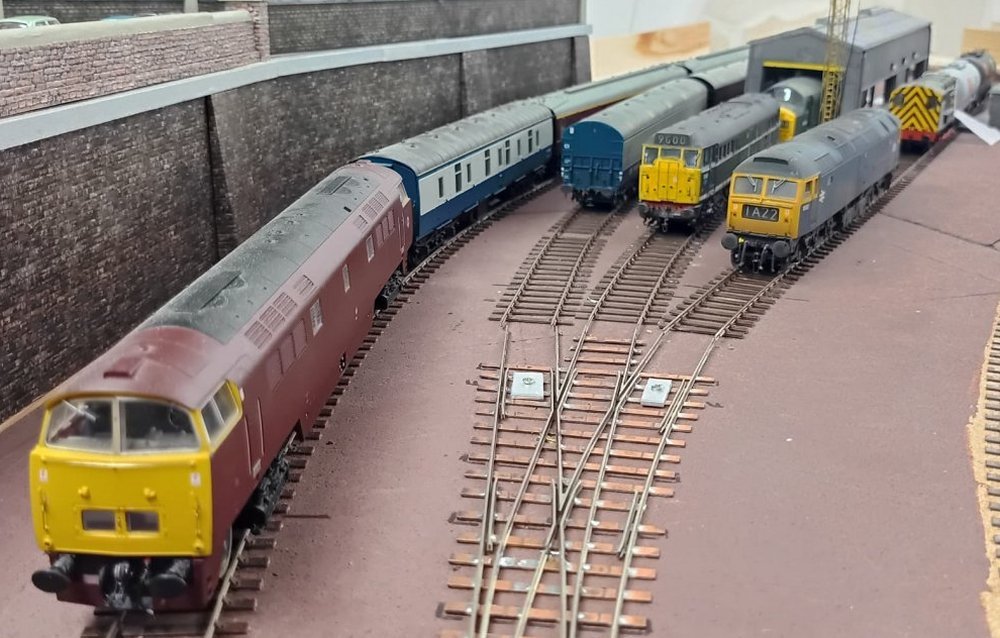 The final track alignment, fixing and wiring will see this corner mechanically and electrically
complete.
The Bachmann fuelling shed will be gaining working outside lights and is being
reglazed due to its original shoddy factory assembly.
The final track alignment, fixing and wiring will see this corner mechanically and electrically
complete.
The Bachmann fuelling shed will be gaining working outside lights and is being
reglazed due to its original shoddy factory assembly.
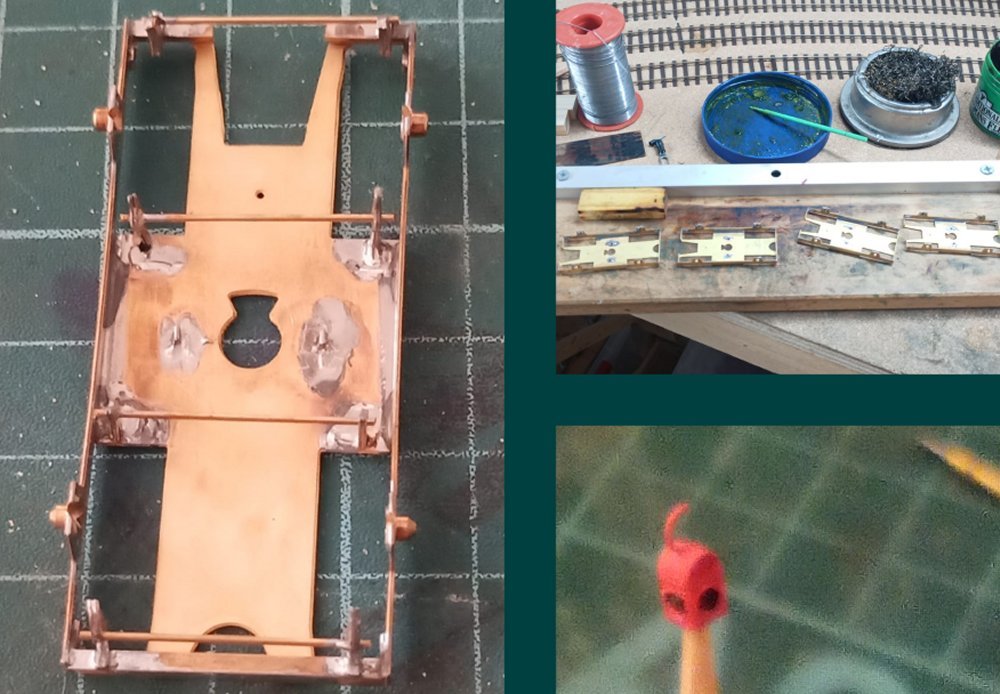 I've also re-bogied a couple of Bachmann Carflats which came with B4 bogies, using the Wizard
brass frames, and I've also put the (not provided) brake shoes inboard and cut off the moulded
shoes which are inline with the outside of the bogie side frame on the replacement mouldings....
Oh and I've also I've painted a few road lamps for the roadworks scene up by the supermarket.
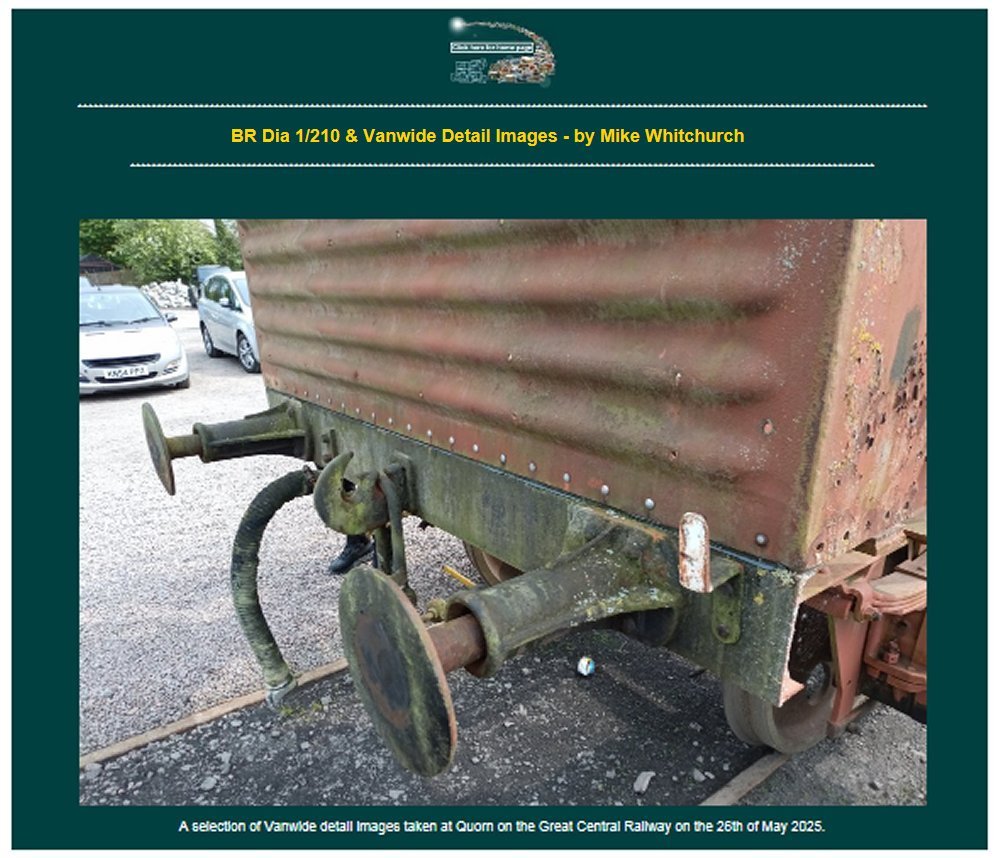
A new page has been added to the 'Reference, Inspiration & Links' page of the website,
featuring detail images of Dia 1/210 vans and Vanwide wagons - please click on the image to
view in another window.
I've also re-bogied a couple of Bachmann Carflats which came with B4 bogies, using the Wizard
brass frames, and I've also put the (not provided) brake shoes inboard and cut off the moulded
shoes which are inline with the outside of the bogie side frame on the replacement mouldings....
Oh and I've also I've painted a few road lamps for the roadworks scene up by the supermarket.
A new page has been added to the 'Reference, Inspiration & Links' page of the website,
featuring detail images of Dia 1/210 vans and Vanwide wagons - please click on the image to
view in another window.

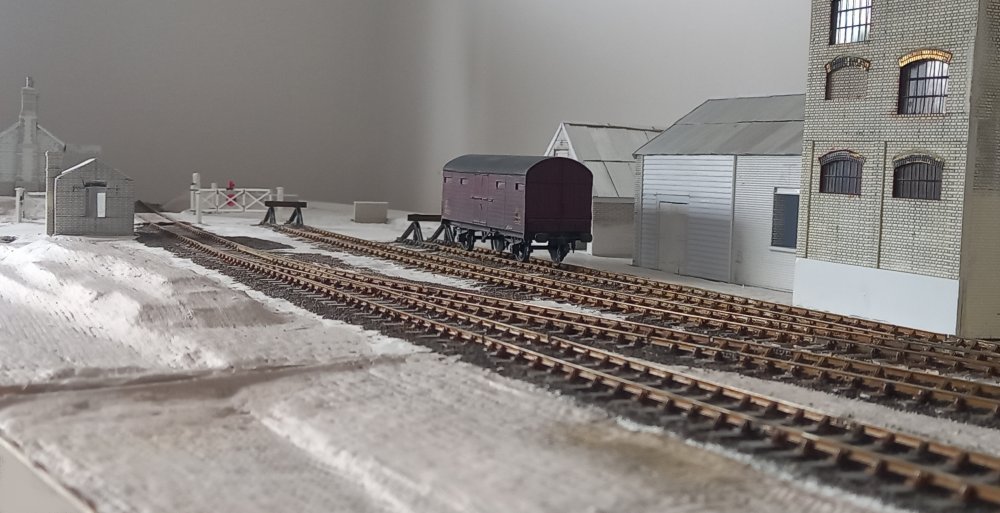 Whitley was well received at the Larkrail exhibition in Bath last month, and a good donation
will be made to the Parkinsons Disease Charity from plenty of cake eating. Much of the
conversation over the layout was about building techniques and groundworks.
Whitley was well received at the Larkrail exhibition in Bath last month, and a good donation
will be made to the Parkinsons Disease Charity from plenty of cake eating. Much of the
conversation over the layout was about building techniques and groundworks.
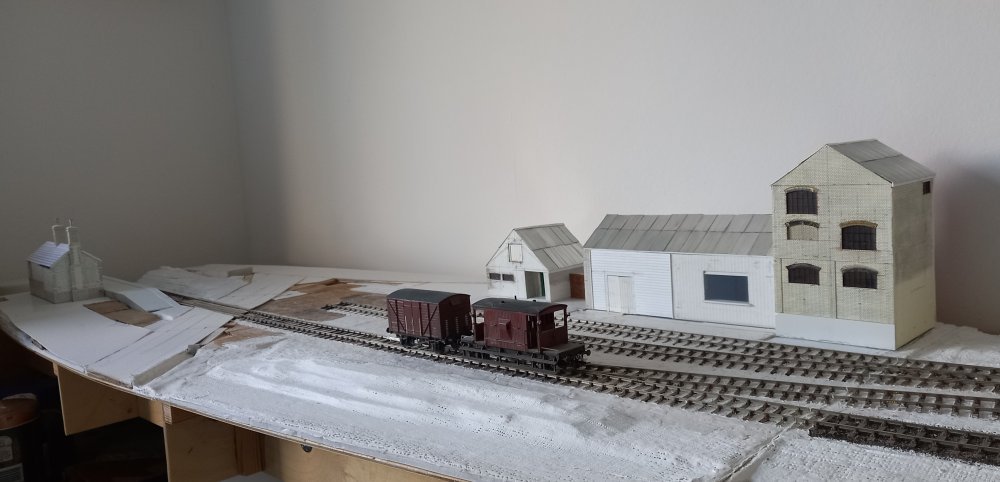 These 2 pictures from the 'white time' illustrate the materials used. Buildings are front
faced only, made from Southern Eastern Finecast brick sheet face of overall 3 ply thickness.
Roofs are from Alan Austin's corrugated sheet with thin paper cappings to top and ends.
Groundworks are simply foam board covered with plaster bandage. Looking at the pictures
now the small high workshop building does fit better turned to the side.
These 2 pictures from the 'white time' illustrate the materials used. Buildings are front
faced only, made from Southern Eastern Finecast brick sheet face of overall 3 ply thickness.
Roofs are from Alan Austin's corrugated sheet with thin paper cappings to top and ends.
Groundworks are simply foam board covered with plaster bandage. Looking at the pictures
now the small high workshop building does fit better turned to the side.
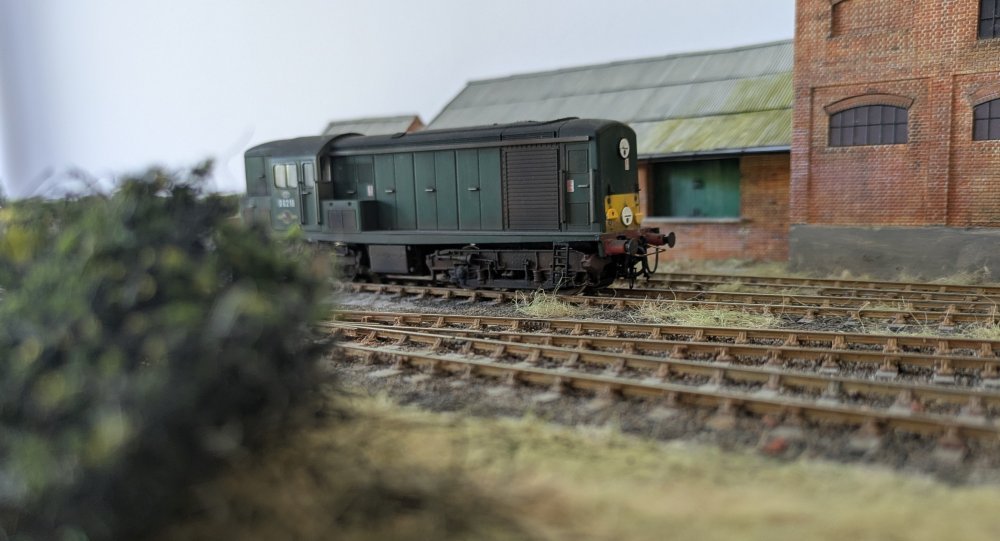 A surprise hasty lineside picture was taken recently of D8219 of Kings Lynn. I suspect in
this period it had just become a Stratford engine and now makes the third Class 15 for the
Whitley fleet frieght only sequence. The ladders restricting the bogie swing continue to be a problem.
A surprise hasty lineside picture was taken recently of D8219 of Kings Lynn. I suspect in
this period it had just become a Stratford engine and now makes the third Class 15 for the
Whitley fleet frieght only sequence. The ladders restricting the bogie swing continue to be a problem.
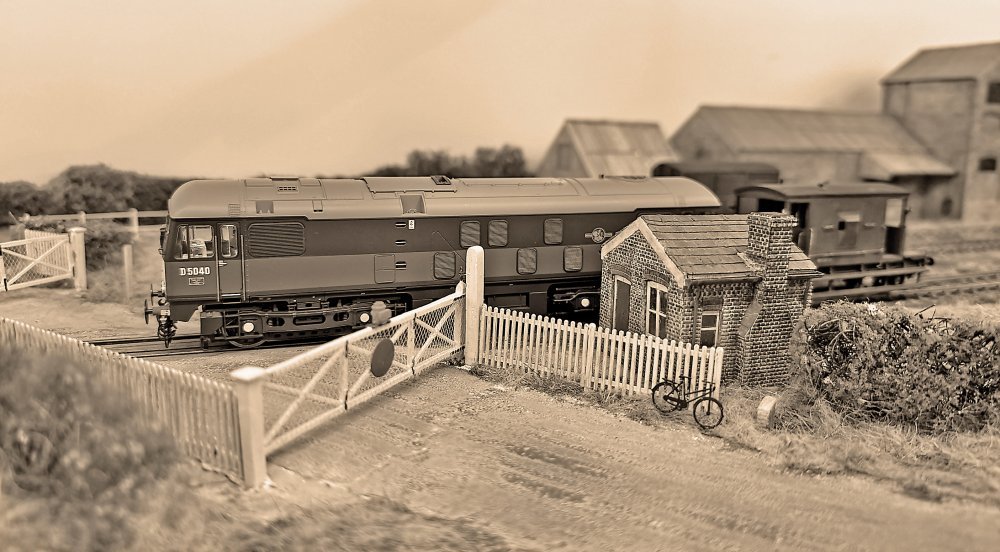 Phil Sutton appeared at Larkrail with a SLW two-tone Class 24 in EM gauge, but I told him
that they didn't run on the Colne Valley and that the livery dates it to C1968, but he did
leave it on the layout and I put it through its paces. I must admit I was seduced and now
its a question of whether he has one in the right livery.
Phil Sutton appeared at Larkrail with a SLW two-tone Class 24 in EM gauge, but I told him
that they didn't run on the Colne Valley and that the livery dates it to C1968, but he did
leave it on the layout and I put it through its paces. I must admit I was seduced and now
its a question of whether he has one in the right livery.

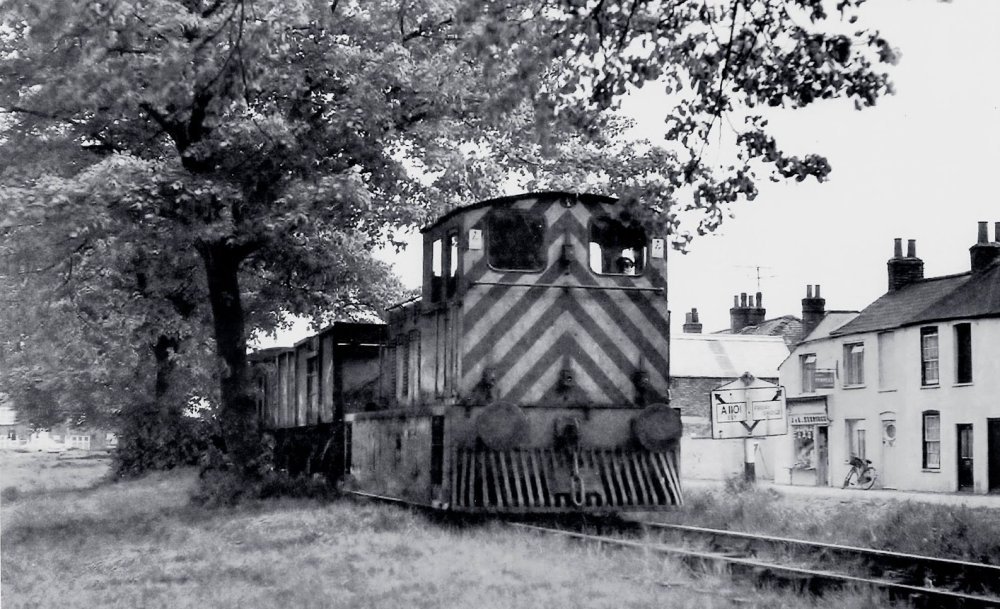 To me, this view of D2201 with the very last working on the Wisbech & Upwell tramway –
dated 20 May 1966 – doesn’t just encapsulate a long-vanished, longed-for world but also
evokes the kind of summer many of us wish we we’d been having sixty years later. So my
modelling in the last heat-baked, airless month or so has also been a kind of wish-fulfilment . . .
To me, this view of D2201 with the very last working on the Wisbech & Upwell tramway –
dated 20 May 1966 – doesn’t just encapsulate a long-vanished, longed-for world but also
evokes the kind of summer many of us wish we we’d been having sixty years later. So my
modelling in the last heat-baked, airless month or so has also been a kind of wish-fulfilment . . .
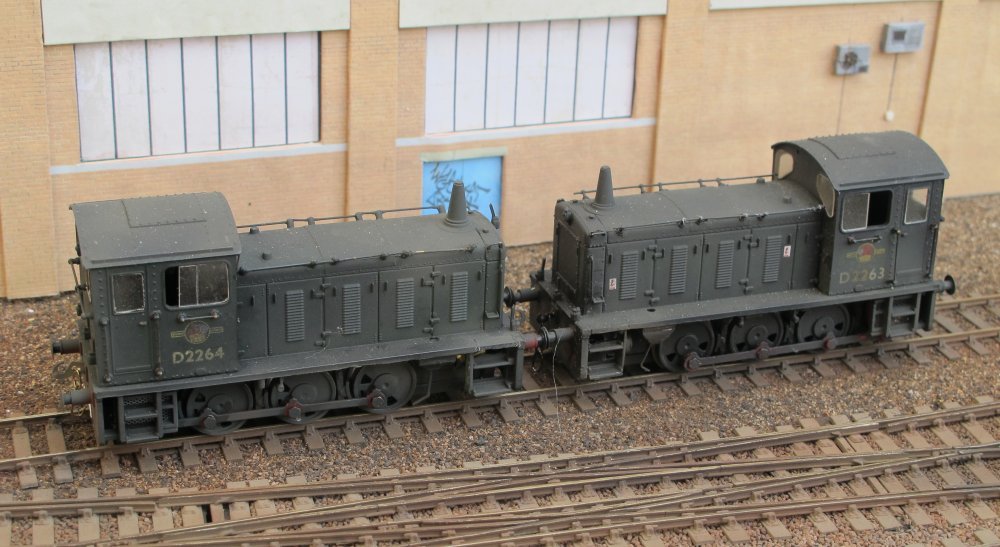 Some relaxed modelling in the July heat, well away from the football. At this time of year
I prefer to work outdoors in the garden but the transit of the Sun means I only have my cool,
shaded spot behind the bay tree from early morning until lunch and then again for an hour
or two mid-evening. So the main projects have been simple rescue acts rather than anything
requiring time and serious concentration. First off were two class 04 shunters – Bachmann
models backdated to represent mid-period Drewry machines with their filled-in front
footplates, forward-mounted air tanks and other detail variations.
Some relaxed modelling in the July heat, well away from the football. At this time of year
I prefer to work outdoors in the garden but the transit of the Sun means I only have my cool,
shaded spot behind the bay tree from early morning until lunch and then again for an hour
or two mid-evening. So the main projects have been simple rescue acts rather than anything
requiring time and serious concentration. First off were two class 04 shunters – Bachmann
models backdated to represent mid-period Drewry machines with their filled-in front
footplates, forward-mounted air tanks and other detail variations.
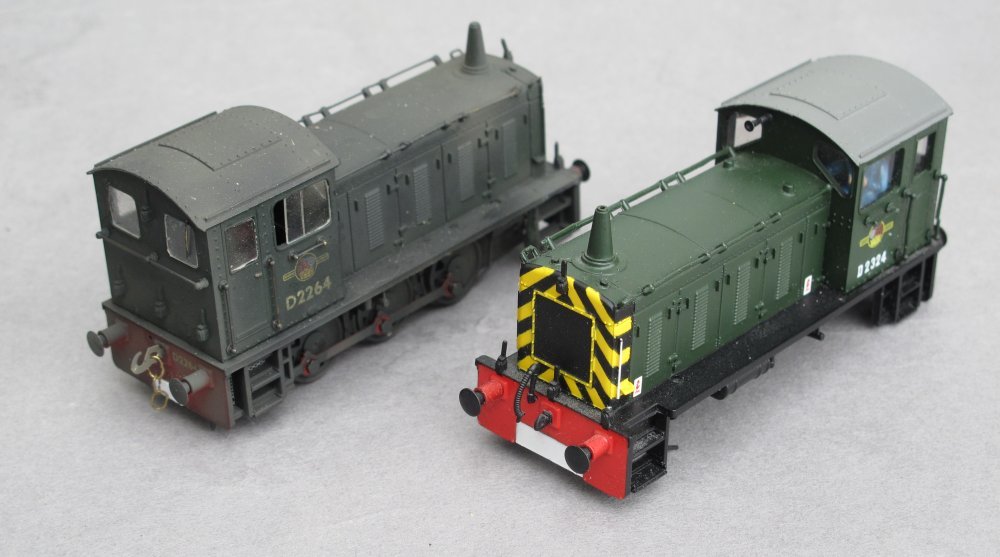 Among other minor refinements, both models now have flush-glazed cabs, mesh footstep guards
and closer-to-scale handrails made from 0.45mm wire. Representative of D2275 onwards, which
were more like 03s than anything, the 1997 Bachmann model with its cutaway shunters’ steps
and repositioned air tanks was good for its day – as was the Airfix kit of 35 years earlier –
but the non-appearance of the rumoured Rapido 04 means there’s work to do, especially if we
want one of the earlier 04s. Partially modified late-build D2324 is biding its time waiting for a chassis.
Among other minor refinements, both models now have flush-glazed cabs, mesh footstep guards
and closer-to-scale handrails made from 0.45mm wire. Representative of D2275 onwards, which
were more like 03s than anything, the 1997 Bachmann model with its cutaway shunters’ steps
and repositioned air tanks was good for its day – as was the Airfix kit of 35 years earlier –
but the non-appearance of the rumoured Rapido 04 means there’s work to do, especially if we
want one of the earlier 04s. Partially modified late-build D2324 is biding its time waiting for a chassis.
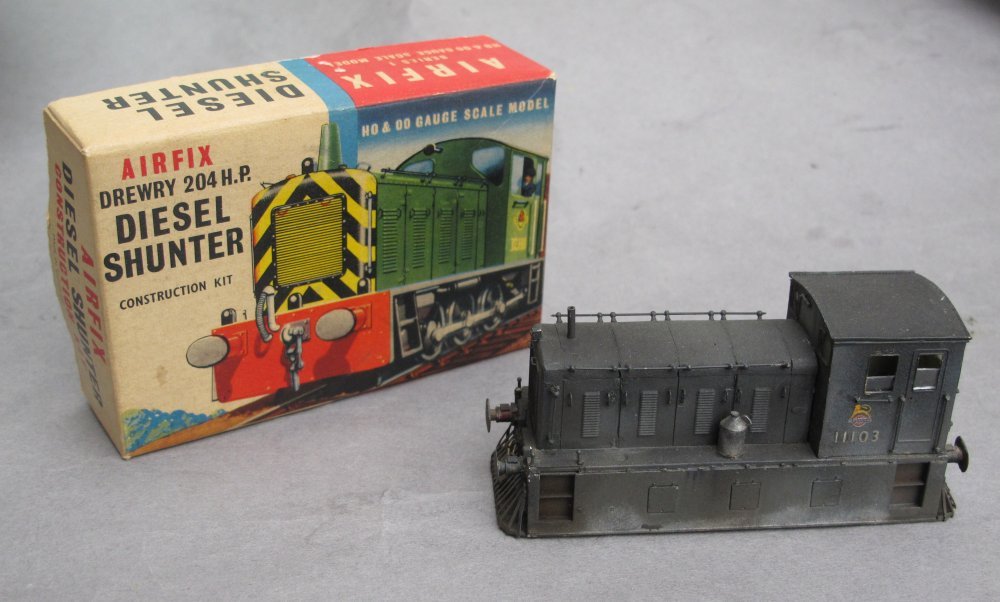 High Level do a superb chassis kit suitable for both the 03 and 04 but as no one apart from
Bachmann does an 04 wheel of any kind – prototype diameter varied and your finescale options
are limited. For comparison, the Wisbech & Upwell tram is an Airfix body with Impetus etched
conversion parts, riding on a High Level P4 chassis. This is one of the original four class
members with smaller wheels, shallow buffer beams, a four-section bonnet top, a glorified
pipe for a chimney and a spartan-looking cab with squared-off front windows. Even as I set
up these photographs I was sensing that prototype research would soon take over from actual
modelling – I blame the heat.
High Level do a superb chassis kit suitable for both the 03 and 04 but as no one apart from
Bachmann does an 04 wheel of any kind – prototype diameter varied and your finescale options
are limited. For comparison, the Wisbech & Upwell tram is an Airfix body with Impetus etched
conversion parts, riding on a High Level P4 chassis. This is one of the original four class
members with smaller wheels, shallow buffer beams, a four-section bonnet top, a glorified
pipe for a chimney and a spartan-looking cab with squared-off front windows. Even as I set
up these photographs I was sensing that prototype research would soon take over from actual
modelling – I blame the heat.
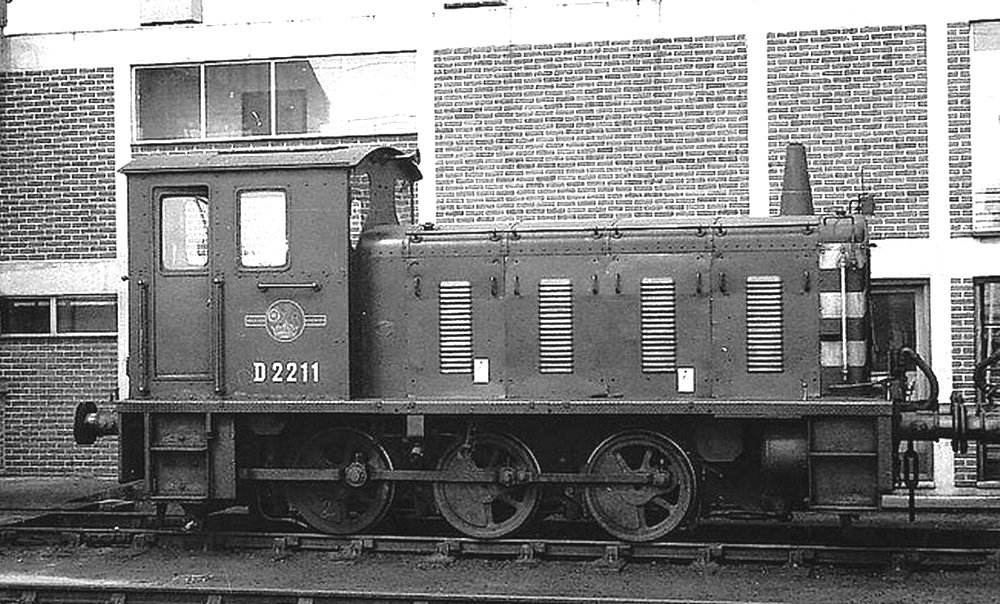 Later locos from this batch had conical chimneys and teardrop-shaped front windows.
Astonishingly, three of this 1952-built group – D2200/9/11 – went on to receive blue livery
and D2211 made it (just) into the 1970s. It had been one of a small group of 04s initially
used at Colchester and Ipswich for shunting the dockside lines, for which duties side skirts
and cowcatchers were usually carried. Here on shed at 30E its tram fittings have been
removed and the mounting holes are clearly visible. Very Pete Johnson, I feel – he shared
my enthusiasm for modelling the class with its myriad detail variations.
Later locos from this batch had conical chimneys and teardrop-shaped front windows.
Astonishingly, three of this 1952-built group – D2200/9/11 – went on to receive blue livery
and D2211 made it (just) into the 1970s. It had been one of a small group of 04s initially
used at Colchester and Ipswich for shunting the dockside lines, for which duties side skirts
and cowcatchers were usually carried. Here on shed at 30E its tram fittings have been
removed and the mounting holes are clearly visible. Very Pete Johnson, I feel – he shared
my enthusiasm for modelling the class with its myriad detail variations.
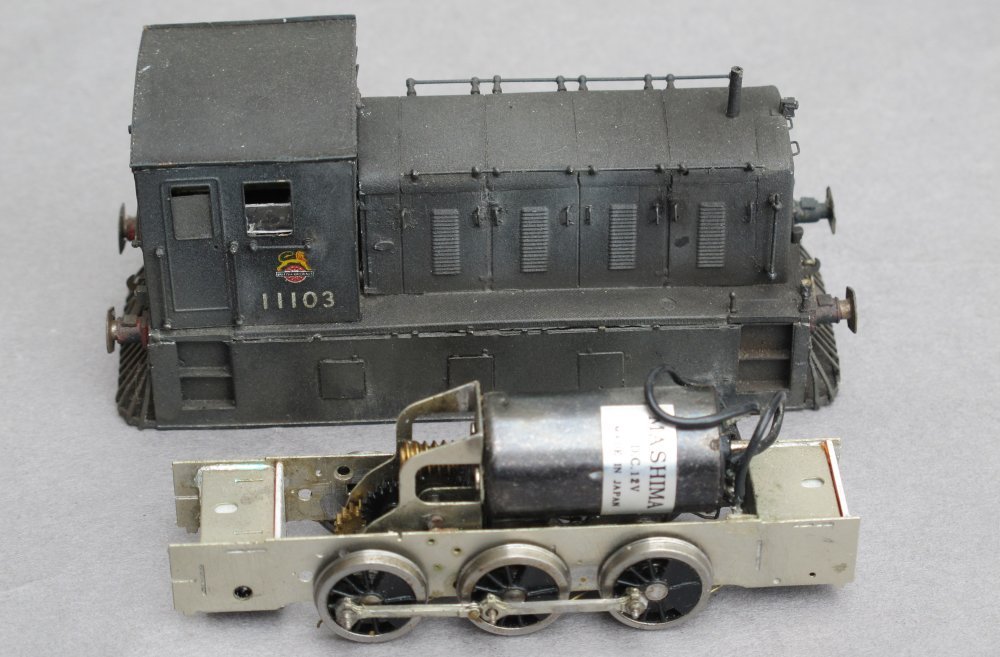 The powerful Mashima 1630 can motor might be a bit ambitious for the 04 tram but it’s a
reliable and smooth-running design and I keep finding them squirrelled away in
half-forgotten boxes full of bits. The incorrect (for an 04) Gibson 03 wheels are
hidden behind valances, assuaging my guilt.
The powerful Mashima 1630 can motor might be a bit ambitious for the 04 tram but it’s a
reliable and smooth-running design and I keep finding them squirrelled away in
half-forgotten boxes full of bits. The incorrect (for an 04) Gibson 03 wheels are
hidden behind valances, assuaging my guilt.
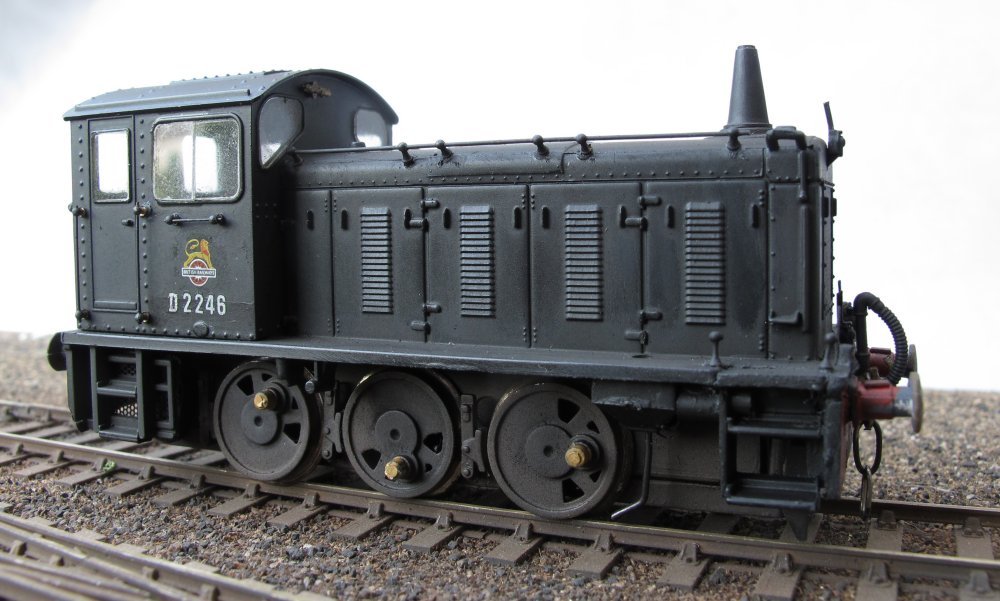 In store minus coupling rods, D2246 is one of a small batch – 11212-19 which became D2242-9 –
built to a North Eastern Region specification with modified cab and 3ft 6ins wheels but
retaining the early-pattern chassis, flush footplating and shallow bufferbeams. Another
hacked-about Bachmann model.
In store minus coupling rods, D2246 is one of a small batch – 11212-19 which became D2242-9 –
built to a North Eastern Region specification with modified cab and 3ft 6ins wheels but
retaining the early-pattern chassis, flush footplating and shallow bufferbeams. Another
hacked-about Bachmann model.
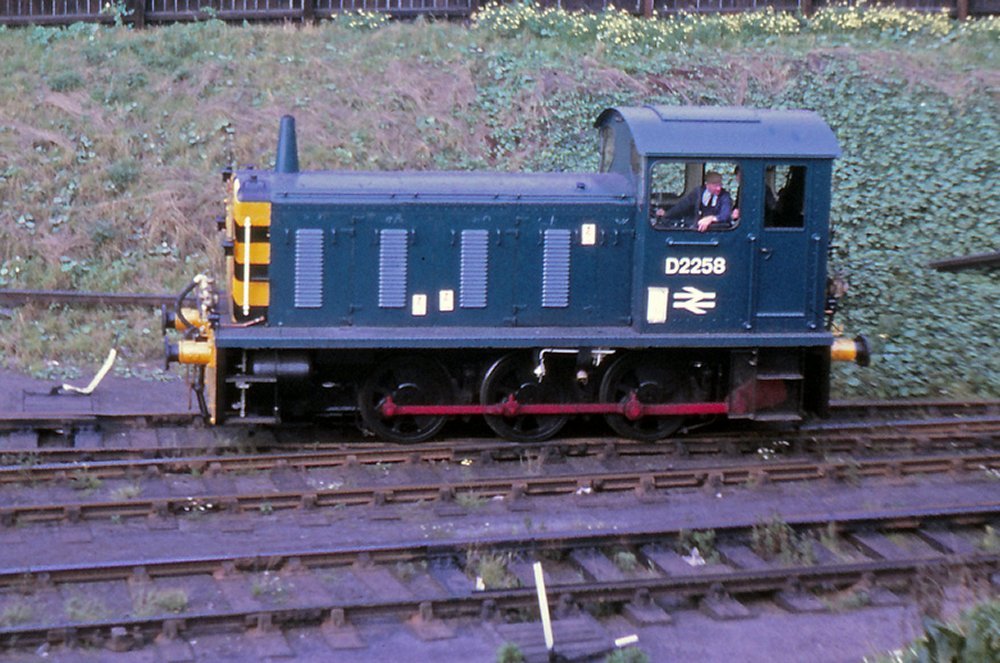 Shunting Litchurch Lane carriage works is one of the few 04s ever to be based in the
East Midlands. Only a handful of 04s made it into corporate livery with double arrows
and even fewer blue machines were still around as the 1970s dawned – D2239 at Selhurst,
D2258 at Derby, D2293 at Chart Leacon and D2294-5 at Eastleigh. Bachmann offer a number
of BR blue 04s but only D2294 is even vaguely accurate – the others play fast and loose
with body and underframe details, and some were never blue in the first place.
Shunting Litchurch Lane carriage works is one of the few 04s ever to be based in the
East Midlands. Only a handful of 04s made it into corporate livery with double arrows
and even fewer blue machines were still around as the 1970s dawned – D2239 at Selhurst,
D2258 at Derby, D2293 at Chart Leacon and D2294-5 at Eastleigh. Bachmann offer a number
of BR blue 04s but only D2294 is even vaguely accurate – the others play fast and loose
with body and underframe details, and some were never blue in the first place.

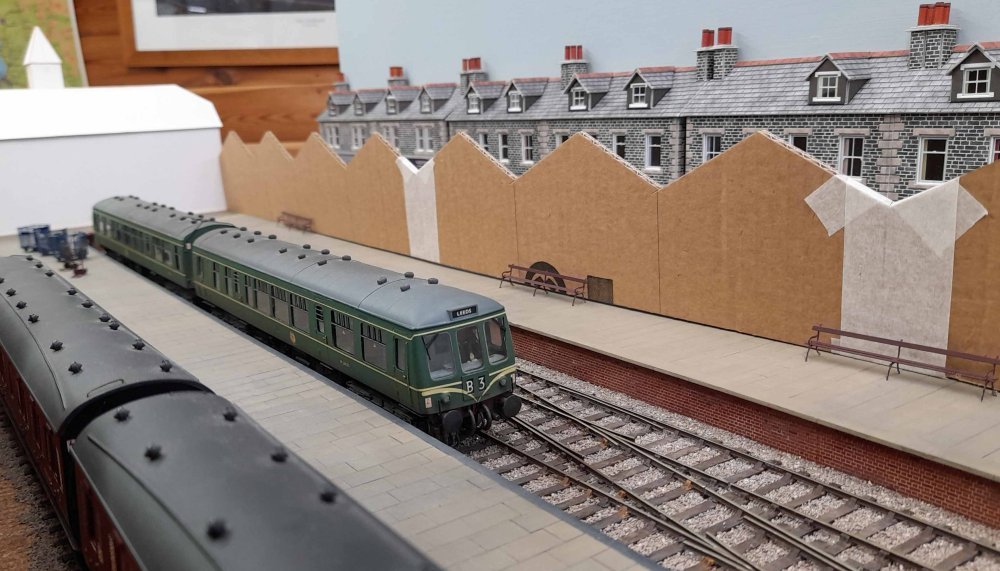 This last month has continued tricky weather-wise, though two visits by operating groups
have fortunately gone ahead as planned. That said, buckled pointwork again became an issue
affecting mainly the quarry area for some reason, now hopefully rectified. Meanwhile over
at Kendal, ready to commence the most recent running session we see Derby Class 108 DMU waiting
to depart Platform 2 with 1N55 the 15.20 Kendal Castle - Leeds Hunslet service. In the foreground
in Platform 3 is the non-corridor stock of the Marthwaite / Dent Head branch ‘shuttle’ service.
This last month has continued tricky weather-wise, though two visits by operating groups
have fortunately gone ahead as planned. That said, buckled pointwork again became an issue
affecting mainly the quarry area for some reason, now hopefully rectified. Meanwhile over
at Kendal, ready to commence the most recent running session we see Derby Class 108 DMU waiting
to depart Platform 2 with 1N55 the 15.20 Kendal Castle - Leeds Hunslet service. In the foreground
in Platform 3 is the non-corridor stock of the Marthwaite / Dent Head branch ‘shuttle’ service.
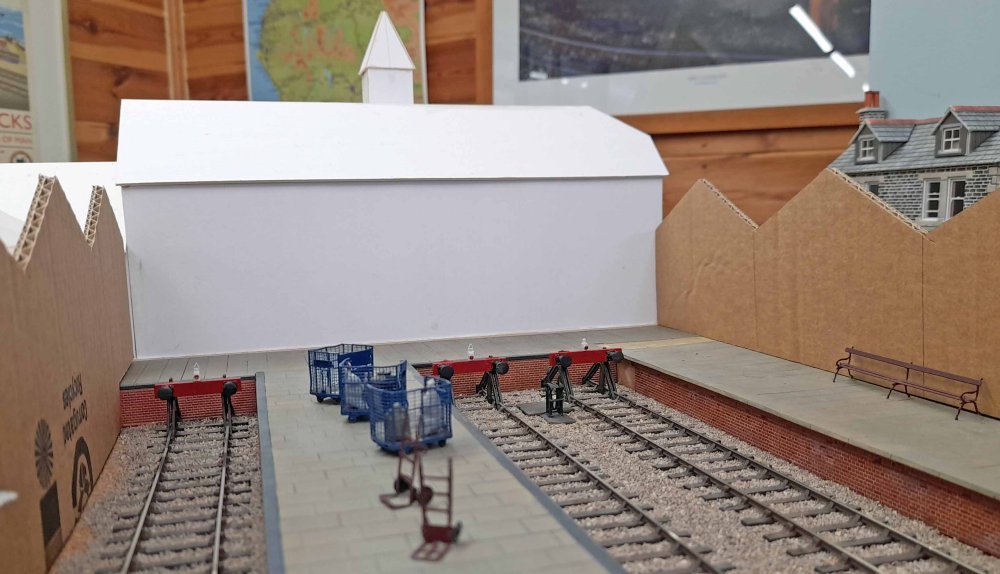 Still at Kendal, a small detail I noticed on a colour shot I saw of the interior of the Lakeside
train shed – the red painted buffer stops with tail lamps mounted on top. Now replicated here.
Still at Kendal, a small detail I noticed on a colour shot I saw of the interior of the Lakeside
train shed – the red painted buffer stops with tail lamps mounted on top. Now replicated here.
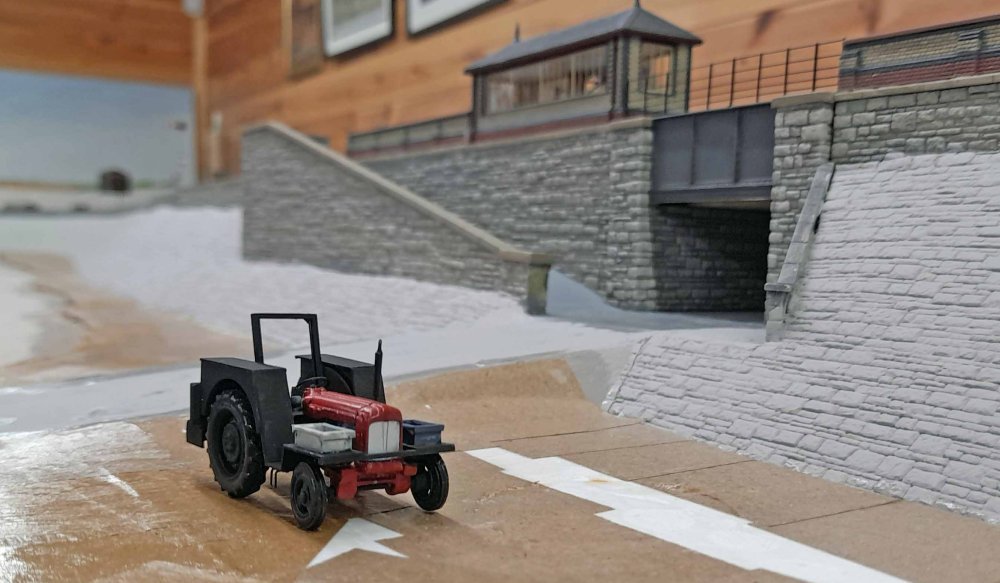 Progress with the tractor, now painted and awaiting some final detailing.
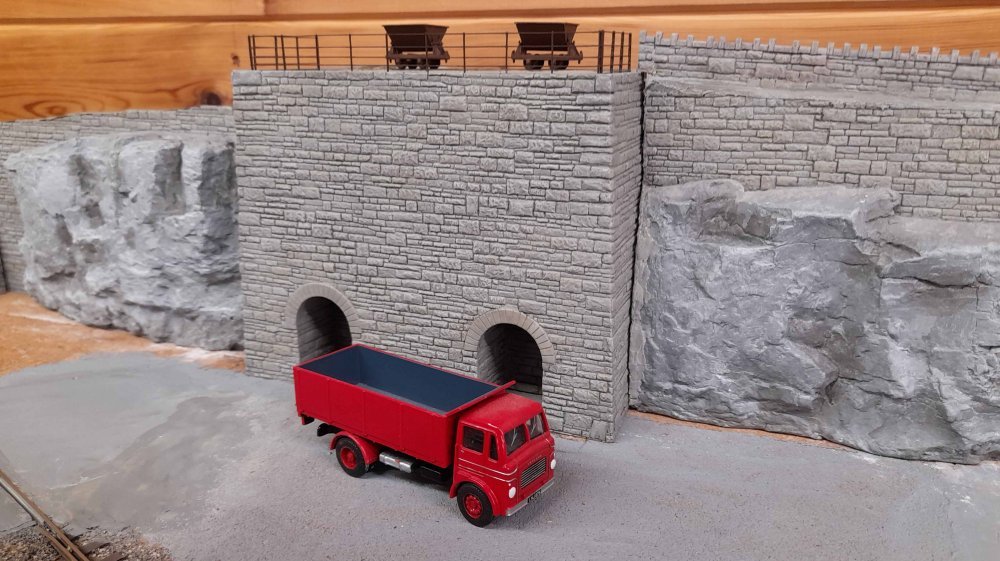 The main focus in July was working (in the cooler house!) on the quarry landscaping. Most of
the ‘backdrop’ has to be removable as there are point servos hidden beneath. Hopefully any gaps
can be hidden by judiciously planted vegetation. But now the stonework has been detail painted
and a fence (51L parts) erected around the periphery of the old lime kilns.
The main focus in July was working (in the cooler house!) on the quarry landscaping. Most of
the ‘backdrop’ has to be removable as there are point servos hidden beneath. Hopefully any gaps
can be hidden by judiciously planted vegetation. But now the stonework has been detail painted
and a fence (51L parts) erected around the periphery of the old lime kilns.
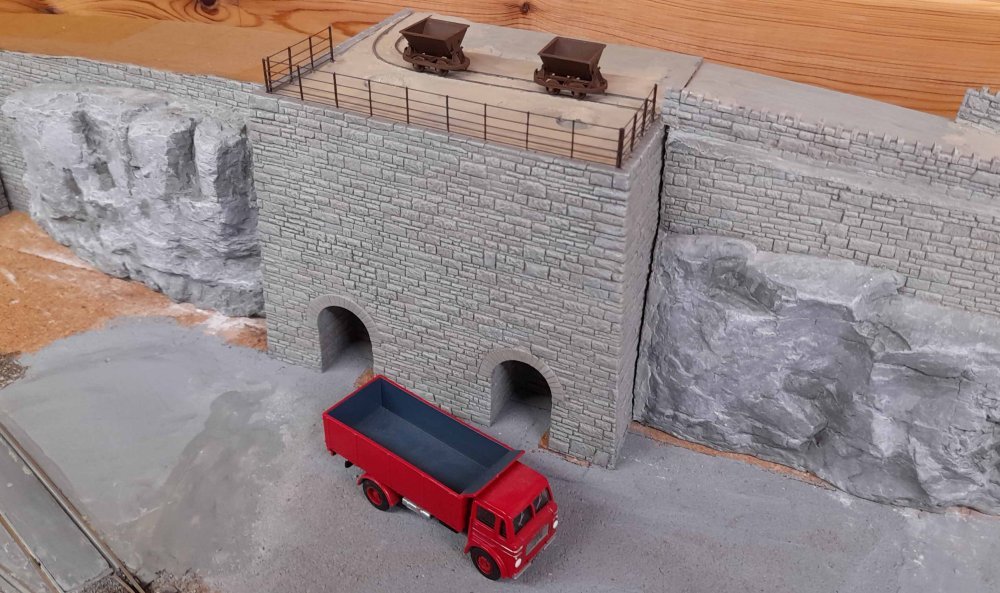 A ‘helicopter’ view showing that some disused tramway track has been modelled on top of the
old lime kilns. Basically, flatbottom rail glued in place and then the ground built up around
with Das clay. The Hudson V-skips are Dundas 009 kits.
A ‘helicopter’ view showing that some disused tramway track has been modelled on top of the
old lime kilns. Basically, flatbottom rail glued in place and then the ground built up around
with Das clay. The Hudson V-skips are Dundas 009 kits.
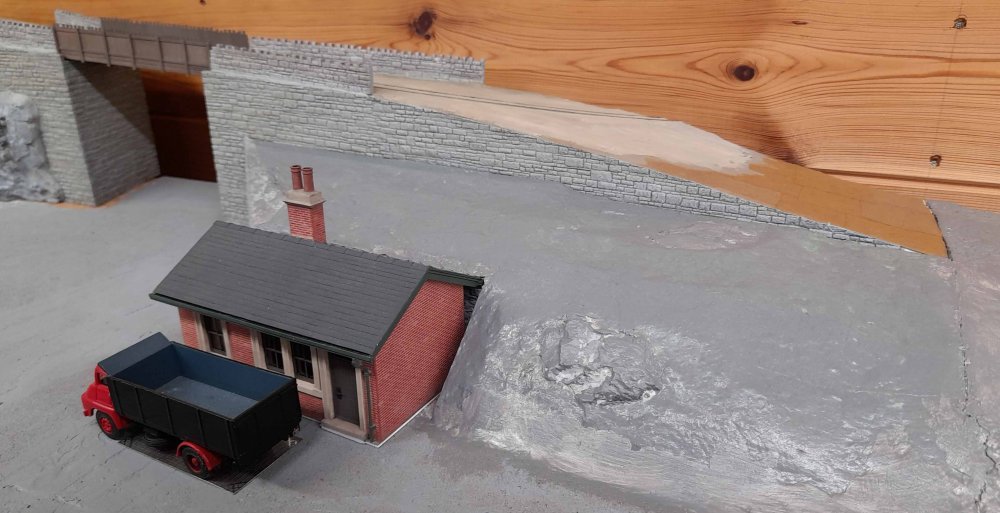 And the tramway continues further downhill – I’m reliably informed that originally horse haulage
would have been used with maybe later, some sort of a shunting tractor. This part of the layout
is almost now ready to consider some vegetation….
And the tramway continues further downhill – I’m reliably informed that originally horse haulage
would have been used with maybe later, some sort of a shunting tractor. This part of the layout
is almost now ready to consider some vegetation….
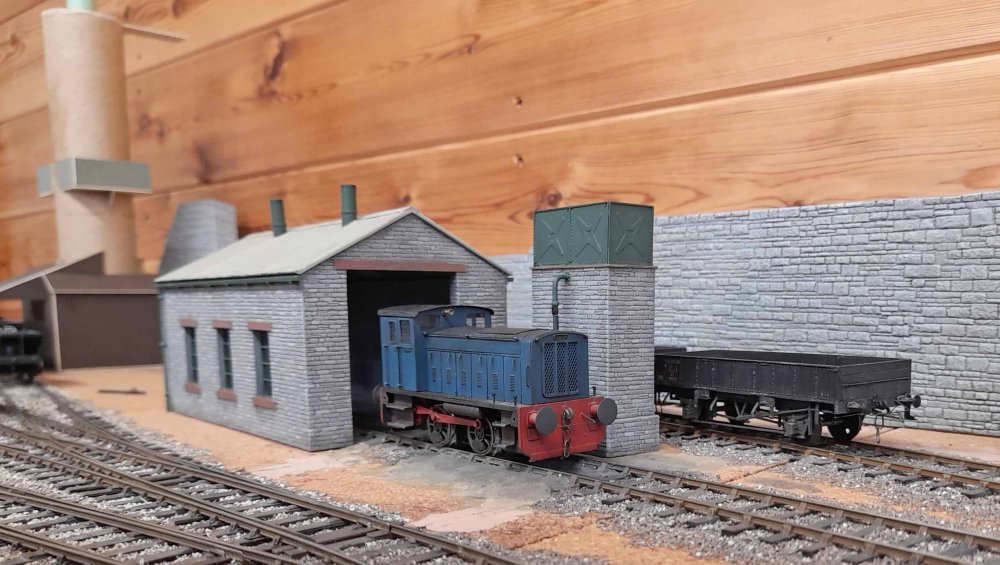 There’s also been progress with the quarry loco shed facility – i.e. the shed itself and a water
tower. The shed walls were a double layer of mounting card with Slaters embossed stonework glued
on. The windows are left-overs from my stash of laser cut parts from Hebble Vale, while the shed
roof is Wills corrugated sheet. The water tank is mainly from plastic, apart from the etched
brass Braithwaite panels that came from the ‘will come in useful some-day’ box!
There’s also been progress with the quarry loco shed facility – i.e. the shed itself and a water
tower. The shed walls were a double layer of mounting card with Slaters embossed stonework glued
on. The windows are left-overs from my stash of laser cut parts from Hebble Vale, while the shed
roof is Wills corrugated sheet. The water tank is mainly from plastic, apart from the etched
brass Braithwaite panels that came from the ‘will come in useful some-day’ box!
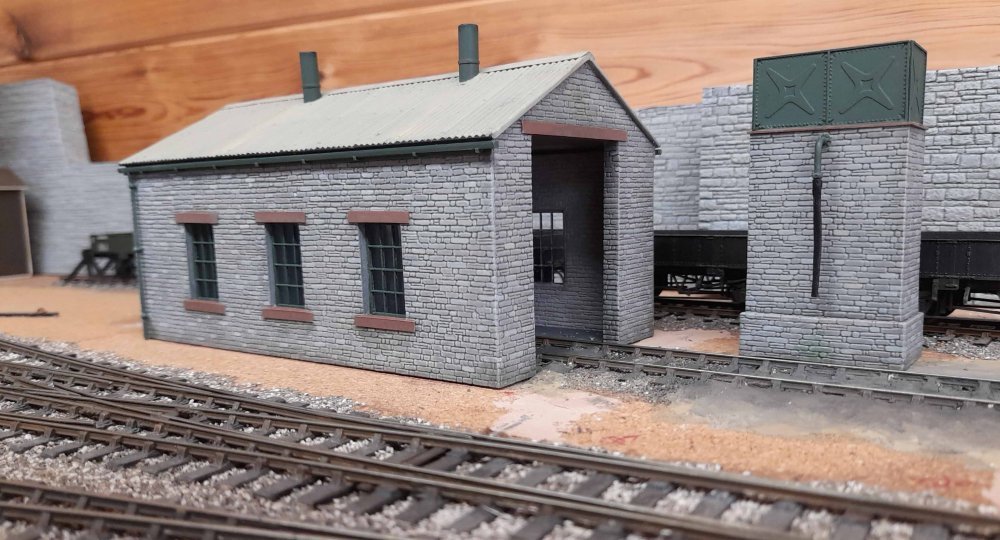 A closer view of the quarry loco shed and water tower (the hose/bag for the latter is from
heat-shrink heated with the soldering iron and then squashed between fingers). Some sort of
operating lever to the tank still needs to be fitted and lots of detail work around this
general area (plus a coal pile and a tank for the diesel).
A closer view of the quarry loco shed and water tower (the hose/bag for the latter is from
heat-shrink heated with the soldering iron and then squashed between fingers). Some sort of
operating lever to the tank still needs to be fitted and lots of detail work around this
general area (plus a coal pile and a tank for the diesel).
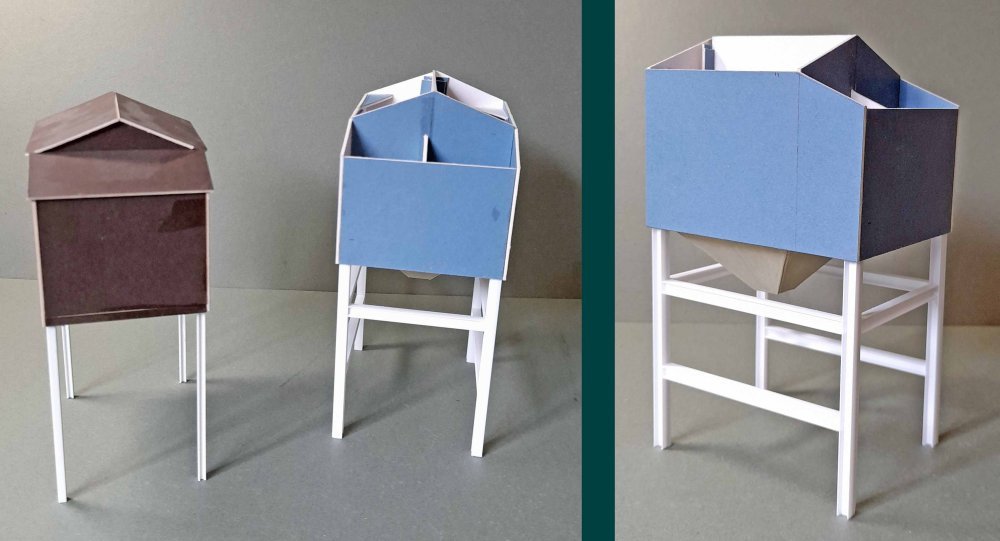 Having completed the shed and water tower, attention then turned to the loading hopper. The
original mock-up (left) was found to be somewhat under-sized and so a slightly enlarged carcass
(from mount card) was made up, with the supporting girder work made up from Evergreen H section.
The basic carcass will now be clad with Wills Asbestos sheeting. Eventually an aerial conveyor
will be required to feed the hopper and may prove tricky as it will need to be some sort of
open lattice construction.
Having completed the shed and water tower, attention then turned to the loading hopper. The
original mock-up (left) was found to be somewhat under-sized and so a slightly enlarged carcass
(from mount card) was made up, with the supporting girder work made up from Evergreen H section.
The basic carcass will now be clad with Wills Asbestos sheeting. Eventually an aerial conveyor
will be required to feed the hopper and may prove tricky as it will need to be some sort of
open lattice construction.
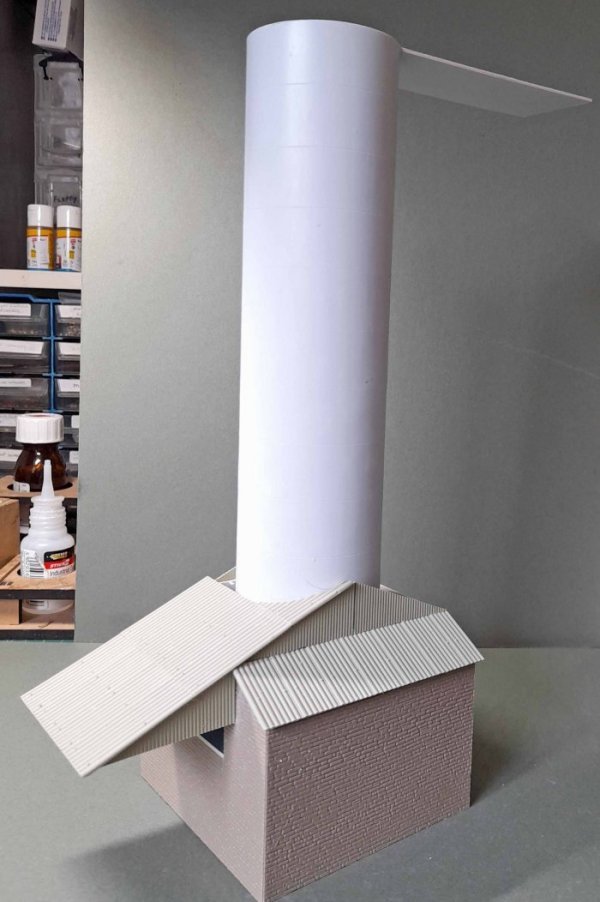 And progress has also been made with the Spencer Lime Kiln. I felt that the original card tube
mock-up was around the right size, so decided to use that as the basis for the actual model.
The metal cladding of the kiln tower was made from 15thou styrene, pre-scored to represent the
individual sections. One end was then tacked to the rear of the tube so it could be wrapped
around and secured via a strip of styrene glued over the join (this will of course be out of
sight at the back). Strips of masking tape were then wrapped tightly around to hold everything
in place, left in place overnight. Stonework on the base section was more of the same as for
the loco shed (plenty was to hand), with more Wills asbestos and other embossed plastic for
the rest of the cladding. Obviously a lot more detailing to do, but a good start.
And progress has also been made with the Spencer Lime Kiln. I felt that the original card tube
mock-up was around the right size, so decided to use that as the basis for the actual model.
The metal cladding of the kiln tower was made from 15thou styrene, pre-scored to represent the
individual sections. One end was then tacked to the rear of the tube so it could be wrapped
around and secured via a strip of styrene glued over the join (this will of course be out of
sight at the back). Strips of masking tape were then wrapped tightly around to hold everything
in place, left in place overnight. Stonework on the base section was more of the same as for
the loco shed (plenty was to hand), with more Wills asbestos and other embossed plastic for
the rest of the cladding. Obviously a lot more detailing to do, but a good start.
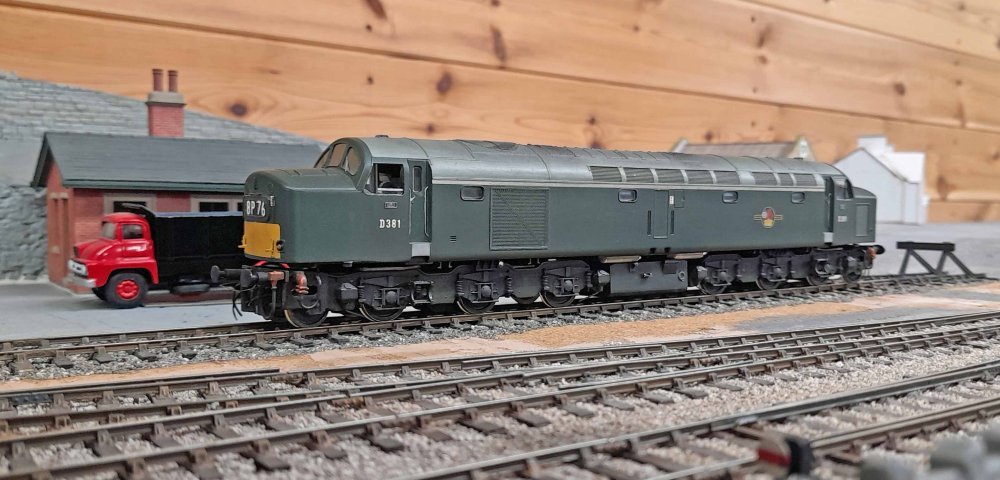 D381 having brought empties from Tebay (8L77, arrive Kentside 14.00) now awaits in the quarry
headshunt for its turn to draw a train of loaded wagons out into the station to then run
around and be ready for departure at 17.02 back to Tebay. If there’s a steam loco on this
turn, having shunted the empties to the quarry, it then has a path to work light engine to
Carnforth to turn and be serviced. The loco is one of the original Kentside fleet, a
re-worked Lima body but now on a Bachmann chassis. One day it may get treated to a Penbits
sprung chassis.
D381 having brought empties from Tebay (8L77, arrive Kentside 14.00) now awaits in the quarry
headshunt for its turn to draw a train of loaded wagons out into the station to then run
around and be ready for departure at 17.02 back to Tebay. If there’s a steam loco on this
turn, having shunted the empties to the quarry, it then has a path to work light engine to
Carnforth to turn and be serviced. The loco is one of the original Kentside fleet, a
re-worked Lima body but now on a Bachmann chassis. One day it may get treated to a Penbits
sprung chassis.
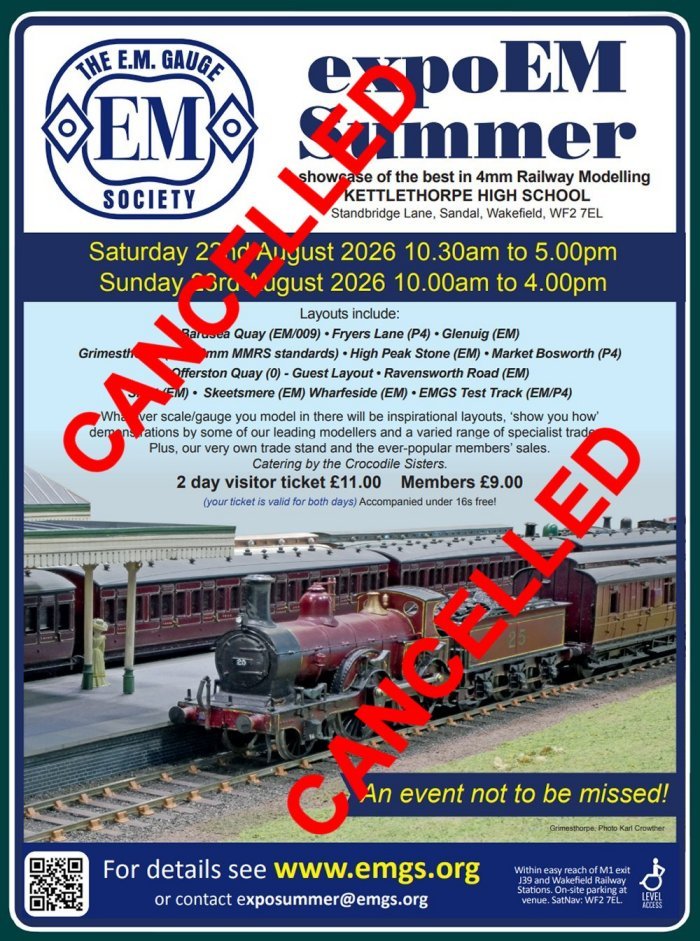 Unfortunately the venue is no longer available due to emergency repairs (and the short
notice given), so Expo EM Summer at Wakefield has been cancelled this year.
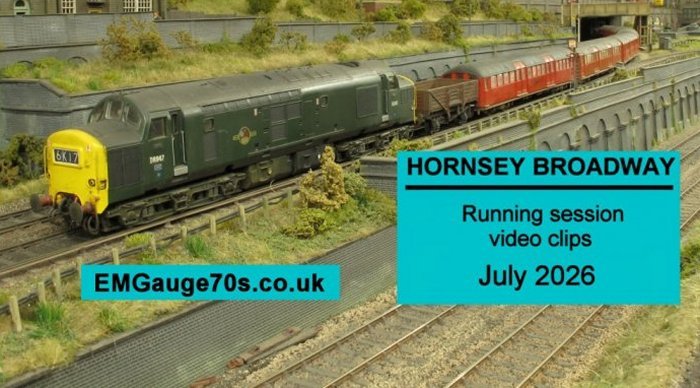
Please click on the above image to view the latest videos, featuring July running session clips.
Unfortunately the venue is no longer available due to emergency repairs (and the short
notice given), so Expo EM Summer at Wakefield has been cancelled this year.
Please click on the above image to view the latest videos, featuring July running session clips.