*********************************************************************************************************************************************
JUNE 2026 UPDATE
*********************************************************************************************************************************************
GREG BROOKES
*********************************************************************************************************************************************
MIKE WHITCHURCH
*********************************************************************************************************************************************
HYWEL THOMAS
*********************************************************************************************************************************************
ALAN DEWEY
*********************************************************************************************************************************************
MATT OWEN
*********************************************************************************************************************************************
KIER HARDY
*********************************************************************************************************************************************
*********************************************************************************************************************************************

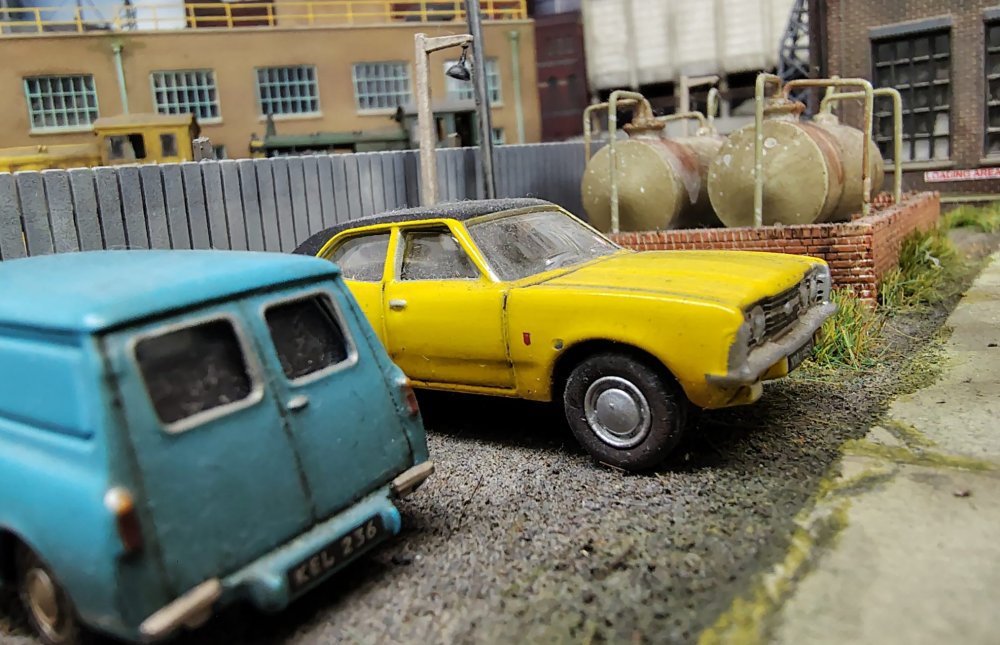 We took a trip to BSC Shenston Works, and after parking up the mark 3 Cortina, we
catch a glimpse over the fence of 2 withdrawn Drewry (ex-BR Class 04) shunting
locomotives parked at the side of the depot.
We took a trip to BSC Shenston Works, and after parking up the mark 3 Cortina, we
catch a glimpse over the fence of 2 withdrawn Drewry (ex-BR Class 04) shunting
locomotives parked at the side of the depot.
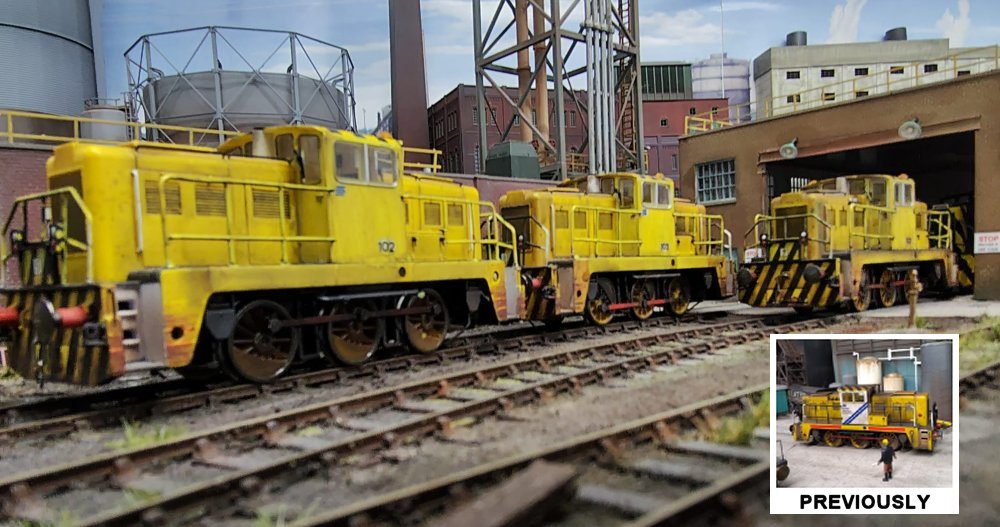 Three YEC Janus locomotives 102, 103 and 107 are captured here outside the maintenance
shed at the steelworks. They've all received partial repaints to backdate them slightly,
by removing the diagonal stripe and matching the yellow on the cab sides and solebars.
Three YEC Janus locomotives 102, 103 and 107 are captured here outside the maintenance
shed at the steelworks. They've all received partial repaints to backdate them slightly,
by removing the diagonal stripe and matching the yellow on the cab sides and solebars.
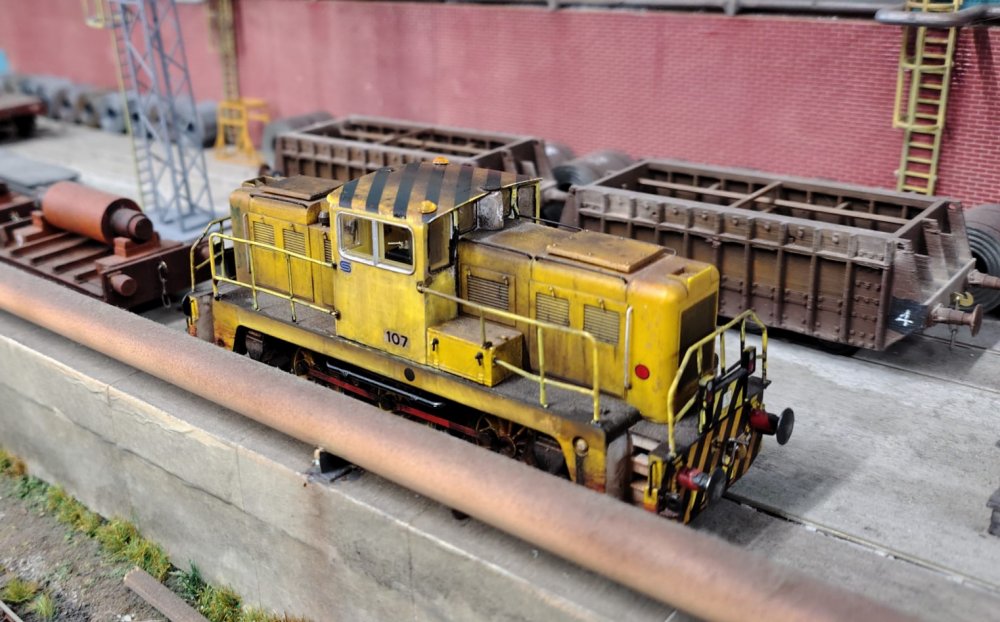 Here's 107 back in service with some light weathering to match the recent cosmetic changes.
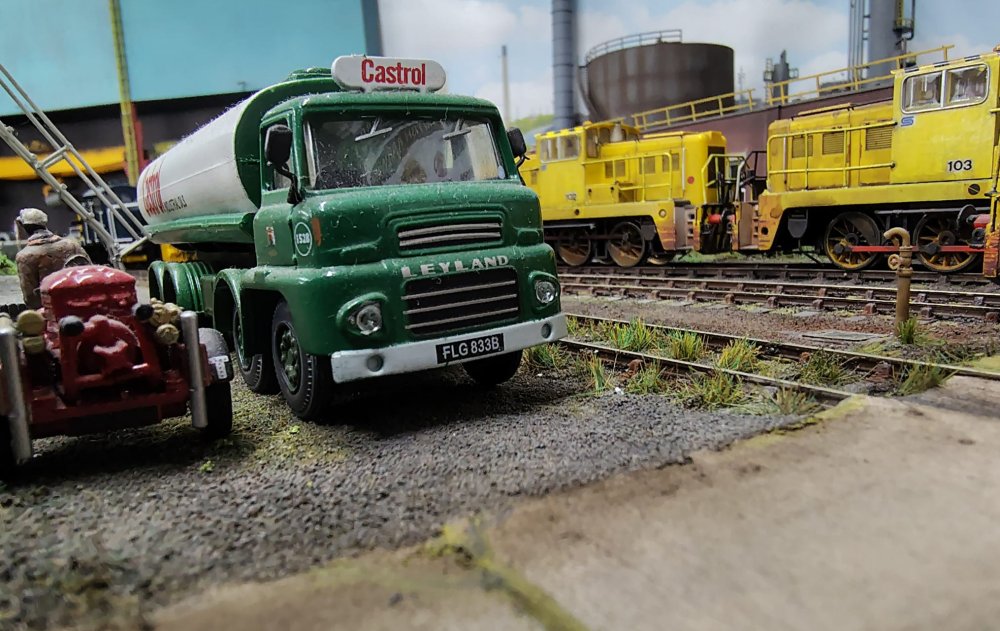 102 and 103 await their next turn of duty, whilst a Leyland tanker stands by with the next
delivery of fuel oil for the shunting loco fleet.
102 and 103 await their next turn of duty, whilst a Leyland tanker stands by with the next
delivery of fuel oil for the shunting loco fleet.
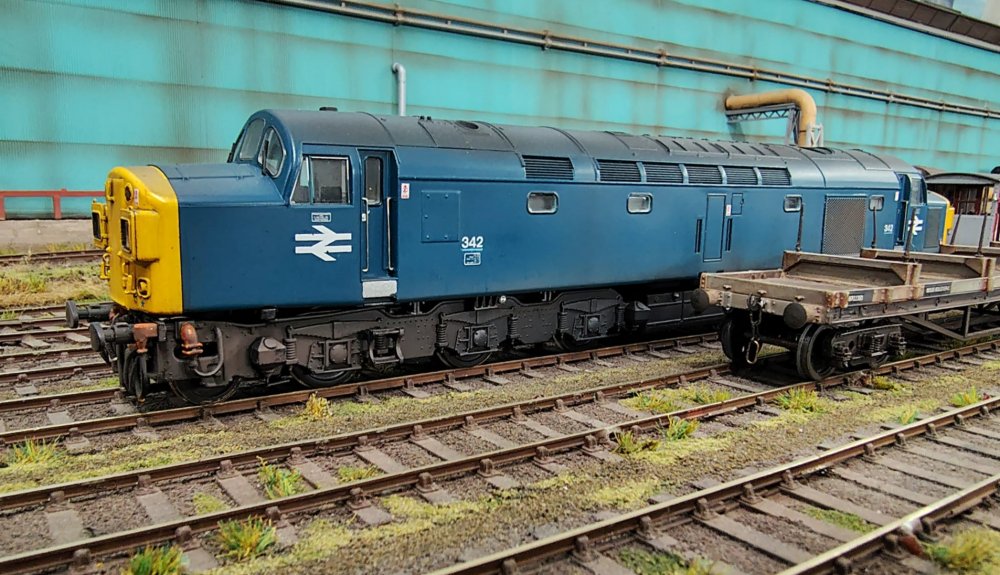 Half way down the exchange sidings, English Electric type 4 split box 342 is captured
whistling away and ready for its next turn of duty....
Half way down the exchange sidings, English Electric type 4 split box 342 is captured
whistling away and ready for its next turn of duty....
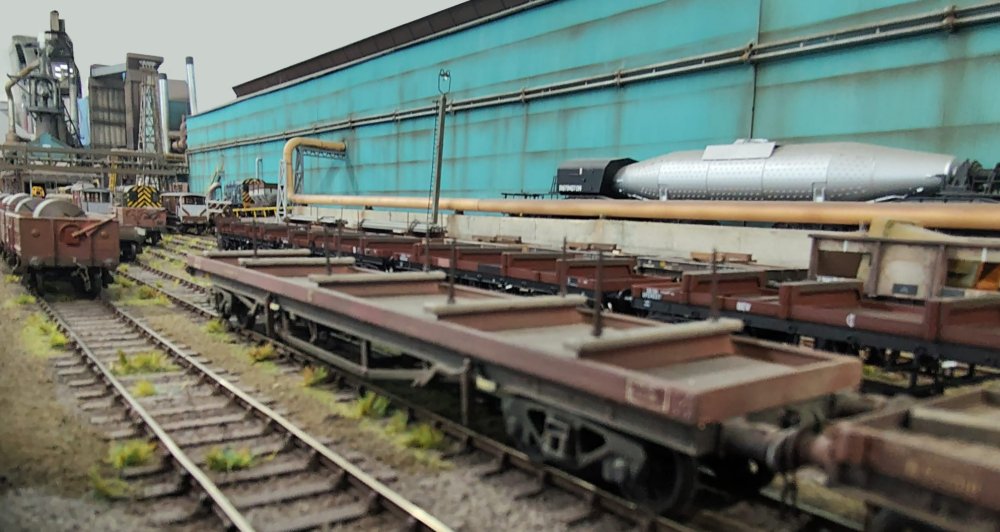 .... with a large selection of wagons ready for sorting.
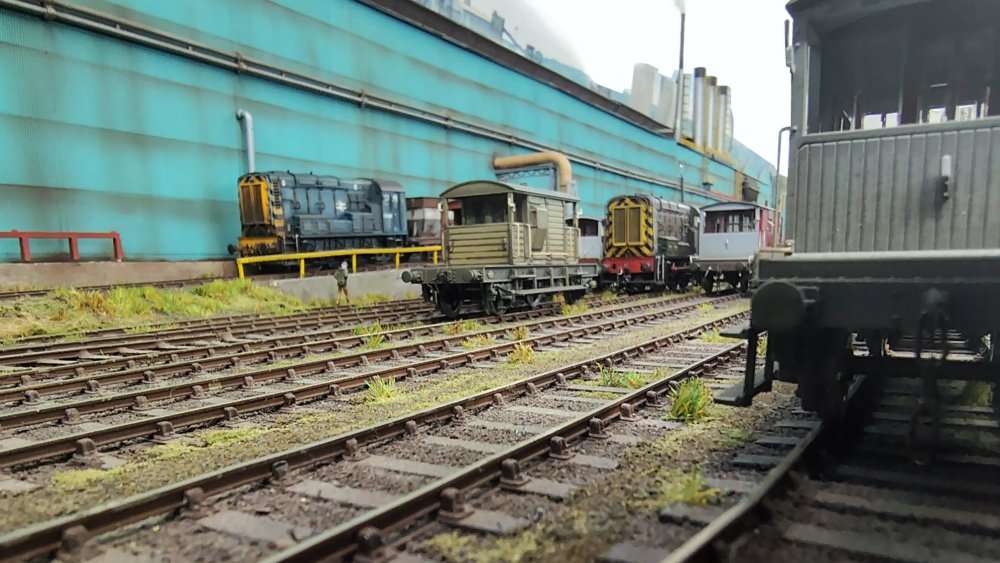 Brake vans dominate this scene as we get nearer to the coking ovens.
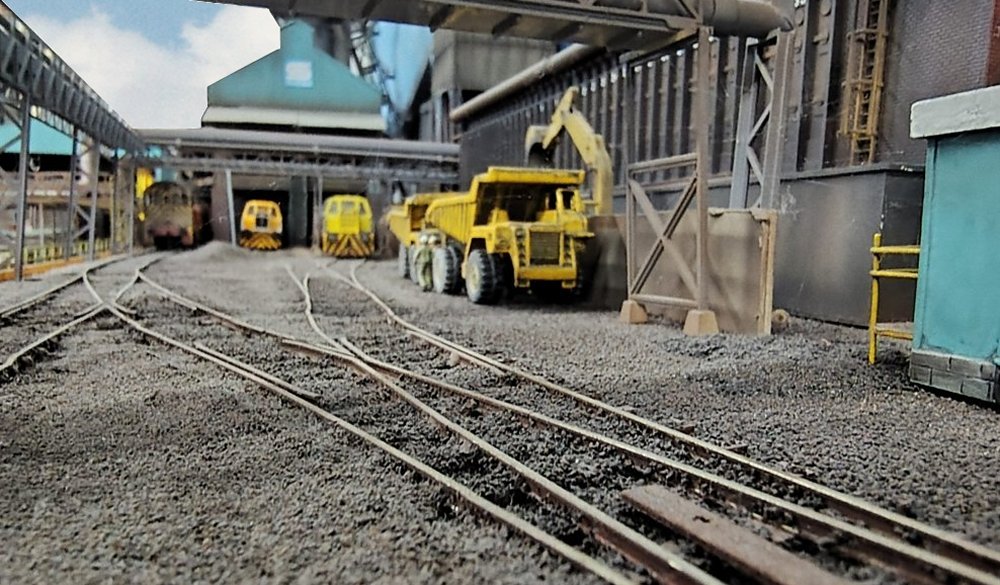 Between the coking ovens and the blast furnace we see a pair of Rolls Royce Sentinels....
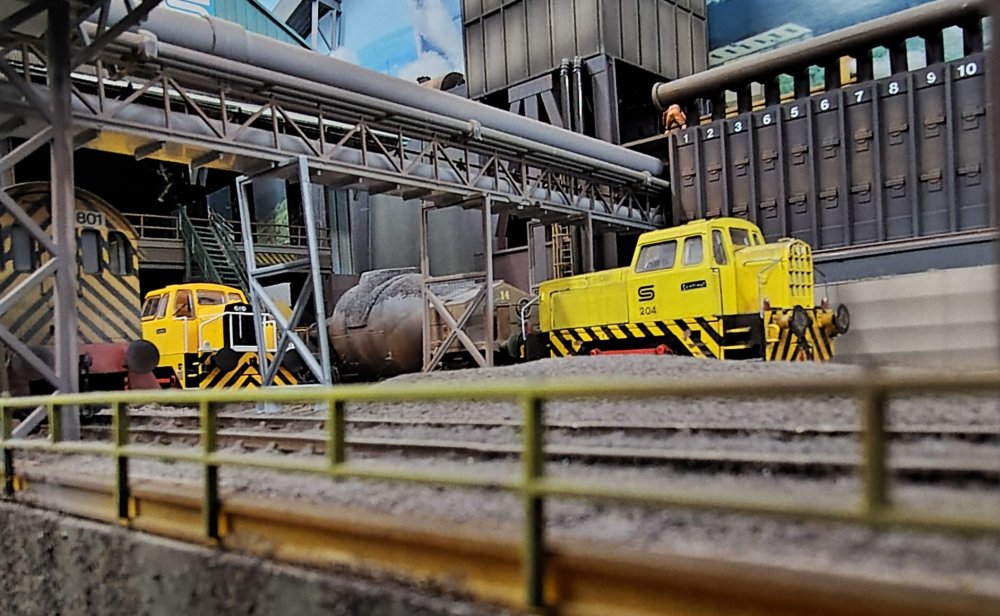 .... and just creeping into frame is an American Alco built bo-bo switcher number 801.
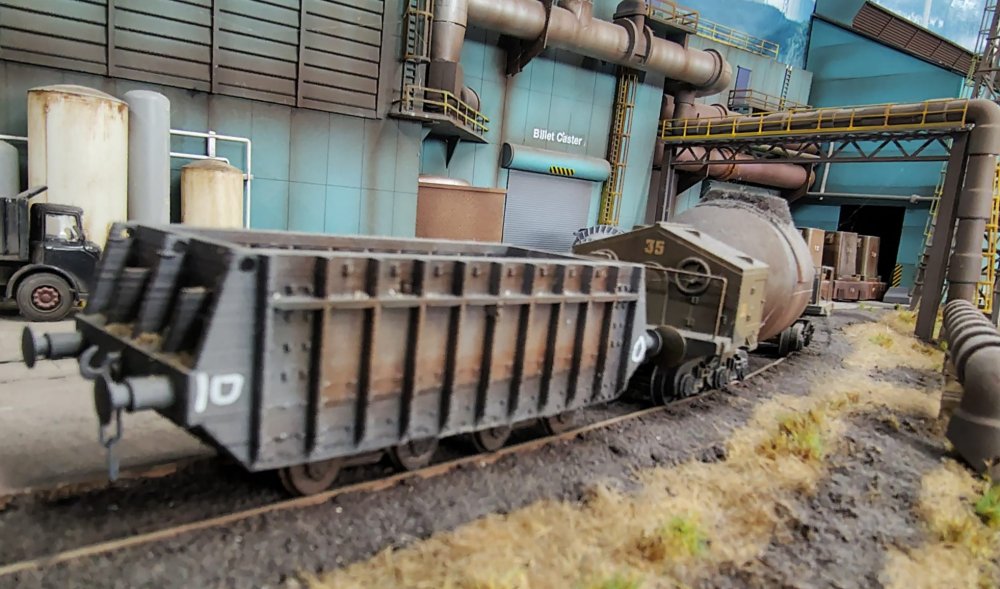 An ingot carrying wagon (AKA Panzer) and a molten steel carrier await shunting.
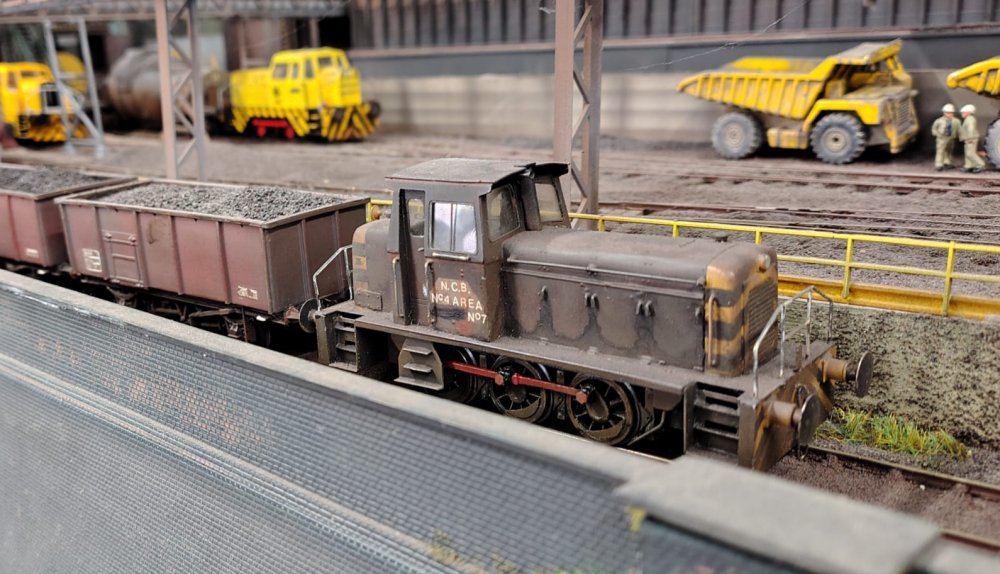 English Electric 0-6-0 (NCB No7) shunting 21 ton mineral wagons.
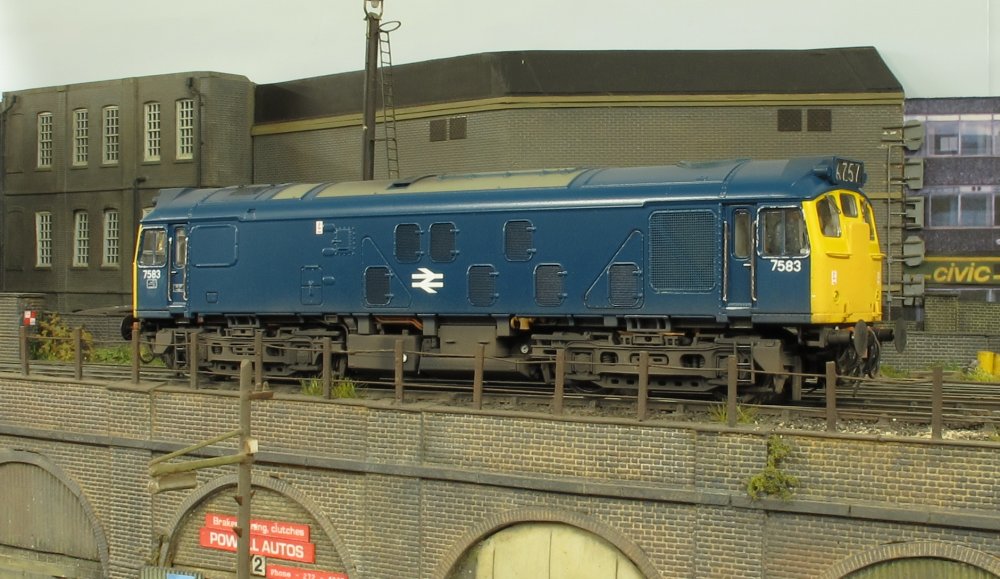 There's a couple of new locomotives into the Shenston Road fleet - 7583 is an early body
style Class 25 captured here at Hornsey Road depot.
There's a couple of new locomotives into the Shenston Road fleet - 7583 is an early body
style Class 25 captured here at Hornsey Road depot.
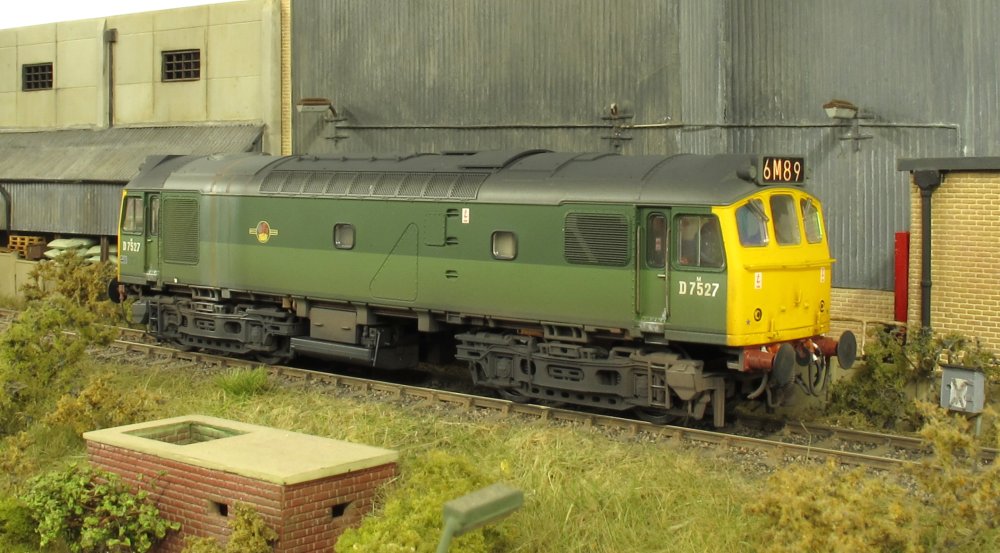 And a later body style Class 25 number 7527, both Bachmann SFX models.

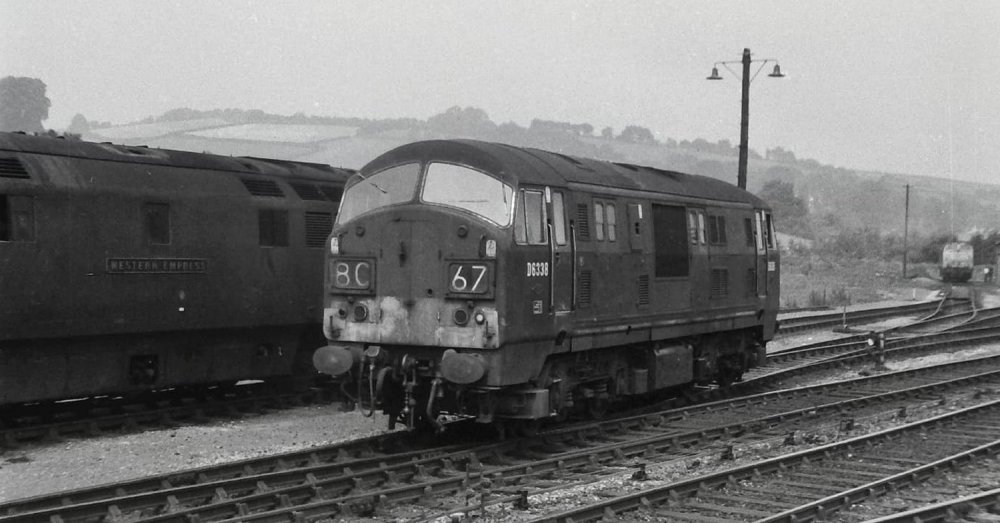 Continuing with a few more snaps taken in Devon during the summer of 1970, starting off with
North British hydraulic D6338 alongside D1037 Western Empress at Exeter stabling point in June 1970.
Continuing with a few more snaps taken in Devon during the summer of 1970, starting off with
North British hydraulic D6338 alongside D1037 Western Empress at Exeter stabling point in June 1970.
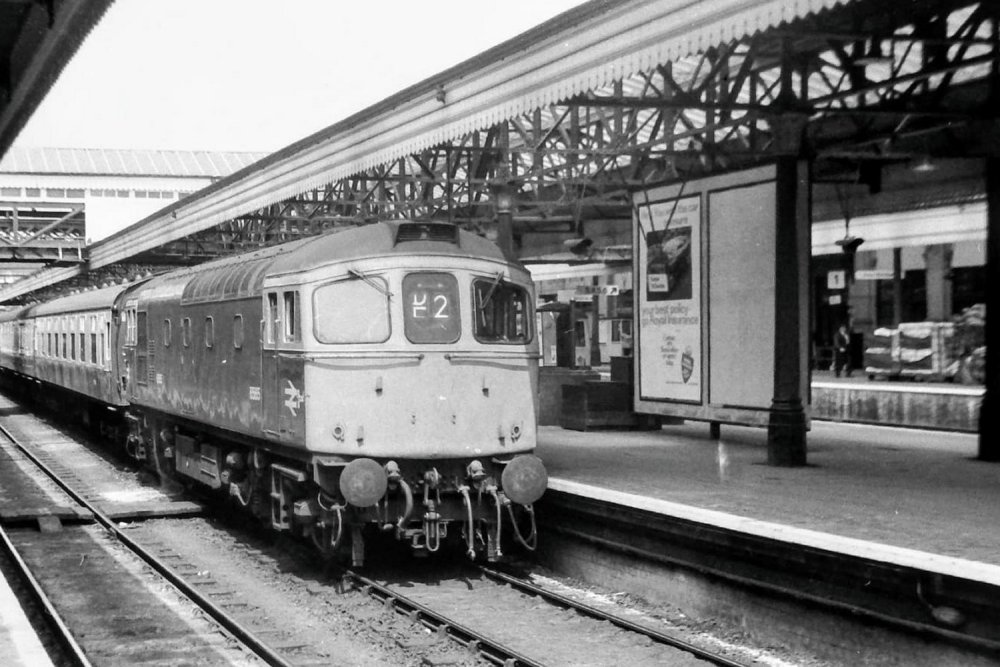 BRCW type 3 - 6565 at Exeter St Davids with a service to Waterloo in June 1970.
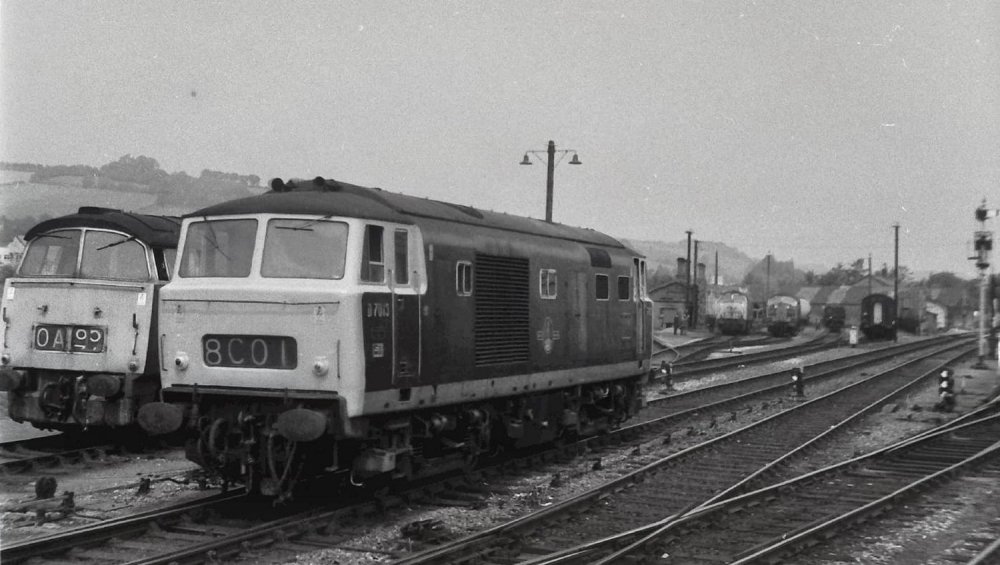 Hymek D7013 at Exeter stabling point in June 1970.
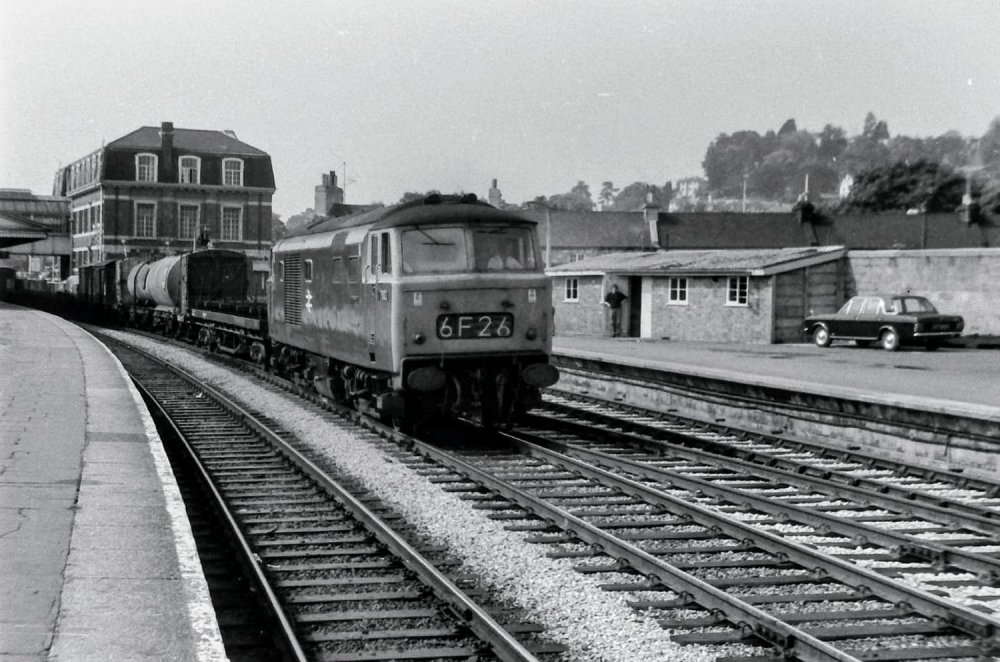 Hymek D7063 at Newton Abbot in June 1970 with a mixed freight.
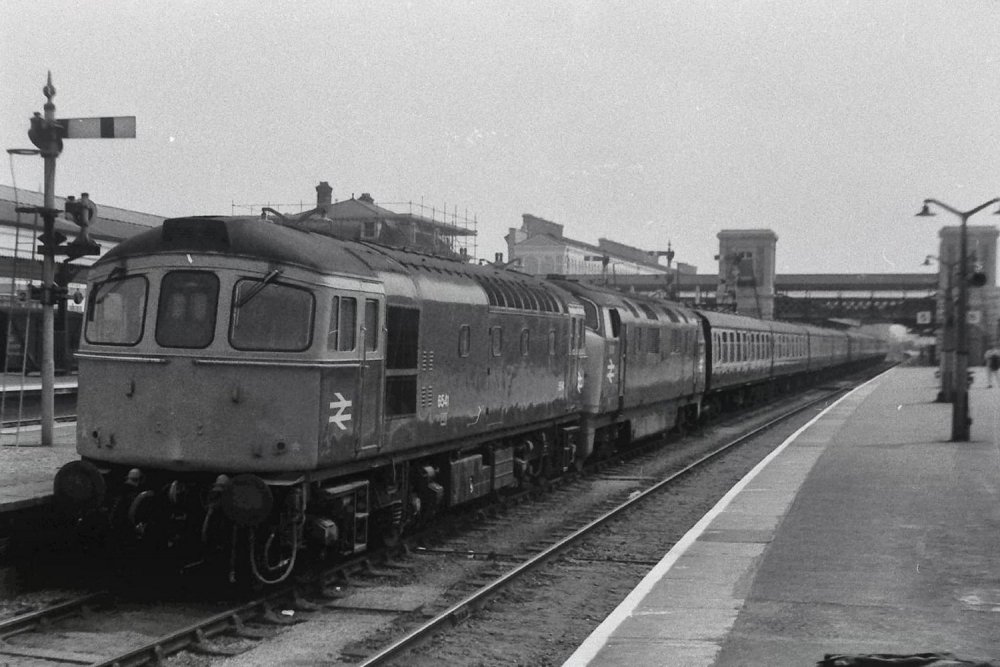 6541 helps an ailing D807 Caradoc into Exeter st Davids with a train from Waterloo.
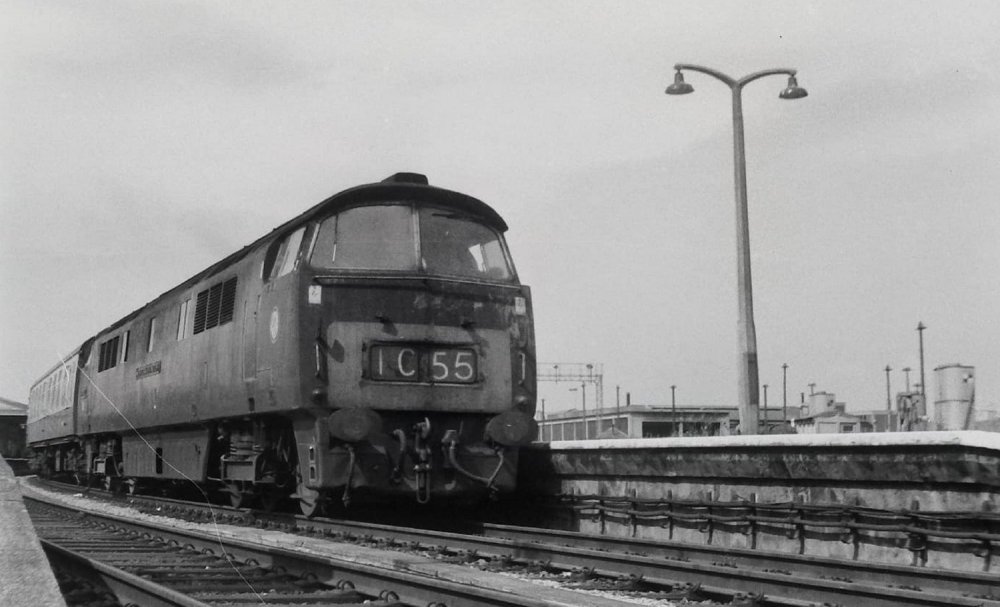 D1042 Western Princess at Newton Abbot on the 8th of June 1970.
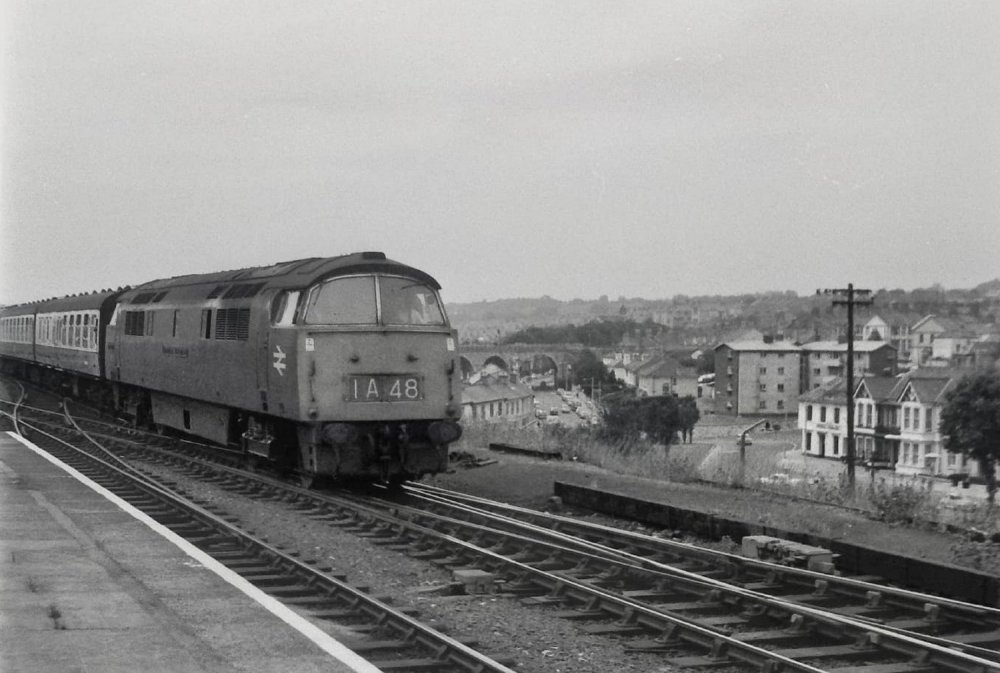 D1030 Western Musketeer at Plymouth on the 8th of June 1970.
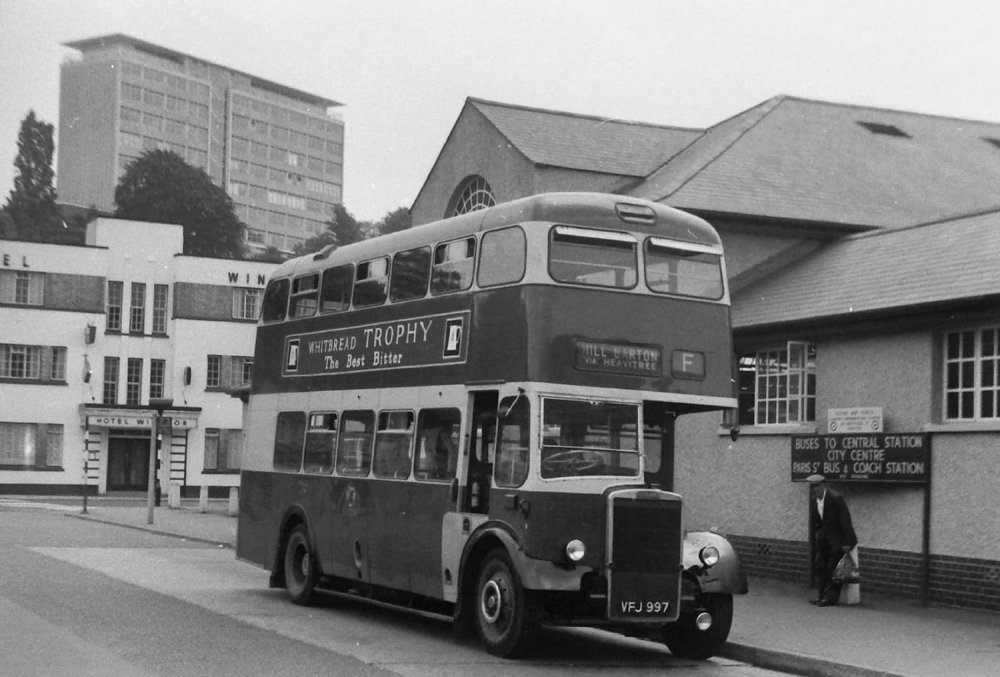 Here's another Brucie bonus, an Exeter Corporation Leyland PD2 - VFJ 997 on route F to
Hill Barton outside St Davids station in June 1970.
Here's another Brucie bonus, an Exeter Corporation Leyland PD2 - VFJ 997 on route F to
Hill Barton outside St Davids station in June 1970.
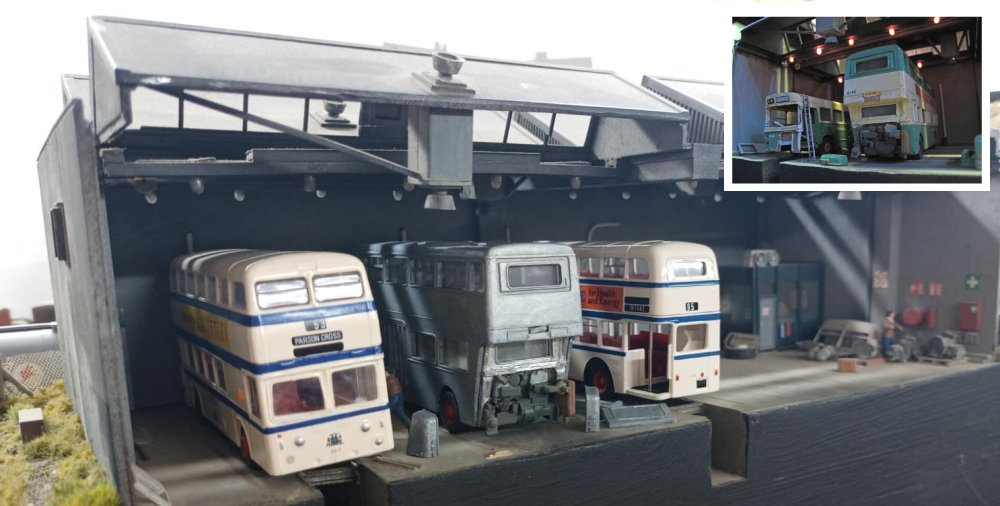 Meanwhile on the layout at the bus depot (constructed by Steve Adcock in 2002), there's been
a change of buses at the garage to suit a Sheffield theme. Once I managed to find the screws
under the double skinned baseboard, the West Yorkshire PTE verona green & cream liveried
Leyland Atlantean and Seddon Pennine were removed.
Meanwhile on the layout at the bus depot (constructed by Steve Adcock in 2002), there's been
a change of buses at the garage to suit a Sheffield theme. Once I managed to find the screws
under the double skinned baseboard, the West Yorkshire PTE verona green & cream liveried
Leyland Atlantean and Seddon Pennine were removed.
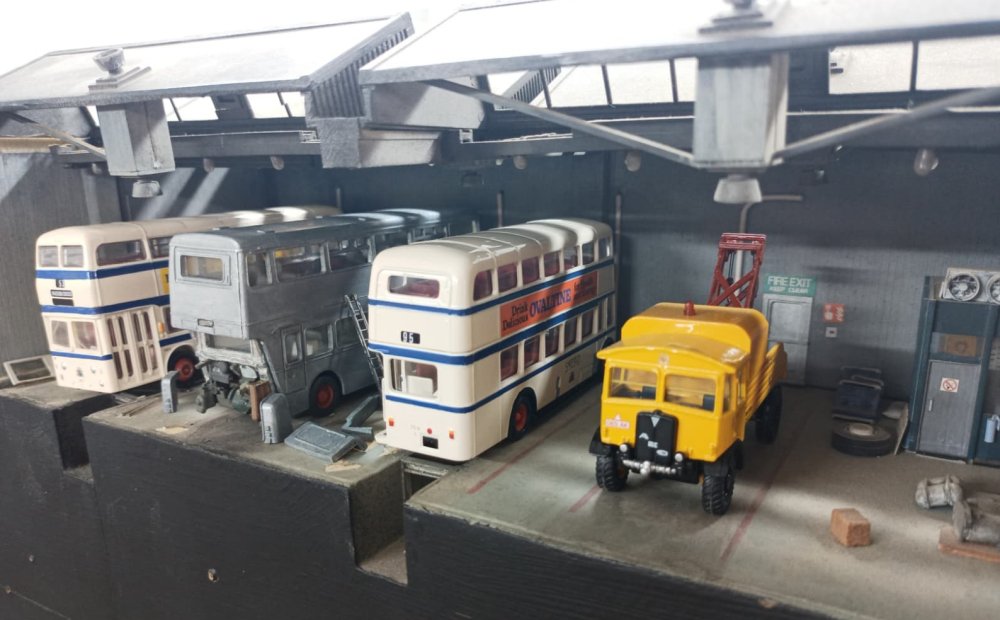 The Dinky diecast Atlantean was dismantled and dunked in stripper, so it's now back to bare
metal. The Pennine white metal kit may be a bit trickier as it can't easily be dismantled.
Doncaster had some of them so it might reappear in red.
The Dinky diecast Atlantean was dismantled and dunked in stripper, so it's now back to bare
metal. The Pennine white metal kit may be a bit trickier as it can't easily be dismantled.
Doncaster had some of them so it might reappear in red.

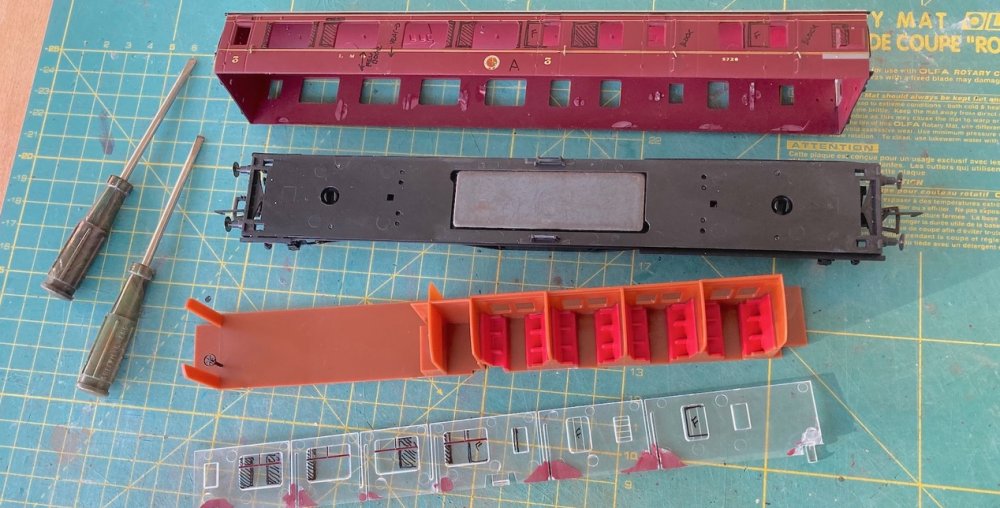 Yet another project that has been waiting in the queue for rather longer than it should
have! The Heater Vans were converted from 1960 to provide steam heat for trains on the
West Coast route after electrification, as the new AC electric locos were ETH fitted only
and most coaches were then still steam heated. Within a few years, as more ETH stock became
available the fleet were relegated to carriage heating duties at coach sidings or terminus
stations across BR. The batch of 20 vans (originally planned as 29) were converted from 57ft
LMS diagram 1745 vestibule TOs and followed a prototype van converted in 1958. The production
vans, to diagram 2192, were numbered M44401 to M44420 and classified as coaching stock
although several were later re-numbered in the LMR departmental series. The donor coach is
seen here after dismantling. This was a Hornby R4805 corridor brake third 5726 (Stanier
diagram 1905) as there were no diagram 1745 RTR stock about so I also needed a set of
Comet etched brass coach sides for the correct TO. All the detail was removed off the Hornby
donor and the Comet sides cut where required using a slitting disk in a mini-drill, to
accommodate the additional doors that were installed during the conversion.
Yet another project that has been waiting in the queue for rather longer than it should
have! The Heater Vans were converted from 1960 to provide steam heat for trains on the
West Coast route after electrification, as the new AC electric locos were ETH fitted only
and most coaches were then still steam heated. Within a few years, as more ETH stock became
available the fleet were relegated to carriage heating duties at coach sidings or terminus
stations across BR. The batch of 20 vans (originally planned as 29) were converted from 57ft
LMS diagram 1745 vestibule TOs and followed a prototype van converted in 1958. The production
vans, to diagram 2192, were numbered M44401 to M44420 and classified as coaching stock
although several were later re-numbered in the LMR departmental series. The donor coach is
seen here after dismantling. This was a Hornby R4805 corridor brake third 5726 (Stanier
diagram 1905) as there were no diagram 1745 RTR stock about so I also needed a set of
Comet etched brass coach sides for the correct TO. All the detail was removed off the Hornby
donor and the Comet sides cut where required using a slitting disk in a mini-drill, to
accommodate the additional doors that were installed during the conversion.
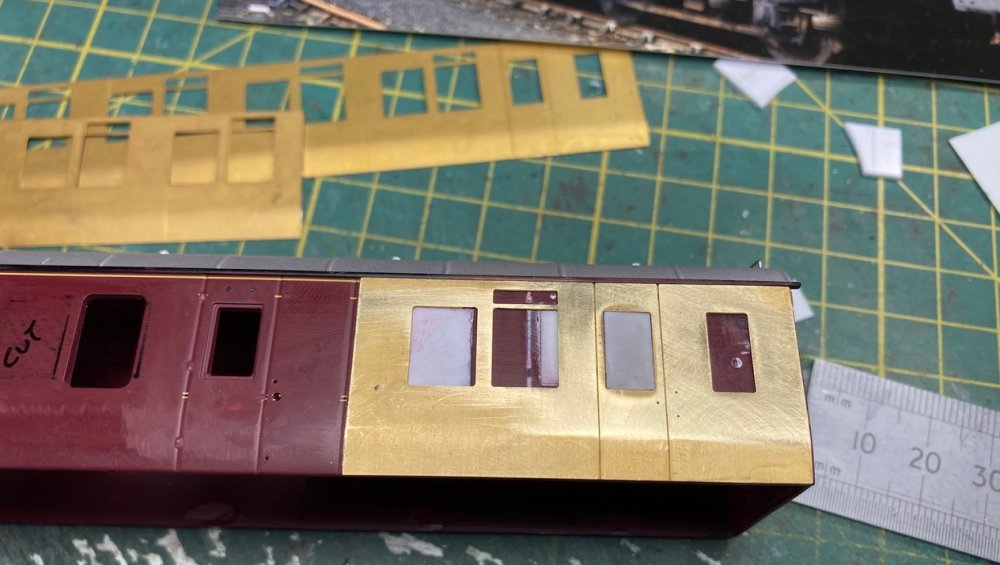 And here is the brass overlay in position with the sealed window positions. The door at this
end was not used in the prototype conversion and was plated over with a steel sheet, which
will be added later. Several of these vans ended up on the Western Region. I initially
planned to model the Canton example (in very worn maroon livery) but that van was essentially
an internal user so I settled on one of the Old Oak Common pair. I imagine it being moved
down to the carriage sidings at Swansea (which was home briefly to one of the smaller SR
vans, DS70185) via Morfa Bank, so it will be an infrequent visitor.
And here is the brass overlay in position with the sealed window positions. The door at this
end was not used in the prototype conversion and was plated over with a steel sheet, which
will be added later. Several of these vans ended up on the Western Region. I initially
planned to model the Canton example (in very worn maroon livery) but that van was essentially
an internal user so I settled on one of the Old Oak Common pair. I imagine it being moved
down to the carriage sidings at Swansea (which was home briefly to one of the smaller SR
vans, DS70185) via Morfa Bank, so it will be an infrequent visitor.
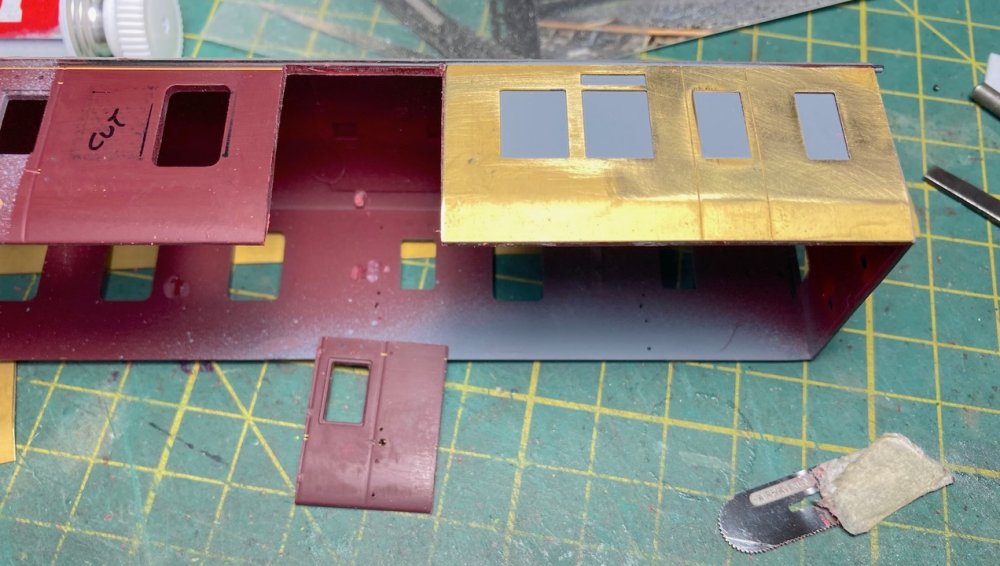 The extra thickness of the overlay meant that the double doors needed to be cut out using a
very fine saw blade and reaffixed about half a millimetre proud of their original position.
The body side beneath the overlay was primed early to see what areas needed filling to avoid
any unsightly lines.
The extra thickness of the overlay meant that the double doors needed to be cut out using a
very fine saw blade and reaffixed about half a millimetre proud of their original position.
The body side beneath the overlay was primed early to see what areas needed filling to avoid
any unsightly lines.
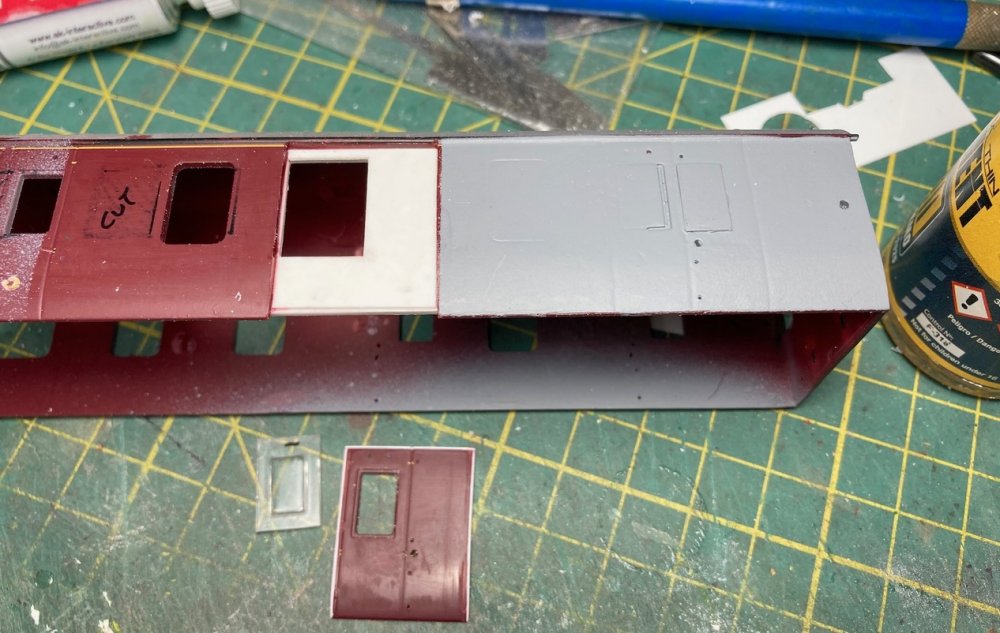 With that overlay removed the position of the old windows is clear but the visible lines
did not require filling as they will soon be permanently hidden behind the Comet side. A
piece of 30-thou sheet has filled in the door aperture (the large gap will accommodate the
original window moulding) and a 20-thou inlay added to bring the door moulding out to the
level of the brass sides. Pieces of thin strip have been added around the doors to
the thickness of the saw cuts.
With that overlay removed the position of the old windows is clear but the visible lines
did not require filling as they will soon be permanently hidden behind the Comet side. A
piece of 30-thou sheet has filled in the door aperture (the large gap will accommodate the
original window moulding) and a 20-thou inlay added to bring the door moulding out to the
level of the brass sides. Pieces of thin strip have been added around the doors to
the thickness of the saw cuts.
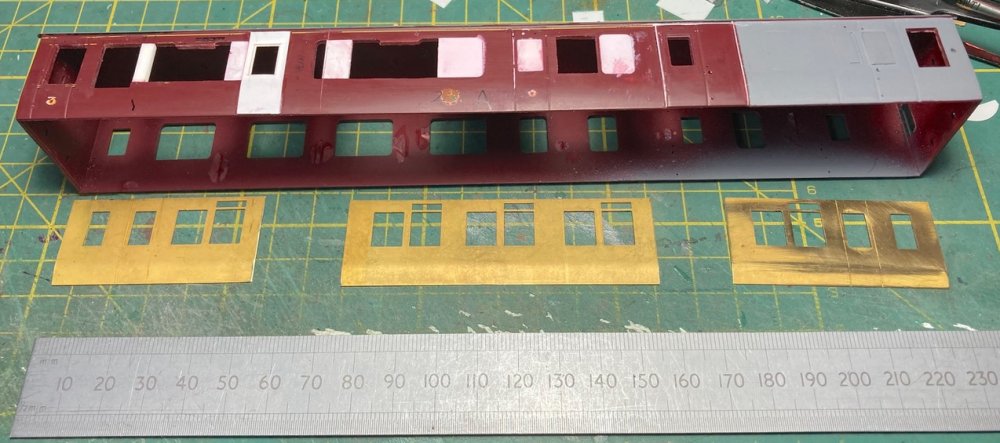 Here is the full side with much butchery evident to get the new window openings clear and
the door refitted proud of the original side. The three parts of the Comet side illustrate
the way these windows will fit onto the heavily modified donor. Some will be plated as part
of the original van conversion, some open.
Here is the full side with much butchery evident to get the new window openings clear and
the door refitted proud of the original side. The three parts of the Comet side illustrate
the way these windows will fit onto the heavily modified donor. Some will be plated as part
of the original van conversion, some open.
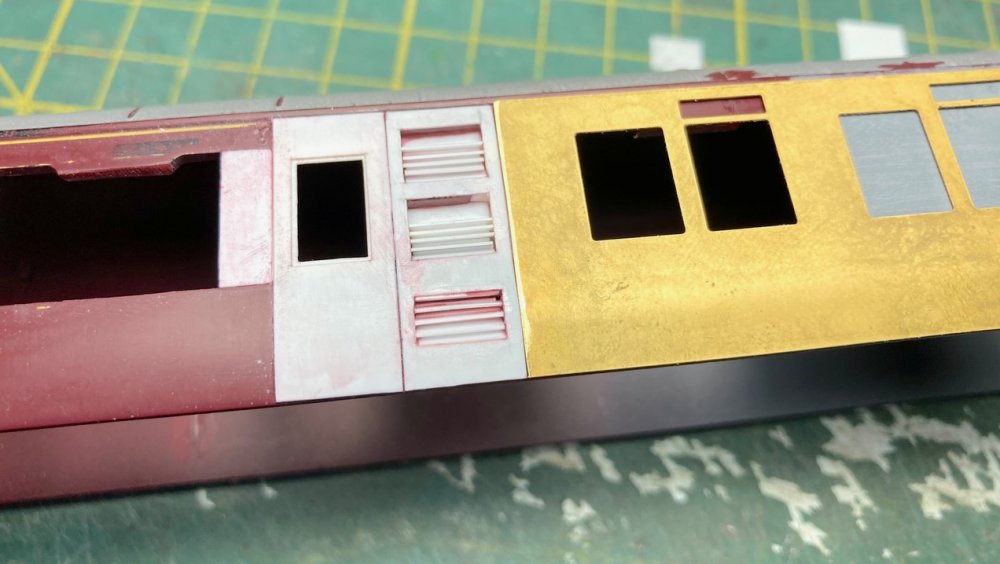 The next area to be tackled was the vented door, behind which on the prototype is the
generator. The new doors were built up with layers of 10-thou sheet (being careful to get
the levels correct with the adjoining brass sides) while the louvres were created by using
Evergreen strip with thinner strips used between each one to create consistent gaps- see below.
The next area to be tackled was the vented door, behind which on the prototype is the
generator. The new doors were built up with layers of 10-thou sheet (being careful to get
the levels correct with the adjoining brass sides) while the louvres were created by using
Evergreen strip with thinner strips used between each one to create consistent gaps- see below.
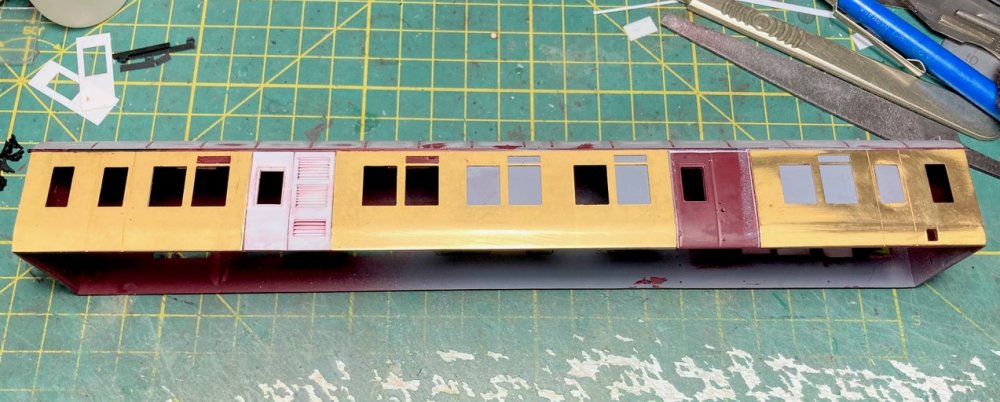 This is the first side basically complete but with lots still to do. The square cut out at
the right hand end will accommodate the water tank fillers (there are two tanks, one each
side behind the blanked off windows).
This is the first side basically complete but with lots still to do. The square cut out at
the right hand end will accommodate the water tank fillers (there are two tanks, one each
side behind the blanked off windows).
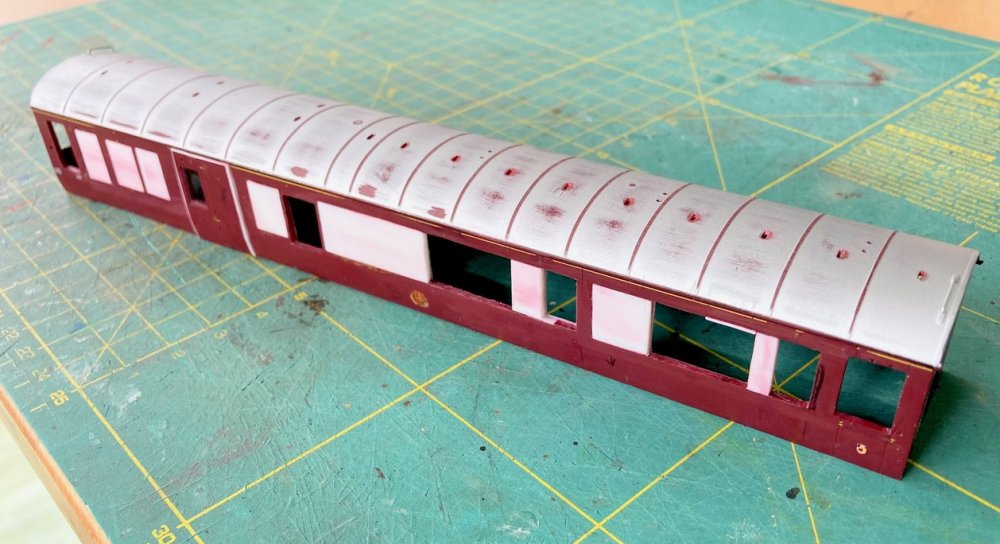 The first side was a learning curve so when tackling side two I made a few changes to the
way the body was initially modified. This side ended up rather stronger than the original
and didn’t require so much bracing behind the scenes. By now the roof has had all the
vents and pipework removed as there are some big modifications to come up there. The
prominent bands have also been thinned down ahead of the later work.
The first side was a learning curve so when tackling side two I made a few changes to the
way the body was initially modified. This side ended up rather stronger than the original
and didn’t require so much bracing behind the scenes. By now the roof has had all the
vents and pipework removed as there are some big modifications to come up there. The
prominent bands have also been thinned down ahead of the later work.
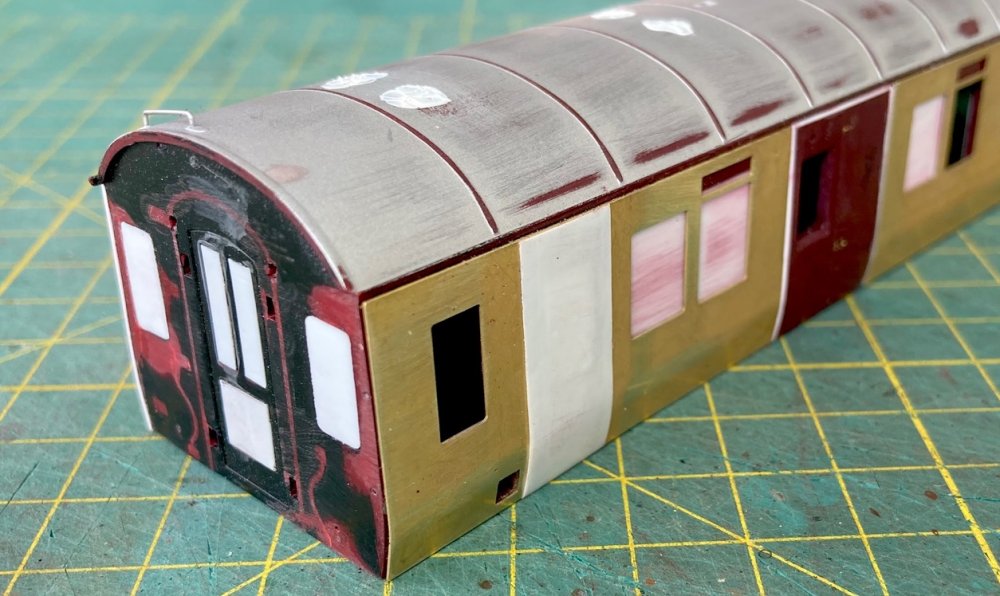 Next to be tackled were the ends. These were going to require 10-thou overlays so all the
detail (and the corridor connections) was removed. The recesses on the doors were also filled
in and, on this end, the windows of the original guard’s compartment. The handrail on the
roof was left in place from the original coach. Also added now is the plate over the
redundant door at this end. The holes where the vents were removed have also been filled.
Next to be tackled were the ends. These were going to require 10-thou overlays so all the
detail (and the corridor connections) was removed. The recesses on the doors were also filled
in and, on this end, the windows of the original guard’s compartment. The handrail on the
roof was left in place from the original coach. Also added now is the plate over the
redundant door at this end. The holes where the vents were removed have also been filled.
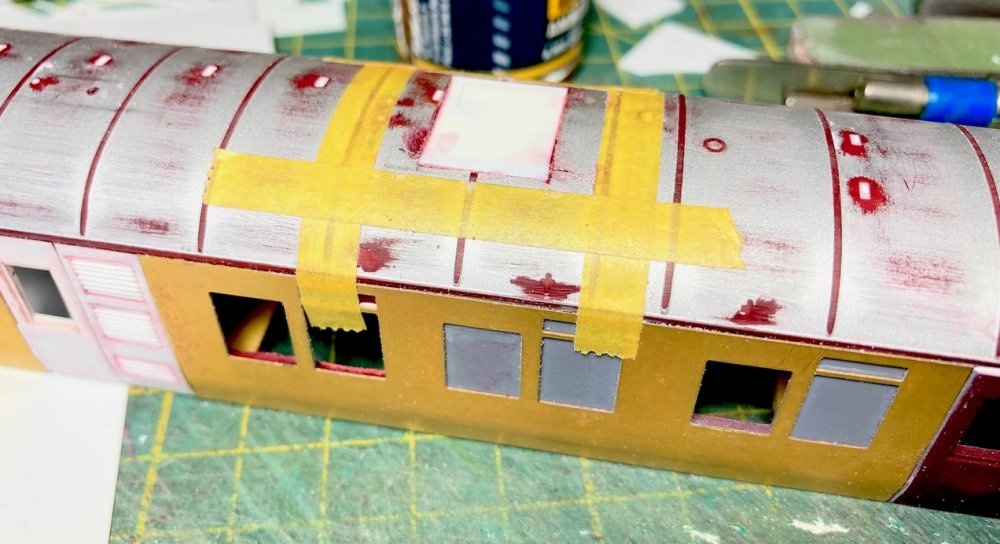 Next up was the roof. The large vent for the train heating boiler was fitted into a recessed
panel in the roof and was also slightly offset to one side. The required section has been cut
out and a new flat piece fitted into the recess. The surrounding hood has been marked out
using masking tape before measuring and cut from 30-thou sheet.
Next up was the roof. The large vent for the train heating boiler was fitted into a recessed
panel in the roof and was also slightly offset to one side. The required section has been cut
out and a new flat piece fitted into the recess. The surrounding hood has been marked out
using masking tape before measuring and cut from 30-thou sheet.
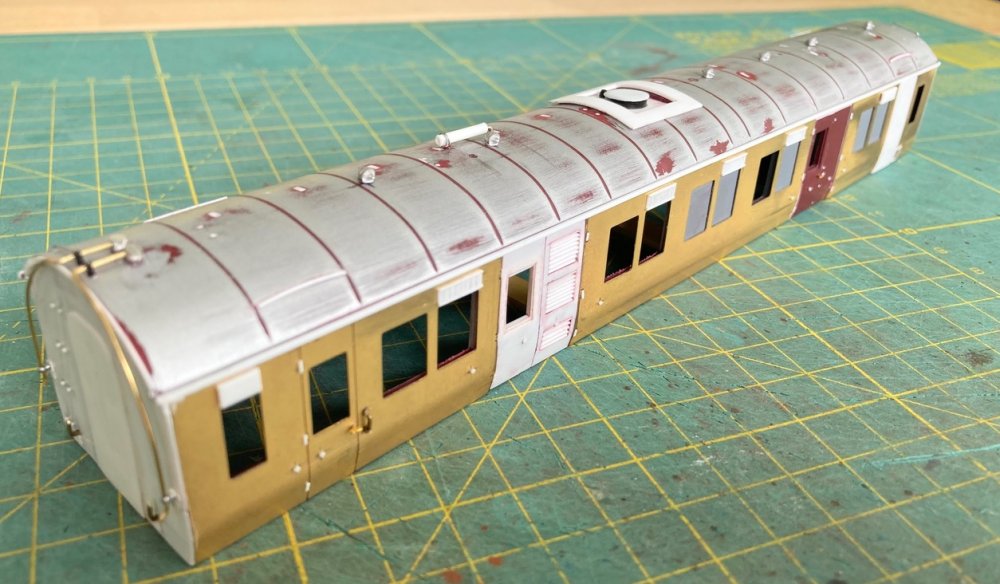 It’s getting there! The large boiler vent, the hood and the exhaust pipe above the generator
have been fitted. Also added by this stage are the central roof shell vents, the water filler
pipes at one end and the lamp irons. New vents over some of the windows have also been fitted
along with door handles (again from Comet), handrails (salvaged Hornby mouldings from the
donor coach), door bumpers and hinges.
It’s getting there! The large boiler vent, the hood and the exhaust pipe above the generator
have been fitted. Also added by this stage are the central roof shell vents, the water filler
pipes at one end and the lamp irons. New vents over some of the windows have also been fitted
along with door handles (again from Comet), handrails (salvaged Hornby mouldings from the
donor coach), door bumpers and hinges.
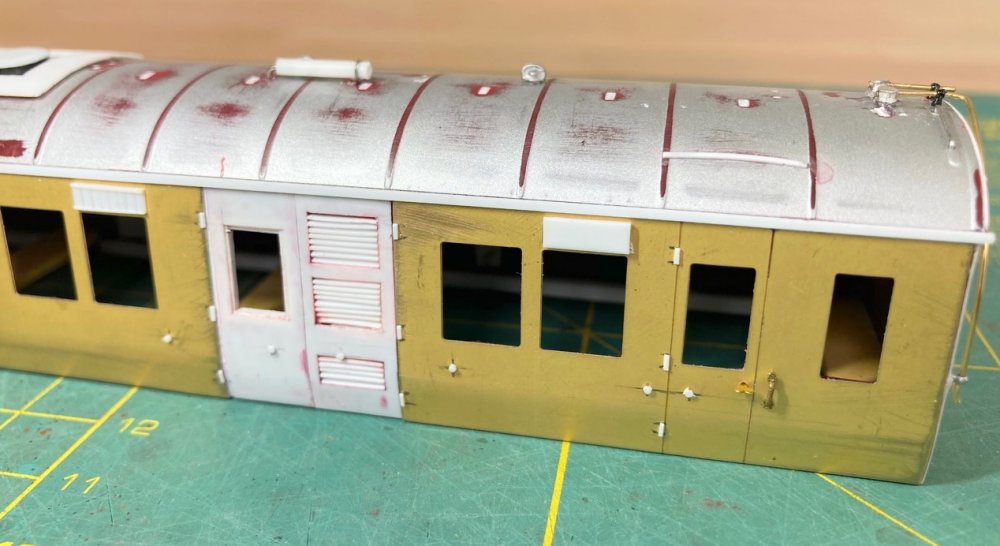 This view shows the fuel tank and generator end of the coach. The generator sits behind the
double doors (hence the vents) and exhausts through the roof where you can just pick out the
silencer on the roof. Also showing are the additional details added to the Comet sides
This view shows the fuel tank and generator end of the coach. The generator sits behind the
double doors (hence the vents) and exhausts through the roof where you can just pick out the
silencer on the roof. Also showing are the additional details added to the Comet sides
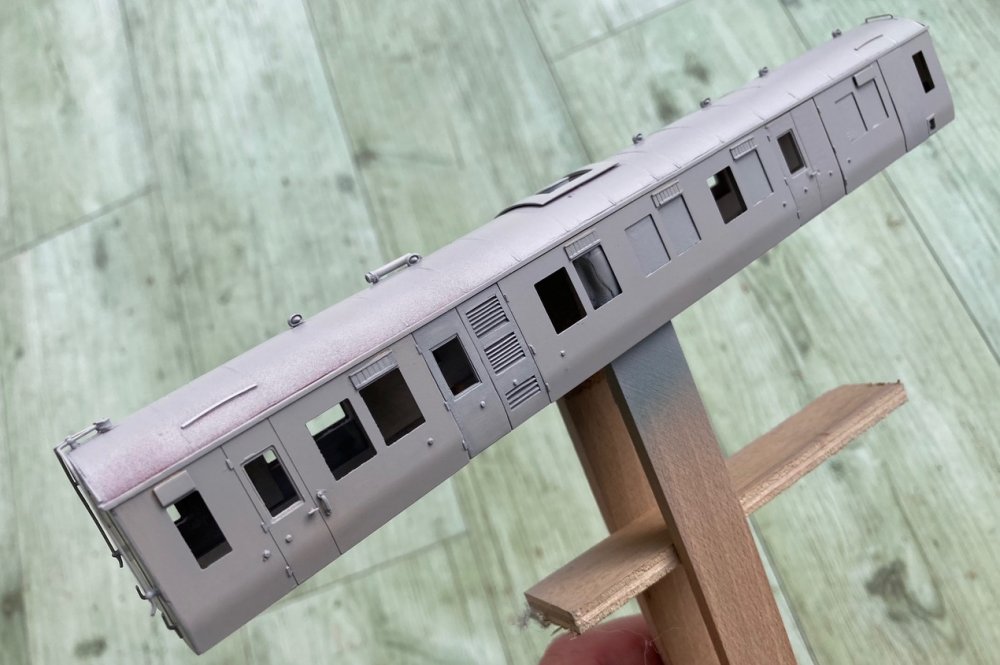 At last primer has been sprayed and the thing is starting to look like the prototype. This
was the second attempt at this - my old faithful can of Halfords primer finally ran out
and the replacement brand was a disaster necessitating a complete strip down back to bare
metal and plastic! Halfords have changed the recipe on their primer and so, after a careful
search, a Hycote can was obtained and off we went again. Success, but there is still, however,
lots to do! The livery will be slightly faded rail blue, which was carried by all except the
maroon Canton van, DM395950 (ex-M44420M).
At last primer has been sprayed and the thing is starting to look like the prototype. This
was the second attempt at this - my old faithful can of Halfords primer finally ran out
and the replacement brand was a disaster necessitating a complete strip down back to bare
metal and plastic! Halfords have changed the recipe on their primer and so, after a careful
search, a Hycote can was obtained and off we went again. Success, but there is still, however,
lots to do! The livery will be slightly faded rail blue, which was carried by all except the
maroon Canton van, DM395950 (ex-M44420M).
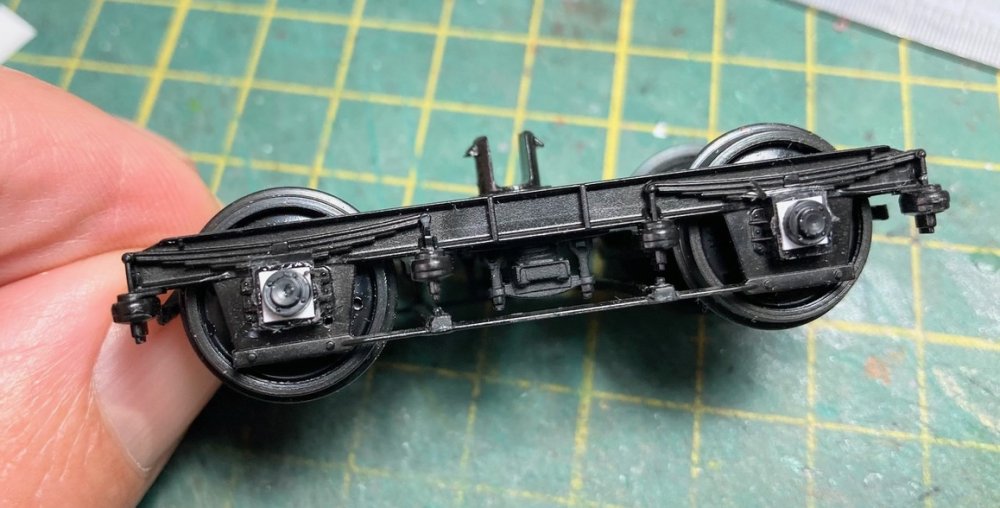 One of the unique features of these vans were the bogies - these otherwise standard LMS
examples were modified with roller bearings. For the model the original oil axleboxes
were removed with a cutting disk and then replaced with spare roller bearings from a Parkside
Grampus kit. Not perfect but close enough. Step boards will also need to be added on one set.
One of the unique features of these vans were the bogies - these otherwise standard LMS
examples were modified with roller bearings. For the model the original oil axleboxes
were removed with a cutting disk and then replaced with spare roller bearings from a Parkside
Grampus kit. Not perfect but close enough. Step boards will also need to be added on one set.
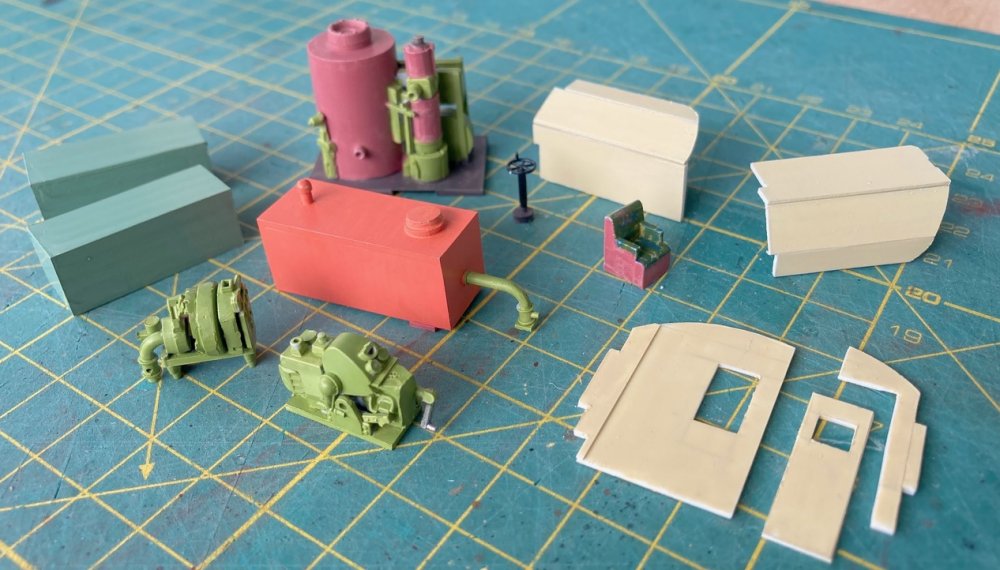 Meanwhile, in between all the bodywork, the interior details needed to be constructed.
From left to right we have the two water tanks (mainly hidden behind body panels), the
water pump, the fuel tank (not very visible in the few pictures but apparently orange!).
Behind that is the boiler itself, which looking on the diagram could have been Clayton
examples, and was made from an old cotton reel and bits from the scrap box. In front is
the generator (mainly parts from a WW2 German motorcycle and sidecar kit!). The brake
hand wheel is from the original RTR coach as was the chair. The other parts are the
lavatory compartment, the cupboard and the single internal partition.
Meanwhile, in between all the bodywork, the interior details needed to be constructed.
From left to right we have the two water tanks (mainly hidden behind body panels), the
water pump, the fuel tank (not very visible in the few pictures but apparently orange!).
Behind that is the boiler itself, which looking on the diagram could have been Clayton
examples, and was made from an old cotton reel and bits from the scrap box. In front is
the generator (mainly parts from a WW2 German motorcycle and sidecar kit!). The brake
hand wheel is from the original RTR coach as was the chair. The other parts are the
lavatory compartment, the cupboard and the single internal partition.
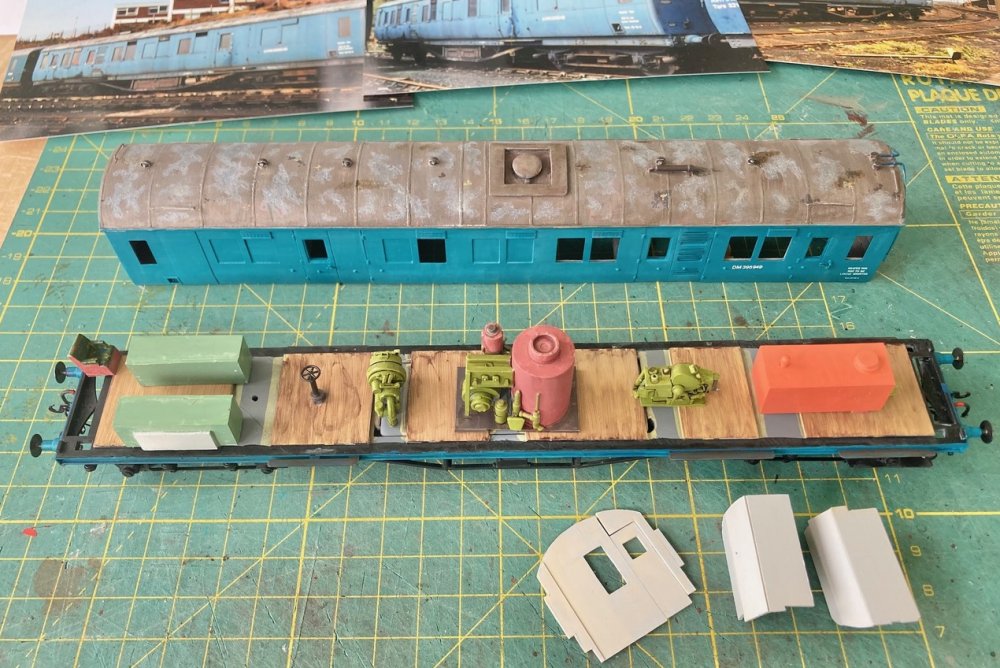 The component parts ready for final assembly (and some of the prototype photos too). The
van was given several thinned brush coats of Railmatch Faded Rail Blue enamel and the
roof a mix of three different shades of grey acrylic. After adding the few transfers,
the rail blue was then further faded using a white Ammo of Mig Oilbrusher, blended with
thinners, while the roof was then given several coats of enamel washes and a coat of
matt varnish followed by a suitably patchy finish using light grey and silver weathering
pencils. In front the underframe shows the temporary positioning of the various internal
components. All of these sit on cross beams that brace the body internally so will be fitted
permanently once the windows have been fitted (to provide some room inside to slot them in).
The component parts ready for final assembly (and some of the prototype photos too). The
van was given several thinned brush coats of Railmatch Faded Rail Blue enamel and the
roof a mix of three different shades of grey acrylic. After adding the few transfers,
the rail blue was then further faded using a white Ammo of Mig Oilbrusher, blended with
thinners, while the roof was then given several coats of enamel washes and a coat of
matt varnish followed by a suitably patchy finish using light grey and silver weathering
pencils. In front the underframe shows the temporary positioning of the various internal
components. All of these sit on cross beams that brace the body internally so will be fitted
permanently once the windows have been fitted (to provide some room inside to slot them in).
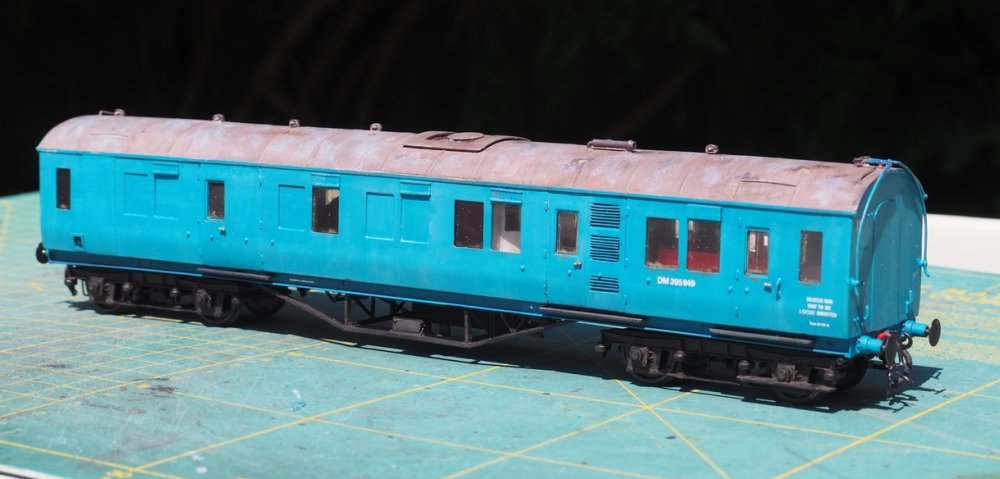 And, at last, here is the finished heater van, basking in the sun and awaiting a trip from
Old Oak Common to Swansea Maliphant via Morfa Bank. The faded rail blue has come out quite
well and matches up with the various photos of the prototype van. The original Hornby coach
was clipped together but once the interior and glazing had been removed the clips became
redundant. It is now held together with two screws from beneath, much easier than the
fiddly clips that most modern coaches use in the assembly process. And so, onto the next project!
And, at last, here is the finished heater van, basking in the sun and awaiting a trip from
Old Oak Common to Swansea Maliphant via Morfa Bank. The faded rail blue has come out quite
well and matches up with the various photos of the prototype van. The original Hornby coach
was clipped together but once the interior and glazing had been removed the clips became
redundant. It is now held together with two screws from beneath, much easier than the
fiddly clips that most modern coaches use in the assembly process. And so, onto the next project!
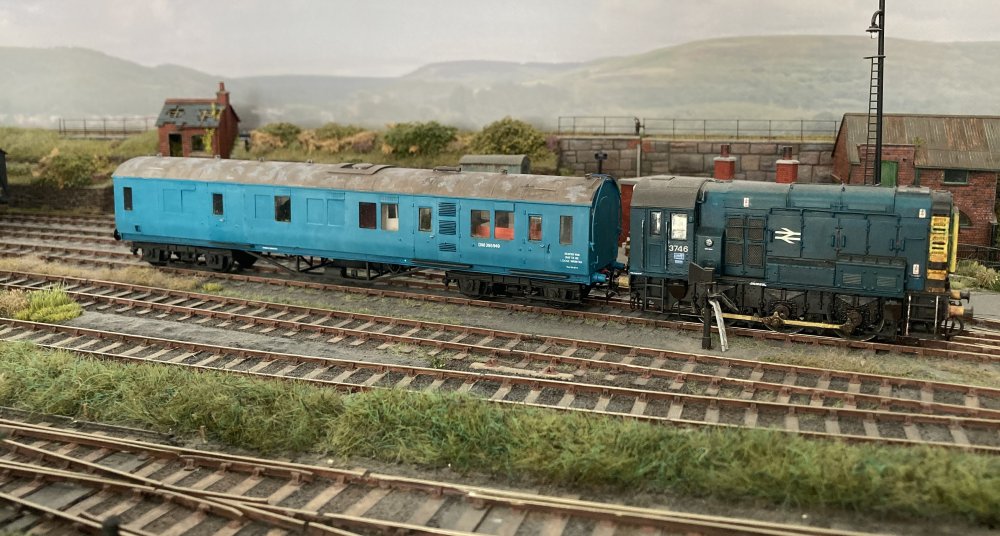 As the natural light was nice this morning I got a pic of the boiler van rolling into
Morfa Bank Sidings en-route to Swansea.
As the natural light was nice this morning I got a pic of the boiler van rolling into
Morfa Bank Sidings en-route to Swansea.

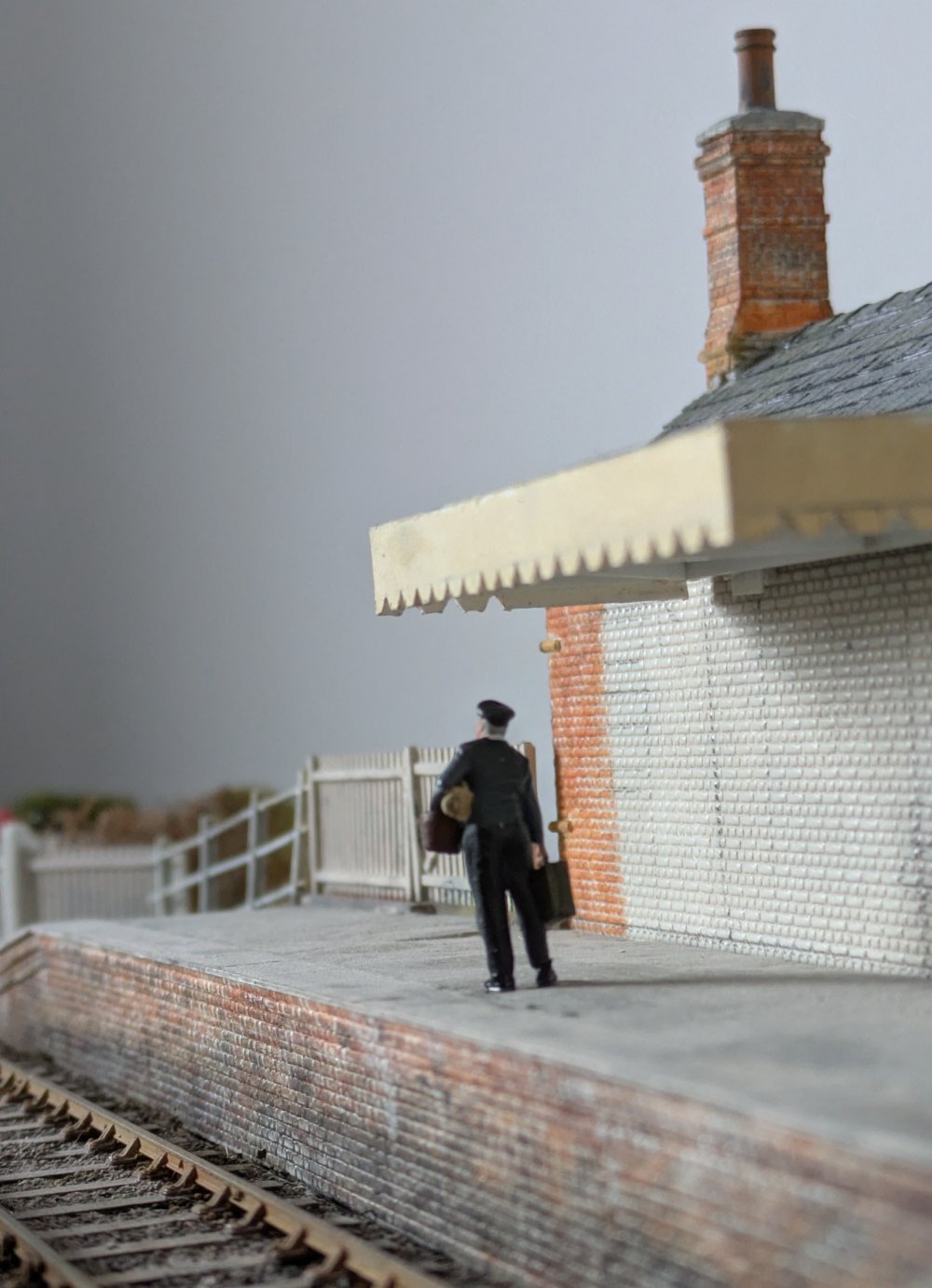 In this heat Whitley is packed away and in the shade, so the opportunity has been taken to
complete the last finishing touches and bring the layout to completion ready for exhibiting.
Over detailing has always been a temptation and can impact the scene. Uncoupling stock at
the station was operationally challenging owing to sighting, so a Modelu porter has been
placed at the magnet position, not only to mark the spot but also to add life to the scene
Positioning here balances the layout end against the fixed distant signal at the other,
framing the vision extremities of movement. This rear view shows the backstage nature of
the building, not the front of house.
In this heat Whitley is packed away and in the shade, so the opportunity has been taken to
complete the last finishing touches and bring the layout to completion ready for exhibiting.
Over detailing has always been a temptation and can impact the scene. Uncoupling stock at
the station was operationally challenging owing to sighting, so a Modelu porter has been
placed at the magnet position, not only to mark the spot but also to add life to the scene
Positioning here balances the layout end against the fixed distant signal at the other,
framing the vision extremities of movement. This rear view shows the backstage nature of
the building, not the front of house.
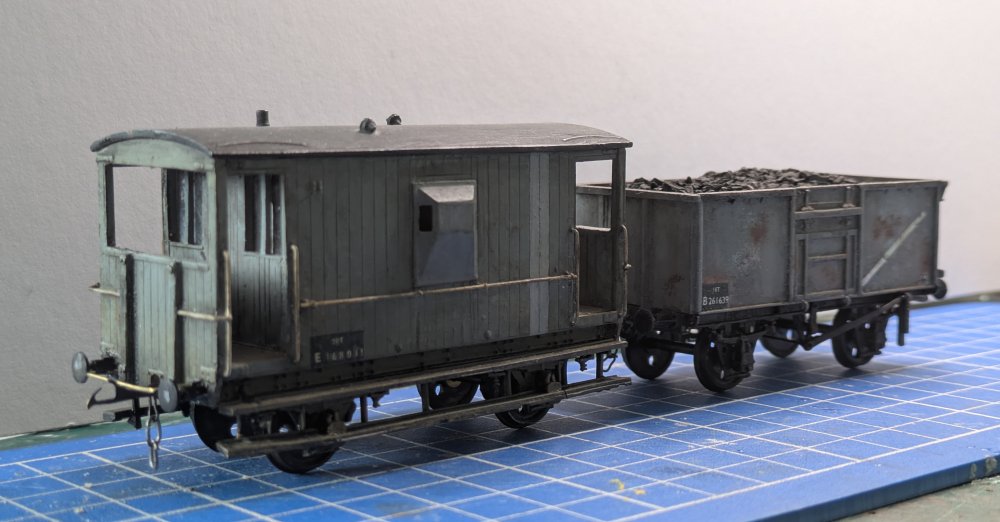 Another Airfix 'two-bob mineral wagon' kit from an MRJ article is ready for service. Finished
in a slightly darker grey with compensation and Lanarkshire Models buffers fitted. The
Parkside LNER brake van survived a bounce off an exhibition floor and is now restored
to become the current spare.
Another Airfix 'two-bob mineral wagon' kit from an MRJ article is ready for service. Finished
in a slightly darker grey with compensation and Lanarkshire Models buffers fitted. The
Parkside LNER brake van survived a bounce off an exhibition floor and is now restored
to become the current spare.

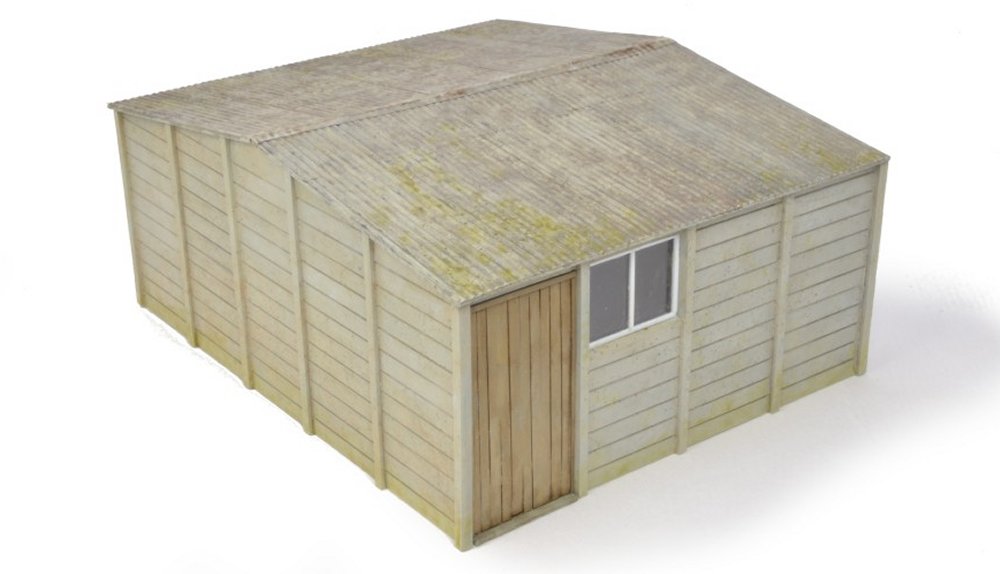 Representing pre-fab concrete has long been a challenge for me. I attempted the Ratio
Provender kit a few years ago but could not get a paint job I was satisfied with. The
opportunity recently arose to scratchbuild a small building destined for a friend's layout.
Representing pre-fab concrete has long been a challenge for me. I attempted the Ratio
Provender kit a few years ago but could not get a paint job I was satisfied with. The
opportunity recently arose to scratchbuild a small building destined for a friend's layout.
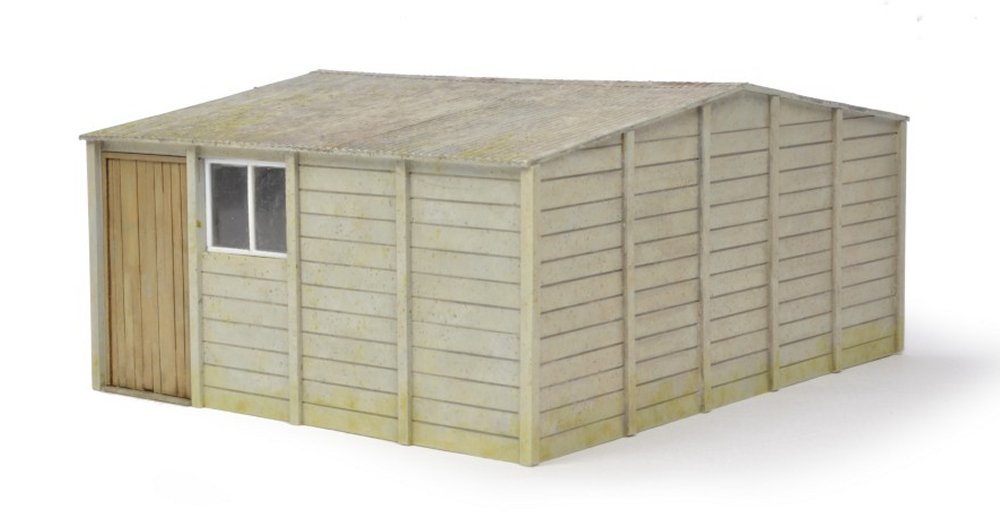 Given the small size, and simple design, the structure itself is entirely built from plastic
sheet - the sides are scribed to represent the panels, and the roof is SE Finecast embossed
sheet. The paintwork was the result of an awful lot of experimentation, repainting and
tweaking as I went along. I hope that I've managed to get a finish that gets somewhere close
to the ballpark shade of pre-fab concrete.
Given the small size, and simple design, the structure itself is entirely built from plastic
sheet - the sides are scribed to represent the panels, and the roof is SE Finecast embossed
sheet. The paintwork was the result of an awful lot of experimentation, repainting and
tweaking as I went along. I hope that I've managed to get a finish that gets somewhere close
to the ballpark shade of pre-fab concrete.

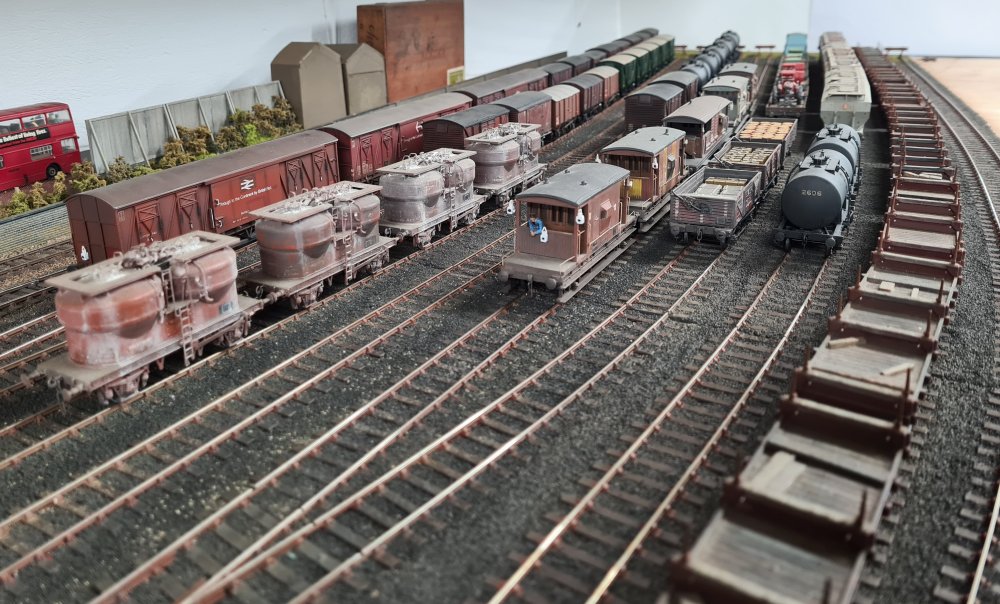 Much use has been made of the initial six sidings on the new East London layout, and it soon
became apparent that there were more wagons than I had space for. Three new sidings (to the
right in this image) have now been laid, wired, painted and ballasted - bringing greater
flexibility for shunting operations. The weed layers are still yet to visit this site.
Much use has been made of the initial six sidings on the new East London layout, and it soon
became apparent that there were more wagons than I had space for. Three new sidings (to the
right in this image) have now been laid, wired, painted and ballasted - bringing greater
flexibility for shunting operations. The weed layers are still yet to visit this site.
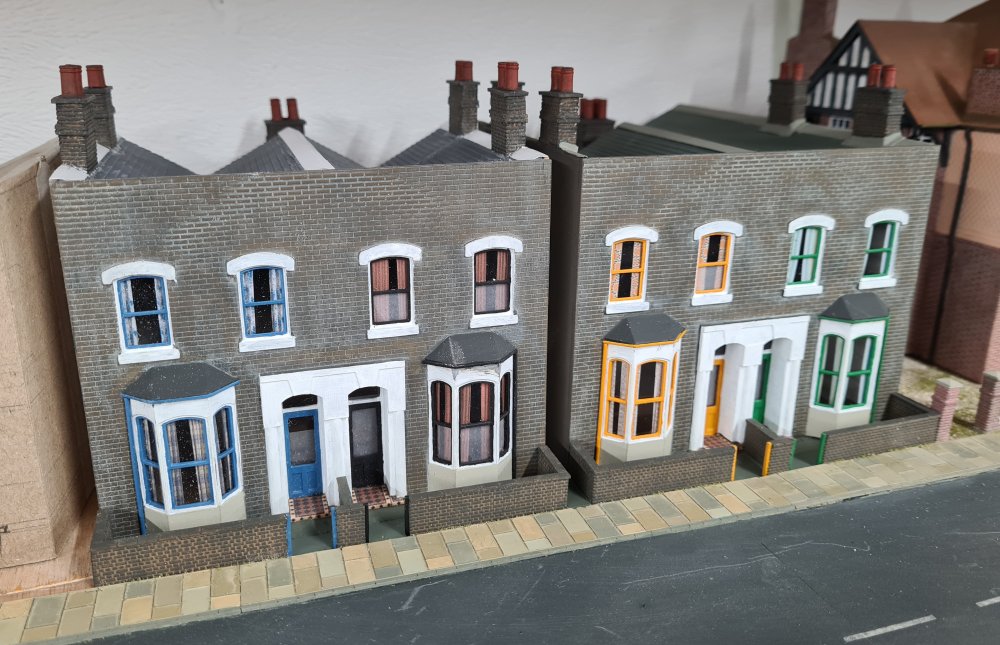 In between playing trains, some work has continued with the buildings which form the backdrop
to the layout. This pair of semi-detached properties utilise Jonny's 3D printed facades, and now
the main building structure and roof sections have been finished ready for painting. The pavement
has been laid and the houses have walls for the front gardens, shown here awaiting gates and some
high / low tone weathering.
In between playing trains, some work has continued with the buildings which form the backdrop
to the layout. This pair of semi-detached properties utilise Jonny's 3D printed facades, and now
the main building structure and roof sections have been finished ready for painting. The pavement
has been laid and the houses have walls for the front gardens, shown here awaiting gates and some
high / low tone weathering.
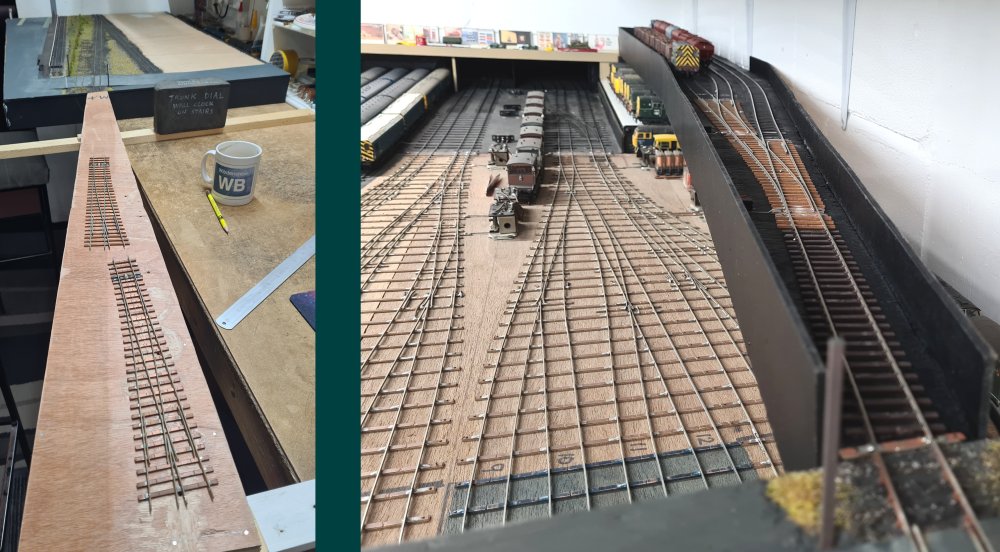 Whilst shunting in the new exchange sidings, a longer headshunt was required as well as an
off-scene yard at the end of the dock tramway. A new easily removable baseboard / bridge has
been constructed with a couple of points to form a 3-siding yard. Traffic for the docks can be
hauled one way, then propelled back when required to form new mixed freights, without the need to
reach over and uncouple, whilst any of the roads can provide over 10ft of usable headshunt.
Whilst shunting in the new exchange sidings, a longer headshunt was required as well as an
off-scene yard at the end of the dock tramway. A new easily removable baseboard / bridge has
been constructed with a couple of points to form a 3-siding yard. Traffic for the docks can be
hauled one way, then propelled back when required to form new mixed freights, without the need to
reach over and uncouple, whilst any of the roads can provide over 10ft of usable headshunt.
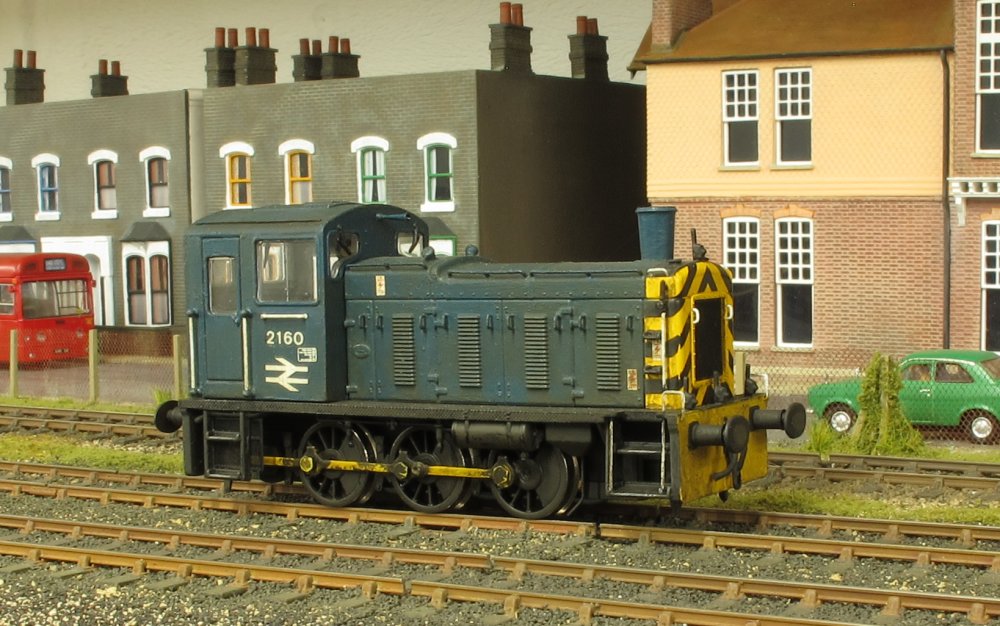 This Bachmann sound fitted Class 03 was aquired a few months ago in white BIS livery at a
bargain price, and has now been repainted into BR blue livery. Although in blue, it depicts a
pre-refurbished example with bonnet end steps and no water filler pipes on the front.
This Bachmann sound fitted Class 03 was aquired a few months ago in white BIS livery at a
bargain price, and has now been repainted into BR blue livery. Although in blue, it depicts a
pre-refurbished example with bonnet end steps and no water filler pipes on the front.
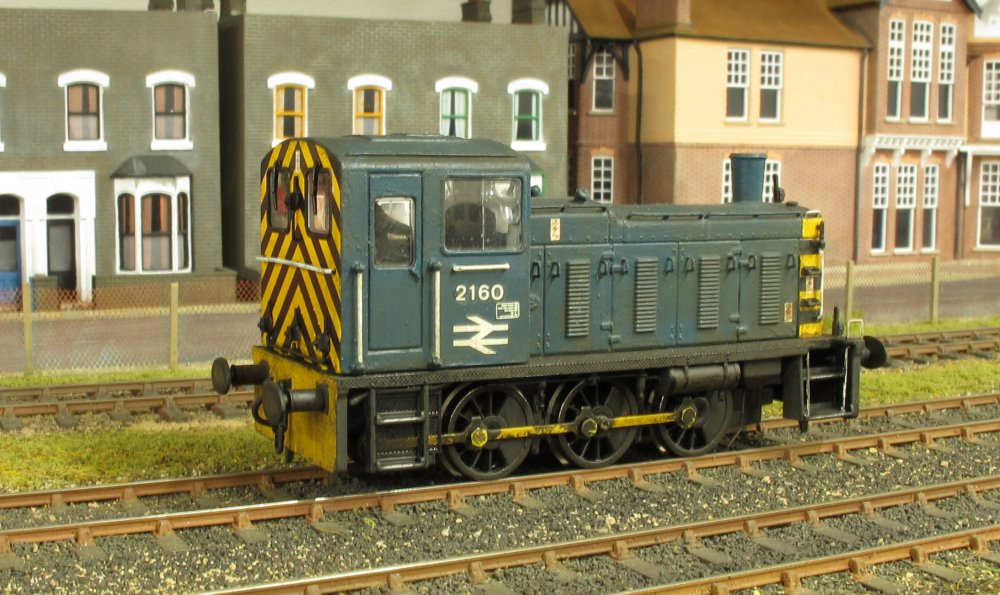 This loco was allocated to Holbeck in the early 1970s, and because the livery and bodystyle choices
are limited, we can assume it was on loan to Stratford for operating the docks exchange
sidings. Fitted with a stay-alive, the sound and operation of this model is really something else.
This loco was allocated to Holbeck in the early 1970s, and because the livery and bodystyle choices
are limited, we can assume it was on loan to Stratford for operating the docks exchange
sidings. Fitted with a stay-alive, the sound and operation of this model is really something else.
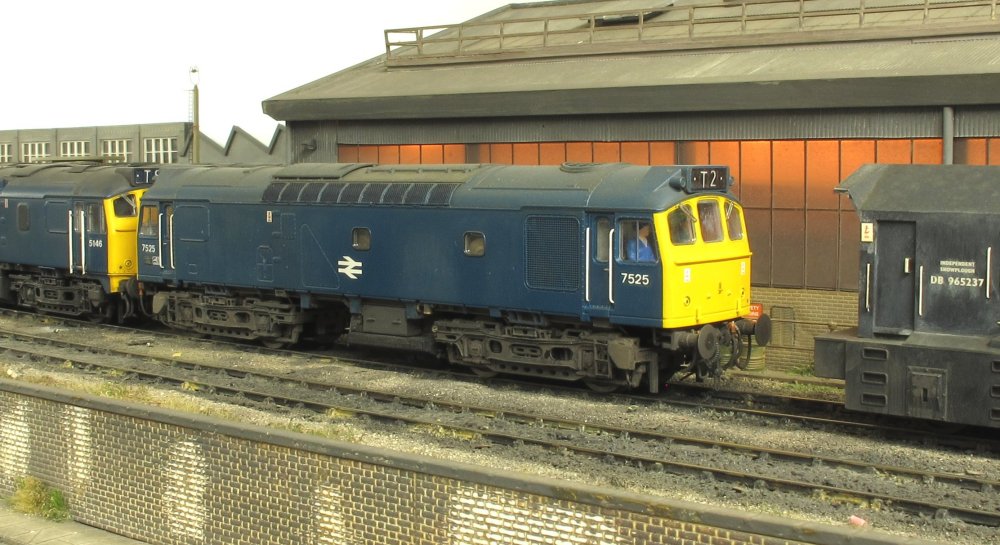 New into the Hornsey fleet is this BR Sulzer type 2 numbered 7525, which was allocated to Willesden
in the early 1970s and regularly used at Euston on station pilot duties, hence the -T2- headcode,
and ideal for working cross-London freights. A customised Bachmann factory sound fitted model.
New into the Hornsey fleet is this BR Sulzer type 2 numbered 7525, which was allocated to Willesden
in the early 1970s and regularly used at Euston on station pilot duties, hence the -T2- headcode,
and ideal for working cross-London freights. A customised Bachmann factory sound fitted model.
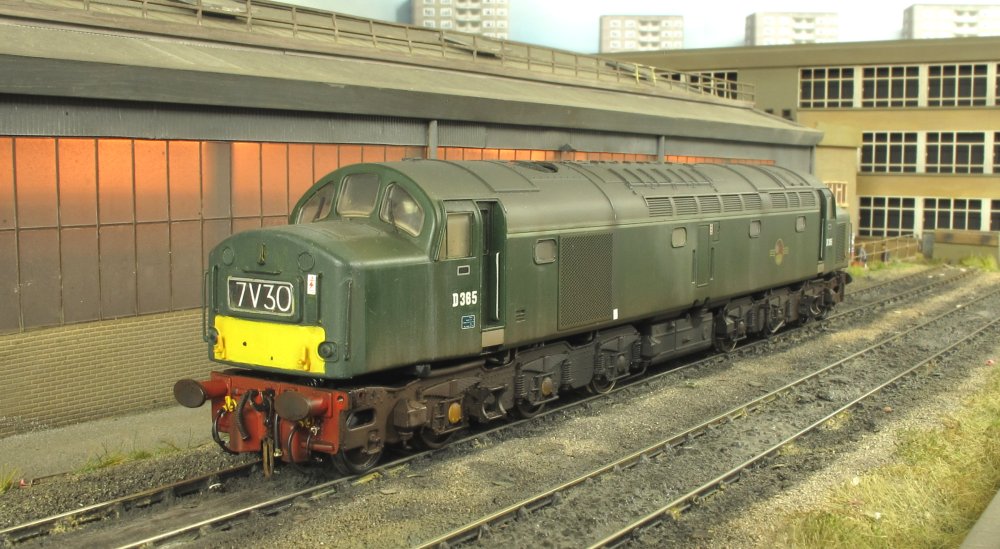 Now here's a few snaps taken during recent running sessions featuring visiting motive power,
starting off with D365 from Paul's Eastwell fleet. A long term resident recently reworked
Bachmann model fitted with a Digitrains sound decoder.
Now here's a few snaps taken during recent running sessions featuring visiting motive power,
starting off with D365 from Paul's Eastwell fleet. A long term resident recently reworked
Bachmann model fitted with a Digitrains sound decoder.
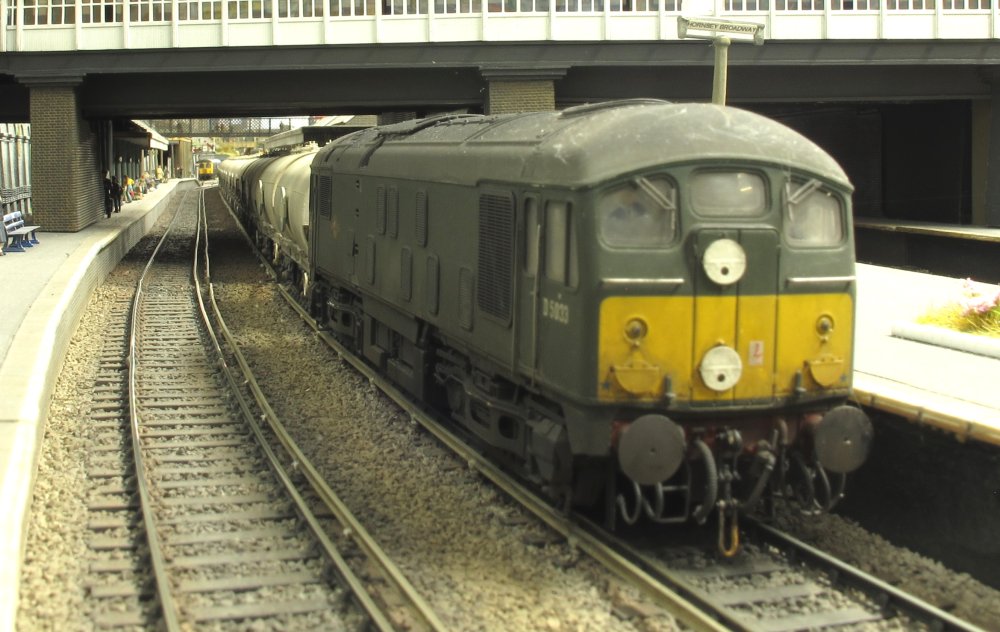 Another Eastwell loco 5033 which has been seen before at Hornsey Broadway and Canada Street,
hauling a rake of Cemflo wagons through the station.
Another Eastwell loco 5033 which has been seen before at Hornsey Broadway and Canada Street,
hauling a rake of Cemflo wagons through the station.
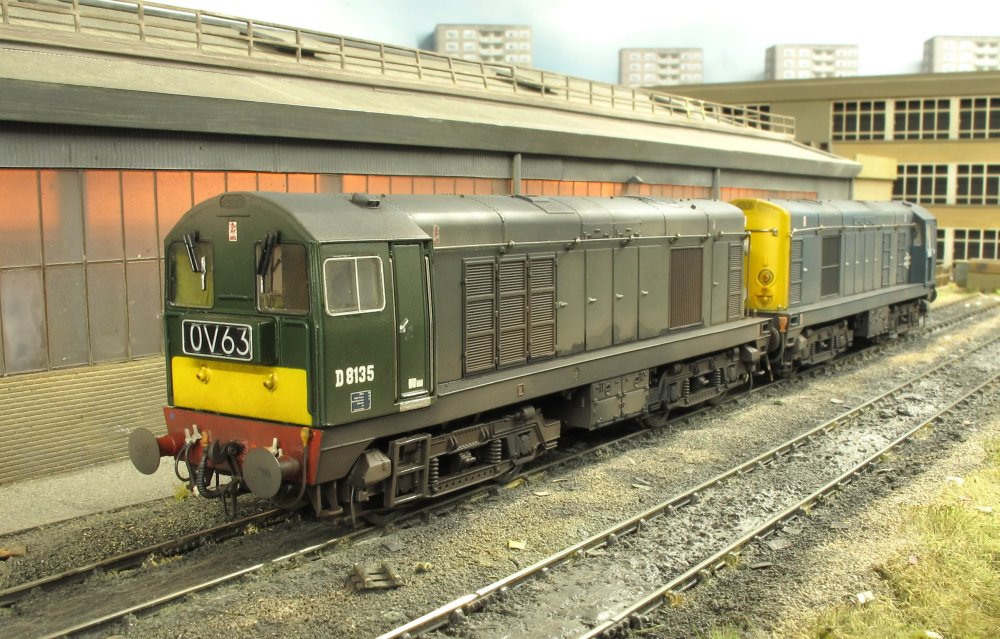 Now some visitors from Greg's Shenston Road fleet. D8135 (note modification plates on door)
paired with 8094 stabled on Hornsey Road depot.
Now some visitors from Greg's Shenston Road fleet. D8135 (note modification plates on door)
paired with 8094 stabled on Hornsey Road depot.
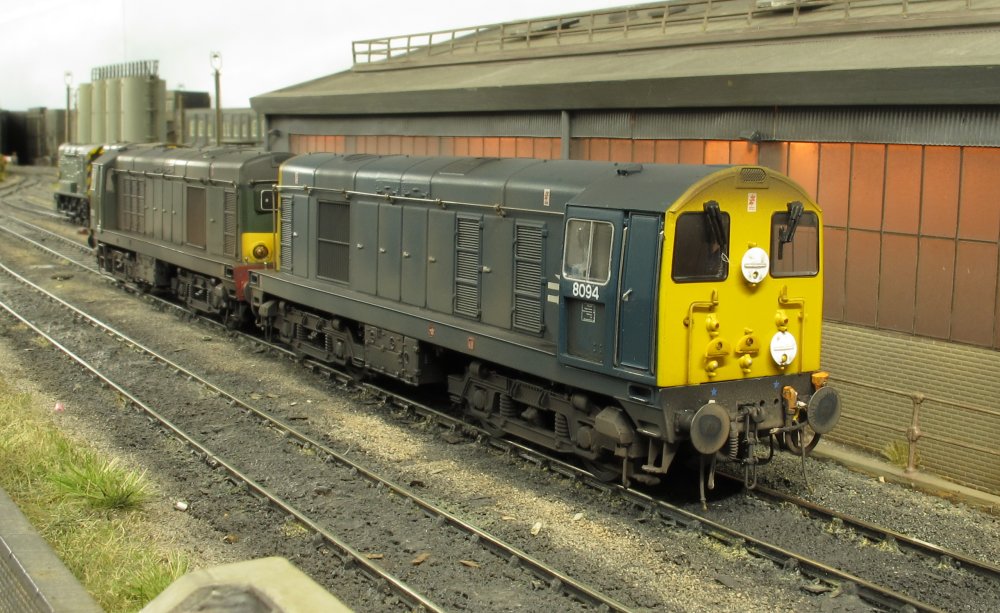 8094 was a cop for me, although D8135 has been seen many times doing the rounds.
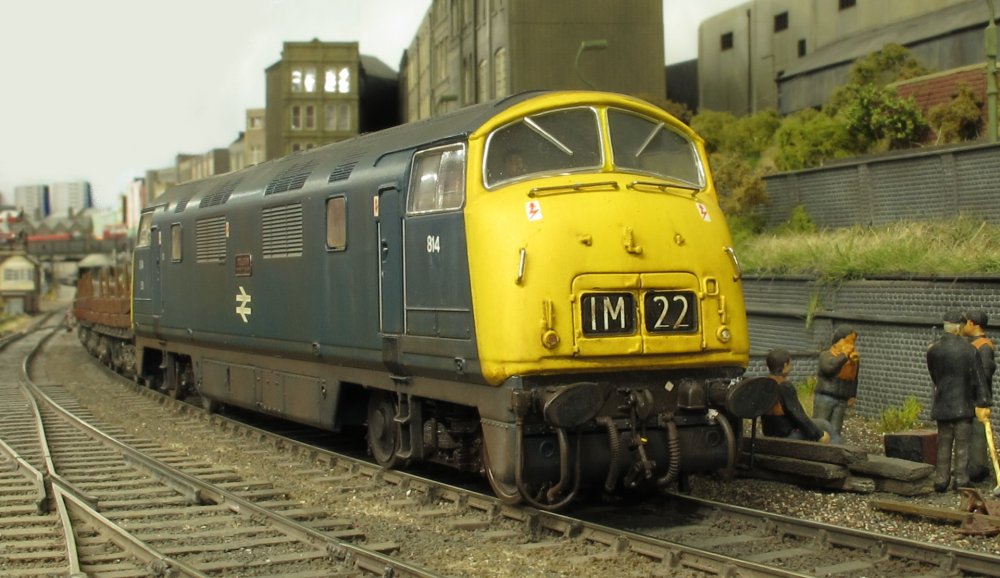 Warship Class 42 - 814 Dragon at the head of a cross-London mixed freight passing a
group of track workers at a time before hi-vis clothing was mandatory.
Warship Class 42 - 814 Dragon at the head of a cross-London mixed freight passing a
group of track workers at a time before hi-vis clothing was mandatory.
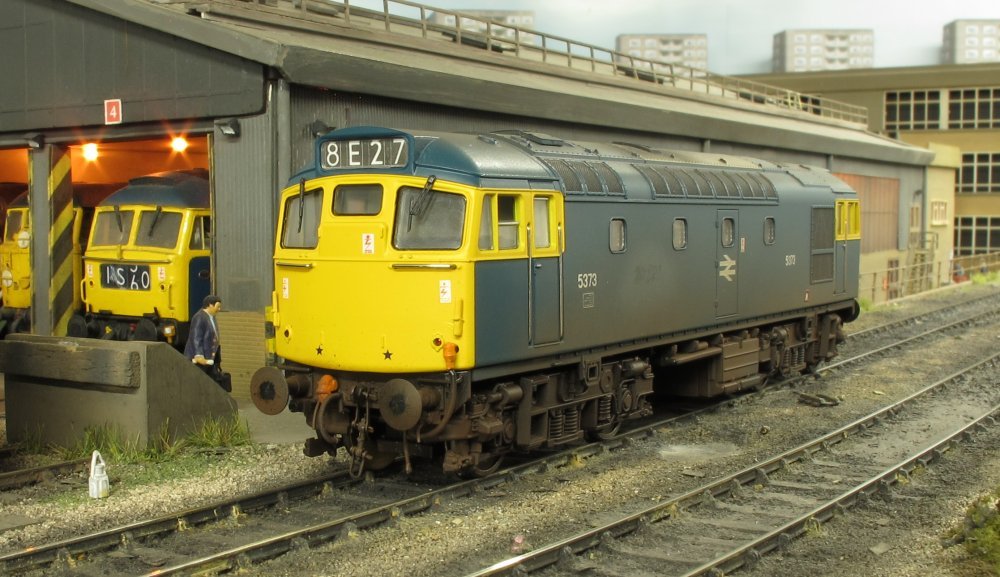 Another recently upgraded Heljan model - a Class 27 5373 at rest on the depot.
Please click on the above image to view the latest video, featuring clips from our May running sessions.
Another recently upgraded Heljan model - a Class 27 5373 at rest on the depot.
Please click on the above image to view the latest video, featuring clips from our May running sessions.